Top Drainage Fixes for Clay Soil Homes in DFW
August 30, 2026
A hard North Texas rain can turn a small low spot beside the house into standing water that lingers for days. That is more than an inconvenience when your property sits on expansive clay soil. The top drainage fixes for clay soil are designed to move water away before it can saturate the ground near your foundation, cause soil movement, and contribute to cracks, sticking doors, or uneven floors.
Clay soil is common throughout Dallas-Fort Worth, and it creates a difficult cycle. It absorbs water slowly, swells when it becomes wet, then shrinks as it dries. A dependable drainage plan helps keep moisture conditions around the foundation more consistent. The right solution depends on where the water starts, how it travels across the property, and whether foundation movement has already begun.
Why Clay Soil Needs a Different Drainage Plan
Sandy soil lets water pass through more readily. Clay holds onto it. After a storm, roof runoff and surface water may pool instead of soaking away, especially in flat yards or areas where landscaping has settled over time. Water trapped close to the home can keep one section of soil much wetter than another.
That uneven moisture is a concern for slab foundations, pier and beam homes, and commercial structures alike. Wet clay expands and can place upward pressure on parts of a structure. During dry weather, the same soil can contract and leave less support beneath it. Drainage will not correct every foundation problem on its own, but it is often an essential part of protecting a repair and preventing conditions from getting worse.
Before choosing a drainage system, look at the full path of the water. A downspout may be dumping runoff at the foundation. A neighbor’s higher lot may be sending water toward your yard. In some cases, a patio, driveway, or improperly graded flower bed acts like a dam. The solution should address the source and provide a reliable route to a safe discharge point.
Top Drainage Fixes for Clay Soil Around a Home
Regrade the soil beside the foundation
Proper grading is one of the first things to evaluate because it directs surface water before a more involved system is needed. The finished soil should slope away from the home rather than creating a shallow bowl next to the exterior walls. As a general target, homeowners often need a drop of about 6 inches over the first 10 feet, although site conditions, paving, and drainage outlets can affect what is practical.
Regrading works best when the problem is limited to surface runoff and there is enough room to establish a meaningful slope. It can be less effective on very flat properties or where fences, sidewalks, driveways, and neighboring structures restrict where water can go. It is also not a one-time concern. Settling soil, mulch buildup, and landscaping changes can gradually flatten a slope that once worked well.
Extend and manage downspout discharge
A roof collects a surprising amount of water during a Texas downpour. If downspouts release that water beside the home, they can quickly overload clay soil near the foundation. Extensions or buried drain lines can carry roof runoff farther from the structure and release it where it will not flow back toward the house or onto a neighboring property.
This is often a practical first correction, but an extension alone is not always enough. Water still needs a place to go. If an extension empties into another low area, it simply moves the standing-water problem across the yard. A contractor should confirm that the discharge area has positive drainage and will remain accessible for maintenance.
Install a French drain for recurring saturated soil
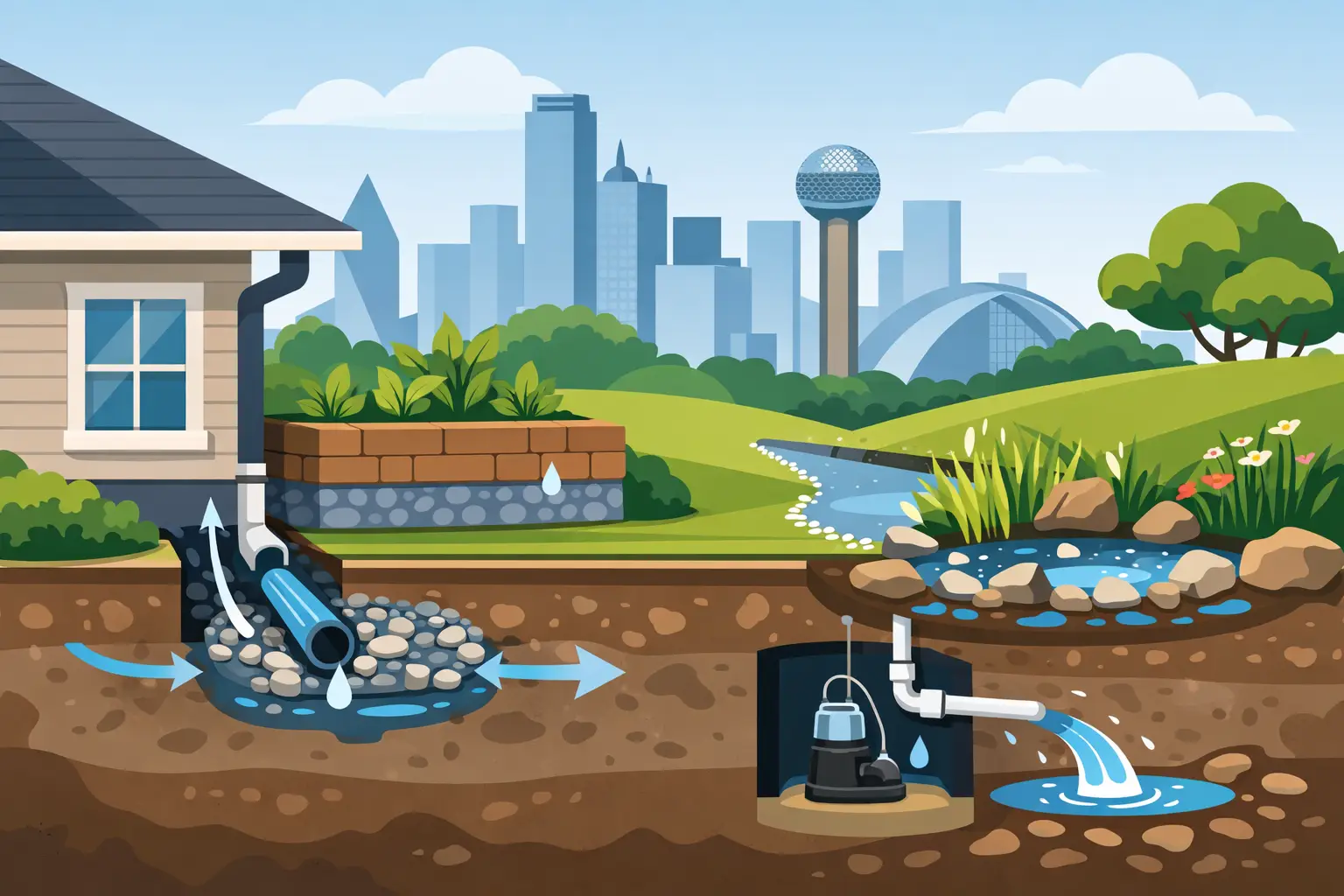
A French drain is a subsurface system that collects water moving through saturated soil and redirects it through perforated pipe surrounded by drainage rock. It is often a strong option when water regularly collects along a foundation wall, at the edge of a patio, or in a persistently wet section of the yard.
For clay soil, installation details matter. The trench must be placed at the right depth and slope, wrapped with appropriate filter fabric, and connected to a dependable outlet. Without a proper outlet, the system can hold water instead of removing it. French drains are not the right answer for every puddle, but they can provide long-term relief where below-grade water is a consistent issue.
Use surface drains where water collects on top
Surface drains are built to capture water that is visible on the ground. They are commonly installed in low areas of a yard, near driveway edges, beside patios, or beneath downspout discharge points. A catch basin or channel drain collects the runoff, and solid pipe carries it to an approved discharge location.
This approach is especially useful after heavy rain when the main problem is fast-moving or pooling surface water. In many DFW properties, a surface drain works alongside grading and downspout improvements. The goal is not simply to collect water at the low point. It is to ensure the drain line has enough fall to carry it away without backing up.
Add swales or carefully planned landscape channels
A shallow swale is a broad, gently shaped channel that guides runoff across the property. It can look like a natural part of the landscape while helping move water away from the home. Swales are useful when a yard has room for surface drainage but does not need the cost or disruption of extensive underground piping.
The trade-off is that swales require thoughtful grading and regular upkeep. They must remain clear of excess mulch, leaves, and soil that can block the route. On a small lot with little room between homes, an underground surface-drain system may be more realistic than trying to create a visible drainage channel.
Avoid Quick Fixes That Can Create Bigger Problems
A layer of mulch or a few bags of soil may hide a wet spot temporarily, but it can also trap moisture against the foundation if installed too high. Keep soil and mulch below the exterior brick weep holes and avoid piling materials against siding. Those openings need to remain clear so moisture can escape from the wall system.
Be cautious about adding gravel without a drainage plan. Gravel can improve appearance and reduce muddy foot traffic, but it does not automatically move water out of clay soil. If the area beneath it is still flat and saturated, the water may remain in place.
Do not route water toward a neighbor, the street without considering local requirements, or an area where it can undermine a fence, driveway, or retaining wall. Water management is a property-wide issue. A fix that protects one corner of the house but damages another part of the property is not a lasting solution.
When Drainage and Foundation Repair Should Be Evaluated Together
Drainage signs and foundation symptoms often appear together, but they should be evaluated carefully rather than assumed to have one cause. Cracks in brick, sheetrock, or tile; doors that no longer latch; gaps around windows; and sloping floors can indicate movement that deserves a professional inspection. The pattern, location, and age of those symptoms matter.
If repair is needed, drainage correction may help protect the work by reducing repeated moisture swings around the structure. If repair is not needed yet, resolving drainage concerns early may help preserve more stable soil conditions. Either way, a clear inspection should explain what was found, what the recommended system will address, and what it cannot guarantee.
A Practical Next Step for DFW Property Owners
Walk your property during or shortly after the next substantial rain. Note where downspouts empty, where water stands after several hours, and whether runoff moves toward the house. Take photos of wet areas and any interior or exterior changes you have noticed. That information can make a drainage evaluation more productive.
For persistent water problems or signs of structural movement, a local assessment is worth more than guesswork. All American Foundation Repair & Drainage has worked with North Texas soil conditions for decades and can help identify a drainage approach that fits the property rather than selling a one-size-fits-all fix. Addressing water at its source now can give your home a steadier foundation for the seasons ahead.