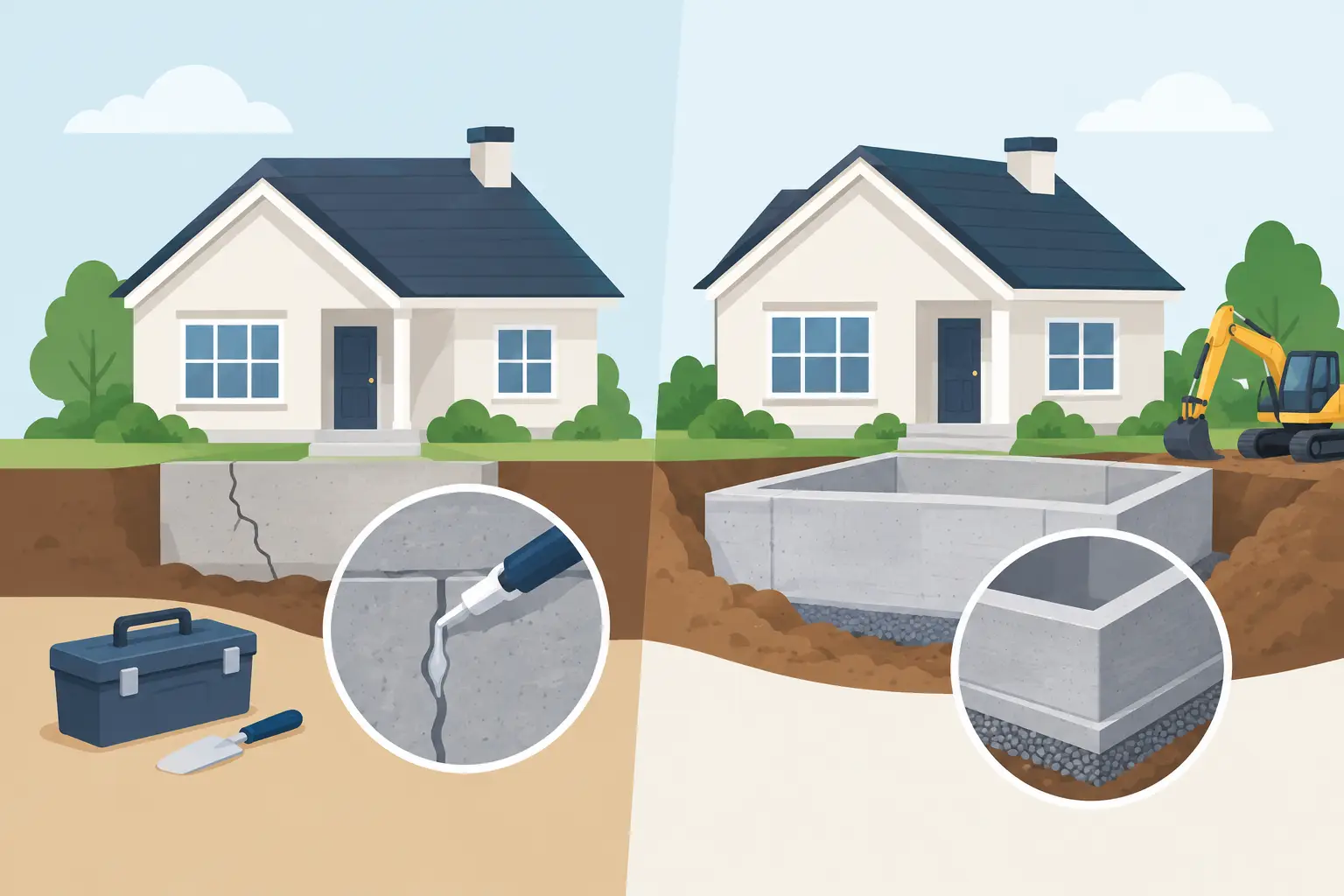
Repair Versus Foundation Replacement Explained
November 15, 2026
A cracked brick veneer, sloping floor, or door that suddenly sticks can make homeowners fear the worst: a total foundation replacement. In many cases, however, repair versus foundation replacement is not an automatic choice between a small fix and starting over. The right answer depends on what is moving, why it is moving, how much of the structure is affected, and whether the condition can be stabilized for the long term.
For Dallas-Fort Worth property owners, that distinction matters. North Texas expansive clay soils swell when saturated and shrink in dry weather. Repeated moisture changes can place uneven pressure on a slab or pier and beam foundation. A sound repair plan addresses the affected support areas and the moisture conditions that contributed to the movement. Replacing concrete without correcting the cause can leave a property exposed to the same problems later.
Repair Versus Foundation Replacement: The Real Difference
Foundation repair reinforces, re-levels, or stabilizes an existing foundation. For a slab foundation, this often means installing engineered piers at carefully selected locations to transfer the home’s load to more stable bearing material below active soil. The goal is not cosmetic perfection. It is to restore practical elevation where appropriate and, most importantly, prevent continued structural movement.
For pier and beam homes, repair may involve adjusting or replacing deteriorated support components, adding concrete piers, correcting beam or joist issues, and improving drainage around the crawlspace. Block and base foundations can also be repaired when their supporting elements and underlying conditions allow for a dependable solution.
Foundation replacement is much more extensive. It generally involves removing and rebuilding a severely compromised section or, in rare circumstances, rebuilding most or all of a foundation system. This can require major demolition, temporary structural support, utility coordination, and significant restoration work. It is not simply a larger version of house leveling.
A replacement may be warranted when concrete is extensively deteriorated, a foundation was improperly constructed, damage is too widespread for reliable stabilization, or a portion of the structure has failed beyond practical repair. Those situations exist, but they are less common than many worried homeowners believe. A thorough inspection should determine whether targeted repair can protect the property before replacement is considered.
When Foundation Repair Is Often the Better Path
Repair is usually the more practical option when the foundation remains structurally serviceable and the movement is limited to identifiable areas. Cracks alone do not determine the answer. A crack may result from normal settling, seasonal soil movement, or active displacement. Its location, direction, width, progression, and connection to other symptoms all matter.
Signs that often point toward a repairable condition include interior sheetrock cracks, exterior brick cracks, gaps around doors or windows, uneven floors, and doors that no longer latch correctly. These symptoms deserve attention, especially if they are new or getting worse, but they do not automatically mean the slab needs to be removed.
A qualified assessment looks beyond visible symptoms. It evaluates elevation changes across the structure, the condition of the foundation perimeter, drainage patterns, plumbing concerns, roof runoff, and soil moisture conditions. On pier and beam homes, the crawlspace and existing supports need a close review as well.
The benefit of repair is that it preserves the existing structure while providing support where it is needed. When piers are properly placed and installed, they can stabilize the affected portion of the home without the disruption and expense of a full rebuild. Just as important, a repair plan can be paired with drainage improvements to reduce the wet-dry soil cycles that commonly drive movement in North Texas.
When Replacement May Be Necessary
There are times when honest guidance means acknowledging that repair is not the right long-term answer. Concrete that is severely crumbling, extensively fractured, undermined, or built with major defects may not provide a reliable base for piering and leveling alone. A failed retaining condition, serious site erosion, or long-term water damage can also complicate the decision.
Replacement becomes more likely when a foundation section cannot safely carry the loads imposed by the structure, even after stabilization. For example, if a portion of a slab has deteriorated beyond reasonable restoration, replacing that section may offer a more dependable result than attempting to support compromised concrete indefinitely.
This is where homeowners should be cautious about one-size-fits-all recommendations. A contractor should be able to explain what they found, why repair is or is not viable, what work is proposed, and how the plan addresses future movement. If the scope is unusually extensive or the structural condition is unclear, an independent structural engineer can provide another layer of guidance.
Replacement is not a failure of maintenance or a reason for panic. It is a construction decision based on the actual condition of the property. The key is making it from evidence, not fear.
Drainage Can Change the Entire Decision
Foundation movement and water management are closely connected in the Dallas-Fort Worth area. Water that pools near the foundation can saturate clay soil and cause it to expand. Extended dry periods can pull moisture from the same soil, causing it to contract. When different sides of a home experience different moisture levels, uneven movement can follow.
Before approving any major foundation work, look at where water goes during and after rain. Gutters should discharge away from the house. The grade should direct surface water away from the foundation rather than toward it. Low areas, overflowing downspouts, leaking irrigation, and poor drainage near patios or walkways can all contribute to ongoing trouble.
In some cases, a French drain or surface drain is part of the long-term solution. The correct system depends on the source of water and the layout of the property. A drain installed without understanding the drainage path may move water without solving the real issue. The purpose is to manage water consistently and protect the soil supporting the structure.
Drainage correction does not erase existing foundation movement, but it can help prevent conditions that cause additional movement. That makes it a valuable companion to repair and an essential consideration before or during replacement work.
Cost, Disruption, and Long-Term Value
Cost naturally weighs heavily in repair versus foundation replacement. Repair is usually less expensive because it focuses on stabilization and support rather than demolition and reconstruction. Yet the lowest initial price is not always the best value if it leaves drainage problems, ignores active movement, or provides no clear warranty coverage.
Replacement can carry a much higher price because of labor, equipment, demolition, concrete work, restoration, and possible utility or access issues. It may also disrupt daily life for a longer period. Still, if the existing foundation cannot be made dependable, replacement can be the responsible investment.
The best comparison is not repair cost against replacement cost in isolation. Compare the expected performance of each option, the cause of the damage, the scope of work, what is included, and how the contractor stands behind it. A detailed written estimate should identify the repair areas, the recommended method, any drainage work, and the warranty terms.
Questions to Ask Before You Decide
A trustworthy inspection should leave you with clear answers, not more uncertainty. Ask what evidence supports the recommendation and whether the movement appears active, seasonal, or historic. Ask whether water management, plumbing leaks, tree placement, or grading is contributing to the problem.
You should also ask what results are realistic. Foundation work can stabilize a home and improve functional issues, but cosmetic cracks may need separate repair after the foundation work is complete. Older homes may retain some floor variation even after a successful repair. Clear expectations are part of quality workmanship.
Finally, ask how the work will be protected. All American Foundation Repair & Drainage has served North Texas property owners since 1969, and our approach begins with evaluating the home rather than selling a predetermined solution. A repair plan should fit the structure, the soil conditions, and the property’s drainage needs.
Do not let alarming symptoms push you into a decision before the cause is understood. Schedule a professional evaluation while the signs are manageable, ask direct questions, and choose the solution that gives your property the strongest path to lasting stability.