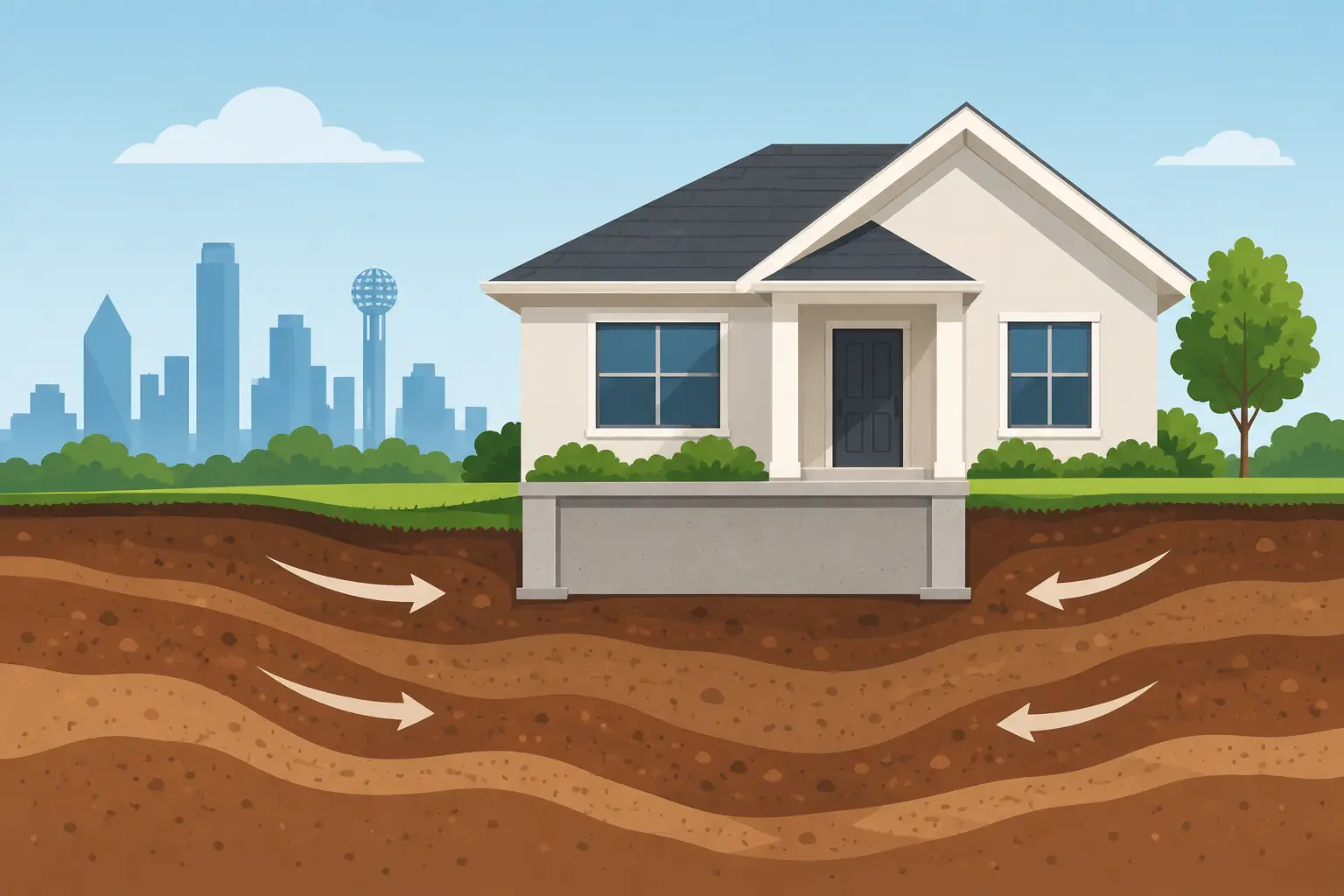
Soil Movement and Your North Texas Foundation
November 14, 2026
A foundation does not have to suddenly collapse to be affected by soil movement. In North Texas, slow shifts in the ground beneath a home can create wall cracks, sticking doors, sloping floors, and gaps around trim long before homeowners realize the underlying problem is moisture and soil behavior.
For property owners in Duncanville and across DFW, the goal is not simply to patch a crack. It is to identify why the foundation is moving, address the conditions contributing to it, and protect the home from continued damage. That takes an honest inspection, a repair plan suited to the structure, and close attention to drainage.
Why Soil Movement Is Common in North Texas
Much of the Dallas-Fort Worth area sits on expansive clay soil. Clay particles react strongly to changes in moisture. When the ground absorbs substantial water, it expands. When prolonged heat and dry conditions pull moisture out of the soil, it contracts.
That expansion and contraction can place uneven pressure on a foundation. One side of a home may receive runoff from the roof while another side dries out under full sun. Soil may swell near a low spot in the yard while shrinking around a large tree or poorly watered area. The result is differential movement, meaning one portion of the foundation moves differently than another.
A properly designed foundation is built to carry a home, but it cannot eliminate the effects of repeated soil changes forever. The longer moisture conditions remain uneven, the greater the chance that small changes turn into noticeable structural symptoms.
Wet Weather Can Be Just as Problematic as Drought
Homeowners often associate foundation trouble with Texas summer heat, and dry weather is certainly a major factor. But excessive rain can also create problems. Water that pools beside the home may saturate the supporting soils, cause clay to swell, and increase pressure against parts of the foundation.
This is why foundation repair and drainage correction often go together. Installing piers may stabilize a settling area, but allowing roof runoff or standing water to continue collecting at the foundation can leave the property vulnerable to future movement in another location.
Signs Soil Movement May Be Affecting Your Home
One hairline crack does not always mean a foundation needs repair. Concrete, drywall, and building materials can develop minor cracks as a home ages. What matters is the overall pattern, whether the issue is growing, and whether several symptoms appear together.
Watch for stair-step cracks in brick, diagonal cracks extending from door or window corners, or interior drywall cracks that widen over time. Doors and windows that suddenly stick, separate from their frames, or no longer latch properly can also point to structural changes.
Floors that feel uneven deserve attention, especially when the slope seems more pronounced in one part of the house. In pier and beam homes, homeowners may notice bouncing floors, sagging areas, or changes around interior support beams. Exterior clues can include gaps between brick and fascia, separated trim, or cracks in patios and walkways near the house.
The important question is not, “Do I have a crack?” It is, “Is my home showing a pattern of movement that needs professional evaluation?” A qualified foundation inspection can help answer that question without pushing homeowners toward work they do not need.
How Water Management Affects Foundation Stability
Water should move away from the home in a controlled way. That sounds simple, but many foundation problems begin with details that are easy to overlook: short downspouts, clogged gutters, negative grading, leaking plumbing, or landscape beds that hold water against the slab.
Start by observing the property during a heavy rain. Look for water collecting along the exterior walls, overflowing gutters, or downspouts releasing water near the foundation. Check whether the yard slopes toward the home rather than away from it. A wet spot that remains long after surrounding ground has dried may indicate a drainage or plumbing concern.
Surface drains can collect runoff before it reaches the foundation. French drains can help manage subsurface water in areas where standing water and saturated soil are recurring concerns. The right drainage solution depends on the layout of the property, soil conditions, roof runoff, existing grading, and where water can safely discharge.
There is no one-size-fits-all drainage fix. A small swale may be appropriate for one yard, while another property may require a more complete drainage system. What should not be ignored is water that repeatedly stays next to the home.
Landscaping Requires a Balanced Approach
Trees and shrubs can make a property more comfortable and attractive, but their roots may affect soil moisture. Large, mature trees near a foundation can draw considerable water from expansive clay soil during dry periods. Removing a tree is not automatically the right answer, and planting decisions should not be based on fear alone. Still, it is wise to consider mature root zones and moisture patterns when planning landscaping close to the house.
Regular, measured watering can help reduce severe dry-season soil shrinkage around some homes. Overwatering, however, can create the opposite problem by keeping soil overly saturated. Consistency matters more than dramatic swings from very dry to very wet.
When Foundation Repair Is Needed
Drainage improvement can protect a foundation, but it cannot always reverse movement that has already occurred. If a home has settled, heaved, or developed ongoing structural symptoms, a repair plan may be necessary to stabilize affected areas.
For slab foundations, concrete piers or other engineered support systems may be installed beneath the foundation at selected locations. These supports are designed to transfer the load of the structure to more stable bearing conditions. The number and placement of piers should be based on inspection findings, elevation measurements, structural symptoms, and the specific behavior of the property.
Pier and beam foundations require a different approach. Repairs may involve adjusting or replacing supports, addressing deteriorated beams, correcting crawl space moisture concerns, or improving drainage around the perimeter. Block and base homes also need an evaluation tailored to their construction rather than a generic slab-foundation solution.
House leveling may be part of the repair process, but homeowners should understand the trade-off. Raising a structure can improve function and reduce visible symptoms, yet it may also reveal or cause cosmetic cracking as framing, drywall, plumbing connections, and finishes adjust. A reputable contractor explains what the work is intended to accomplish and what reasonable post-repair adjustments may be needed.
What to Do Before Damage Gets Worse
Do not wait for a small concern to become an emergency. Document visible cracks with dated photos, especially if you think they are changing. Keep notes about sticking doors, seasonal changes, and areas where water stands after rain. Those details can help distinguish a one-time cosmetic issue from a recurring movement pattern.
Avoid relying on quick cosmetic fixes as the only response. Caulk and paint can improve appearance, but they do not stabilize a foundation or redirect water. Likewise, avoid making major drainage changes without considering where the water will go next. Moving water away from one side of the house should not send it toward a neighbor’s property or create a new low area near another part of the foundation.
A professional inspection is particularly worthwhile when symptoms are increasing, multiple areas of the home are affected, or a real estate transaction is approaching. Clear information helps homeowners make practical decisions about timing, cost, and the repairs that will provide lasting value.
Protect the Ground Supporting Your Home
North Texas weather will continue to alternate between heavy rain, heat, and dry stretches. You cannot control the clay soil beneath your property, but you can pay attention to the moisture conditions around the foundation and respond before damage becomes more extensive.
For more than 57 years, All American Foundation Repair & Drainage has helped local property owners understand structural concerns and choose repair plans built for long-term stability. If you are seeing signs of movement or water collecting near your home, a straightforward evaluation can replace uncertainty with a clear path forward.