Concrete Piers for Foundation Repair
June 21, 2026
When a slab starts cracking, doors quit latching, or floors feel out of level, most homeowners are not looking for theory. They want to know what will actually stabilize the house. That is where concrete piers for foundation repair often enter the conversation, especially here in North Texas where expanding and shrinking soils put constant stress on foundations.
Concrete piers are a common repair method used to support and, when conditions allow, help lift a settling foundation. They are not the right answer for every structure, and they are not interchangeable with every other pier system. But when they are properly designed for the home, soil conditions, and movement pattern, they can provide dependable long-term support.
How concrete piers for foundation repair work
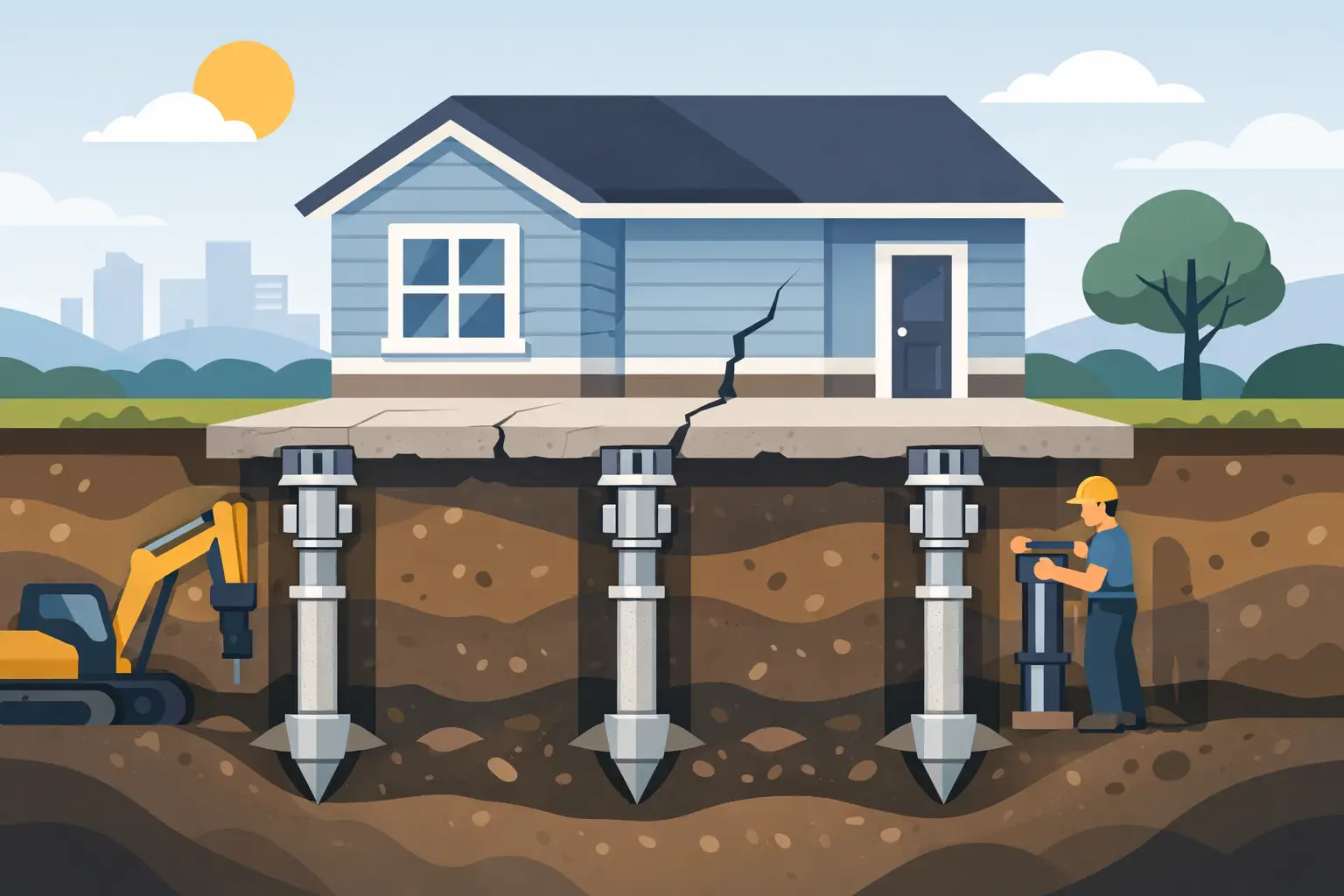
A concrete pier system transfers the weight of the structure down to more stable soil below the active surface layer. In the Dallas-Fort Worth area, that surface layer is often the problem. Clay-rich soils expand when wet and shrink when dry. That movement can push one section of a slab up, let another section drop, and create the uneven stress that shows up as interior cracks, brick separation, or sloping floors.
Concrete piers are installed beneath the foundation in strategic locations based on the structure’s load points and the areas showing distress. The goal is not just to put supports under the home. The goal is to carry the load where the soil can do its job more consistently.
In many cases, sections of concrete are pressed or placed into the ground until the system reaches suitable bearing strata. Once the pier is established, the foundation can be supported on that deeper point rather than relying only on the unstable upper soils. Depending on the structure and degree of movement, the repair may also include attempts to raise portions of the home closer to their original elevation.
That sounds straightforward, but the quality of the outcome depends on good evaluation. The wrong pier placement, poor depth, or a repair plan that ignores drainage can leave the underlying problem in place.
When concrete piers make sense
Concrete piers are often a strong fit for slab foundation repair, particularly when settlement is tied to shifting near-surface soil. They are also used in some situations where long-term support is needed under concentrated load areas.
What matters most is not whether a homeowner has heard the term before. What matters is whether the foundation movement pattern, structural load, and site conditions support this type of solution. Some homes need concrete piers. Others may be better served by steel piers, root barriers, drainage correction, or a combination of repairs.
A trustworthy contractor will not treat every crack the same way. A small cosmetic crack from normal seasonal movement is different from a widening crack paired with sticking doors and separation around windows. Likewise, a house with severe moisture imbalance around the perimeter may continue moving unless drainage issues are corrected along with the pier work.
That is why inspection matters. Foundation repair is rarely one-size-fits-all in North Texas.
What concrete piers can and cannot do
Homeowners often ask whether piers will make the house perfectly level again. Sometimes there can be meaningful improvement. Sometimes there are practical limits.
Concrete piers can stabilize settling sections of a foundation and may allow a contractor to recover some lost elevation. They can reduce ongoing structural stress and help prevent movement from getting worse. That can protect flooring, walls, masonry, and door and window operation.
What they cannot do is erase every sign of prior movement. Drywall cracks may need cosmetic repair after the structure is stabilized. Brick that has already fractured may not close back up completely. In older homes, lifting too aggressively can create new stress, so experienced crews often balance structural benefit with the realities of the building.
That kind of judgment is where experience shows. Repair is not about chasing a perfect number on paper. It is about creating safe, lasting support without causing avoidable damage in the process.
The installation process homeowners should expect
Most homeowners feel better once they know what the job will actually look like. The process usually starts with a detailed inspection and elevation readings to understand where the foundation has moved. Visible symptoms inside and outside the home are reviewed together, and the repair plan is built around those findings.
If concrete piers are recommended, access points are opened around the foundation where the supports need to be installed. Excavation is done at those locations to expose the footing or grade beam. From there, the pier sections are driven or installed downward until proper resistance or bearing conditions are reached.
After the piers are in place, hydraulic lifting may be used where appropriate to support and adjust the foundation. Not every area can or should be lifted the same amount. The structure’s response is monitored during the process. Once the system is secured, the excavated areas are backfilled and the site is cleaned up.
For many DFW homeowners, the biggest surprise is that the repair itself is only part of the full solution. If poor drainage, plumbing leaks, or major moisture swings are contributing to movement, those issues should be addressed too. Otherwise, the house may continue to experience stress in surrounding areas.
Concrete piers vs. other foundation pier systems
Homeowners comparing options often want a clear winner, but the better question is which system best fits the property.
Concrete piers are valued for their proven performance and cost-effectiveness in many residential applications. They have been used for decades and remain a practical option for many slab foundation repairs. In the right conditions, they provide solid support at a reasonable price point.
Steel pier systems can be a better choice in some cases, especially where deeper load transfer is required or where soil conditions call for a different approach. Steel and concrete systems each have strengths, and the decision should be based on engineering logic, not sales pressure.
There is also the issue of access, load demands, and structure type. A light residential slab with moderate settlement is not the same as a heavier structure with more serious movement. What works well at one property may not be the best long-term answer at another.
A good repair contractor explains the trade-offs clearly. If someone insists there is only one solution for every home in DFW, that should raise questions.
Why local soil and drainage matter so much
In North Texas, foundation performance is tied closely to moisture. Long dry spells cause clay soils to contract. Heavy rains can quickly swell those same soils. Add poor drainage, flat lots, leaking sprinkler lines, or tree roots pulling moisture from one side of the home, and foundation movement becomes much more likely.
That is why concrete piers for foundation repair should never be discussed in isolation. Piers address support. They do not solve water management by themselves.
If water pools near the home, if downspouts dump next to the slab, or if one side of the house stays much wetter than the other, those conditions need attention. In many cases, drainage improvements are part of protecting the value of the pier repair. This is especially true in the Dallas-Fort Worth Metroplex, where seasonal soil movement is a fact of life, not an exception.
An experienced local contractor understands that foundation repair and drainage correction often belong in the same conversation.
Choosing the right contractor for pier work
Concrete pier installation is not just excavation and lifting equipment. It is diagnosis, planning, workmanship, and accountability. Homeowners should look for a contractor with a long track record in North Texas, clear communication about the repair scope, and a willingness to explain what the piers are expected to accomplish.
It also helps to ask practical questions. How many piers are being recommended, and why in those locations? What signs of movement support that plan? Will elevation readings be provided? What warranty comes with the work? Will drainage concerns be addressed if they are part of the problem?
Companies that have spent decades working in local soil conditions tend to recognize patterns quickly. That matters. A family-owned company like All American Foundation Repair & Drainage, LLC understands that homeowners are not buying piers. They are buying peace of mind, structural protection, and a repair plan they can trust.
If your home is showing signs of settlement, waiting usually makes the repair conversation harder, not easier. The helpful next step is simple: get the foundation evaluated, understand the cause of the movement, and make sure any pier recommendation fits the house as it actually sits today.