Pier and Beam Repair Guide for Homeowners
July 6, 2026
A soft spot in the floor near the hallway. A door that suddenly drags. Cracks showing up above an interior doorway. For many North Texas homeowners, those small changes are the first warning that the structure underneath the house needs attention. This pier and beam repair guide explains what those signs can mean, what repairs usually involve, and why the right fix depends on what is happening below your home, not just what you can see inside it.
What makes pier and beam homes different
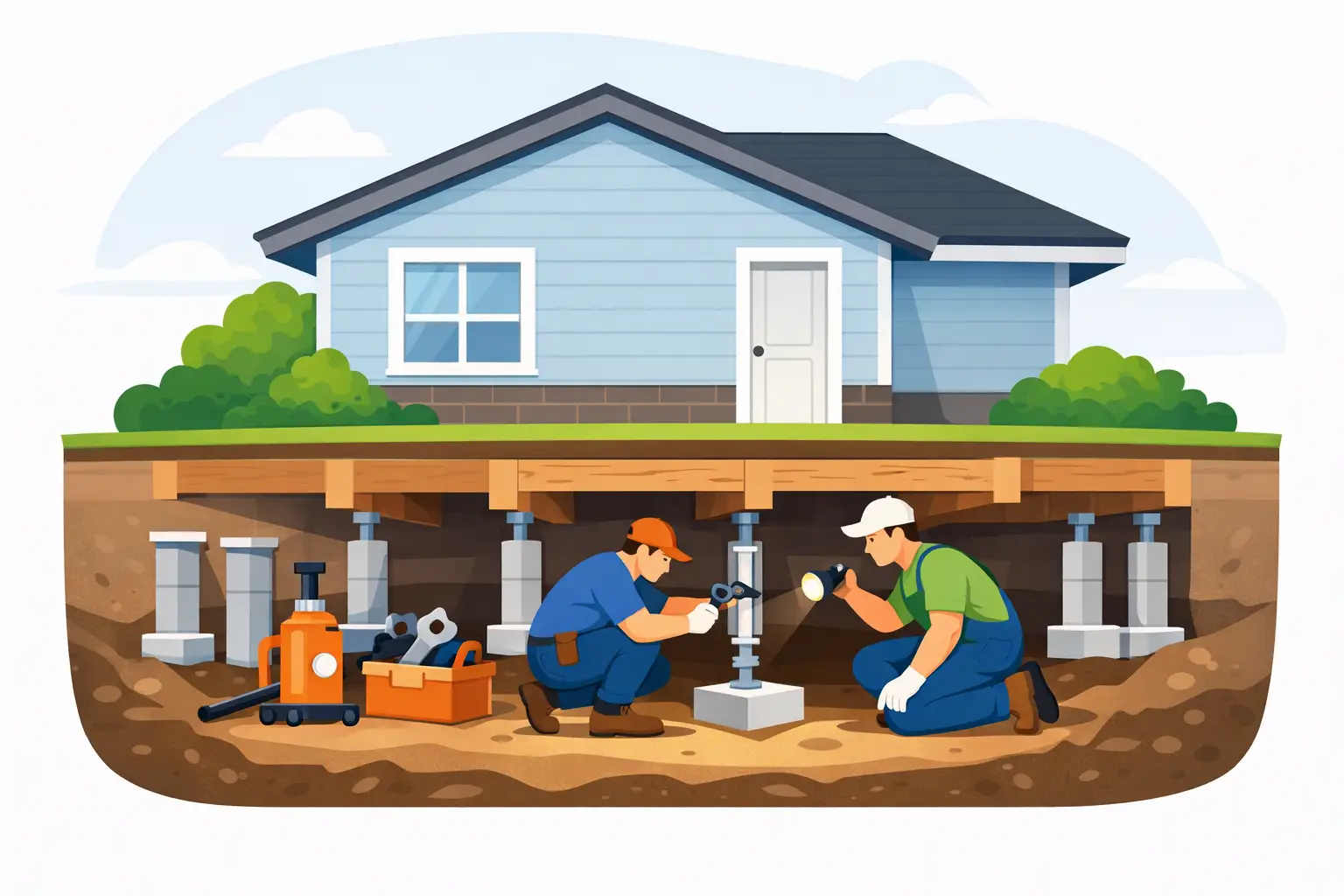
A pier and beam foundation supports the house above an open crawl space. Instead of resting on a single concrete slab, the structure is carried by beams, joists, and piers that transfer the home’s weight down into the ground. That design gives easier access to plumbing and some structural components, but it also means there are more parts that can shift, rot, settle, or lose support over time.
In the Dallas-Fort Worth area, soil movement is a major factor. North Texas clay expands when it gets wet and shrinks when it dries out. That cycle can put pressure on piers, change moisture conditions around the foundation, and lead to uneven movement. Poor drainage makes the problem worse. So does plumbing leakage under the home, especially when it goes unnoticed in a crawl space.
A pier and beam system can perform well for decades, but it needs stable support, controlled moisture, and timely repairs when movement starts to show.
Common signs you may need pier and beam repair
Most homeowners do not start by looking under the house. They notice symptoms inside the living space first. Uneven or bouncy floors are common. Some areas may feel lower than others, or the floor may slope toward one side of the home. Doors and windows may stick, fail to latch, or develop gaps around the frame.
You may also see cracks in drywall, especially above doors and windows or where walls meet ceilings. Trim can separate from the wall. In older homes, tile or wood flooring may begin to shift because the framing beneath it is no longer level.
Outside, there can be clues as well. Water collecting near the perimeter, poor yard drainage, or visible movement around skirting and support areas can all point to foundation stress. If you have access to the crawl space, signs such as sagging beams, deteriorated wood, standing water, or leaning supports should be taken seriously.
Some of these symptoms can have more than one cause. A sticking door does not always mean major structural failure. But when several warning signs appear together, or when they keep getting worse, it is time for a professional inspection.
What causes a pier and beam foundation to fail
There is no single answer, which is why a proper diagnosis matters. In many cases, movement starts with moisture. Water from poor drainage, plumbing leaks, or humidity buildup in the crawl space can weaken wood components and soften the soil supporting the piers. On the other hand, overly dry conditions can cause soil shrinkage and settlement.
Wood deterioration is another common issue. Joists, beams, and subfloor framing can suffer from rot, insect damage, or age-related wear. Even if the piers themselves are still in place, damaged wood above them can create sagging and instability.
Sometimes the problem is with the support system itself. Older homes may have piers that were not designed for current load demands, or previous repairs may have been incomplete. In some situations, homeowners are dealing with a combination of issues – settlement, moisture intrusion, and failing wood members all at once.
That is why surface symptoms rarely tell the whole story. A level floor is not the only goal. The real goal is restoring dependable support and preventing the same conditions from causing more damage later.
Pier and beam repair guide: how repairs are evaluated
A sound repair plan starts with inspection, not guesswork. The contractor should look at both the living areas and the crawl space, checking the floor system, support layout, moisture conditions, drainage patterns, and any evidence of plumbing leaks or wood damage. Elevation readings may also be taken to measure how far the structure has moved.
This step matters because two homes with similar interior cracks can need very different repairs. One may need shim adjustments and beam support. Another may need new piers, joist replacement, drainage correction, and leveling work. The right approach depends on where the movement started and whether the home is still actively shifting.
For North Texas properties, local experience is especially important. Clay soil behavior, seasonal moisture swings, and drainage patterns can all affect how a pier and beam home moves. A repair plan should account for those local conditions, not just the visible symptom inside the house.
Typical pier and beam repairs
Repair methods vary, but most projects fall into a few core categories. Shimming and leveling are often used when support points need adjustment to bring the structure back into better alignment. This can help reduce floor slope and improve function, though full perfection is not always realistic in older homes.
If existing supports are inadequate or settling, new piers may be installed to provide more stable bearing points. In some cases, concrete piers are used to strengthen the support system and carry loads more effectively.
When wood members are damaged, joists, beams, sill plates, or other structural components may need repair or replacement. Rot, termite damage, or long-term moisture exposure can compromise these elements beyond what shimming alone can correct.
Moisture control is often part of the repair, even when homeowners are focused on the structure itself. If water is collecting around the home or under it, drainage improvements may be necessary to protect the repair. Surface drains, French drains, grading corrections, and leak repairs can all play a role.
The best contractors do not treat structural repair and water management as separate conversations when they are clearly connected. If the water problem is left in place, the structural problem often comes back.
What to expect during the repair process
Most homeowners want to know two things right away: how disruptive this will be, and whether they need to leave the home. In many cases, pier and beam repairs can be completed with limited disruption because much of the work happens in the crawl space or around the perimeter. That said, there may be noise, vibration, and temporary changes inside the home as the structure is adjusted.
Repairs are usually done in stages. The crew may first stabilize weak areas, then make elevation corrections, then replace damaged components, and finally address drainage or moisture concerns. Not every home can or should be forced back to perfectly level. Trying to over-correct an older structure can sometimes create new stress on walls, finishes, or plumbing.
A good contractor will explain what level of correction is realistic and why. Straight answers matter here. Homeowners deserve to know whether the goal is full structural stabilization, improved function, cosmetic improvement, or a combination of all three.
Cost, trade-offs, and long-term value
Pier and beam repair costs can vary widely because the scope can range from minor support adjustments to major structural rebuilding. The size of the home, crawl space access, extent of wood damage, number of piers needed, and drainage conditions all affect the price.
The cheapest bid is not always the lowest-cost decision over time. If repairs address only the symptom and not the cause, homeowners may end up paying again for more leveling, more drainage work, or interior repairs that crack back open.
That does not mean every house needs the largest repair plan offered. Sometimes a targeted structural repair with a moisture-control recommendation is the right path. Sometimes broader correction is necessary because multiple systems have already been affected. The key is getting a repair plan that matches the actual condition of the home.
For many property owners, financing options and warranty coverage are part of the decision. Those details matter because foundation work is not just another maintenance item. It is an investment in safety, value, and the long-term performance of the property.
Choosing the right contractor for a pier and beam repair guide in real life
A useful pier and beam repair guide should do more than explain warning signs. It should help you judge who to trust with the work. Look for a contractor with direct experience in pier and beam systems, not just general foundation repair. Ask how they inspect crawl spaces, how they determine whether drainage is part of the issue, and what kind of repair documentation they provide.
You should also expect clarity about warranties, project scope, and what results are realistic. A dependable contractor will explain the difference between cosmetic cracking and structural movement, tell you when drainage correction is necessary, and avoid pushing a one-size-fits-all solution.
In the Dallas-Fort Worth area, long-term local experience counts. Soil movement here is not theoretical. It is part of daily foundation work. Companies like All American Foundation Repair & Drainage, LLC have spent decades seeing how North Texas moisture patterns affect homes, and that kind of history can make the repair plan more accurate from the start.
If your floors feel different than they did a year ago, or your home is giving you more than one warning sign, trust that instinct and get it checked. Catching a pier and beam issue early usually gives you more repair options, less interior damage, and a better chance of protecting the home you have worked hard to keep stable.