When Is House Settling Serious? 7 Warning Signs
November 1, 2026
A hairline crack above a doorway may be ordinary cosmetic movement. A crack that widens, runs diagonally from a window corner, and appears alongside a sloping floor is a different matter. Homeowners often ask, when is house settling serious? The answer comes down to the pattern, progression, and cause of the movement – especially in the shifting clay soils common across Dallas-Fort Worth.
Every home moves to some degree. Materials expand and contract with temperature changes, lumber dries, and a newer home can adjust as it carries its full load. Serious settling occurs when that movement is uneven, ongoing, or strong enough to affect the home’s structure, drainage, utilities, or daily function.
When Is House Settling Serious?
House settling deserves a professional foundation evaluation when visible signs are growing, appearing in several areas, or interfering with how the home operates. One small, stable drywall crack is not automatically a foundation failure. But repeated repairs to the same crack, doors that suddenly will not latch, or a floor that feels noticeably out of level can point to differential movement.
Differential movement means one portion of the foundation is moving more than another. On a slab home, that can happen when soil beneath one area dries out and shrinks while soil beneath another remains wet and expands. On a pier and beam home, it may involve moisture changes, deteriorated supports, drainage problems, or movement in the soil below the piers.
The concern is not simply that a crack exists. The concern is whether the home is being stressed unevenly and whether the condition will continue without correcting the underlying cause.
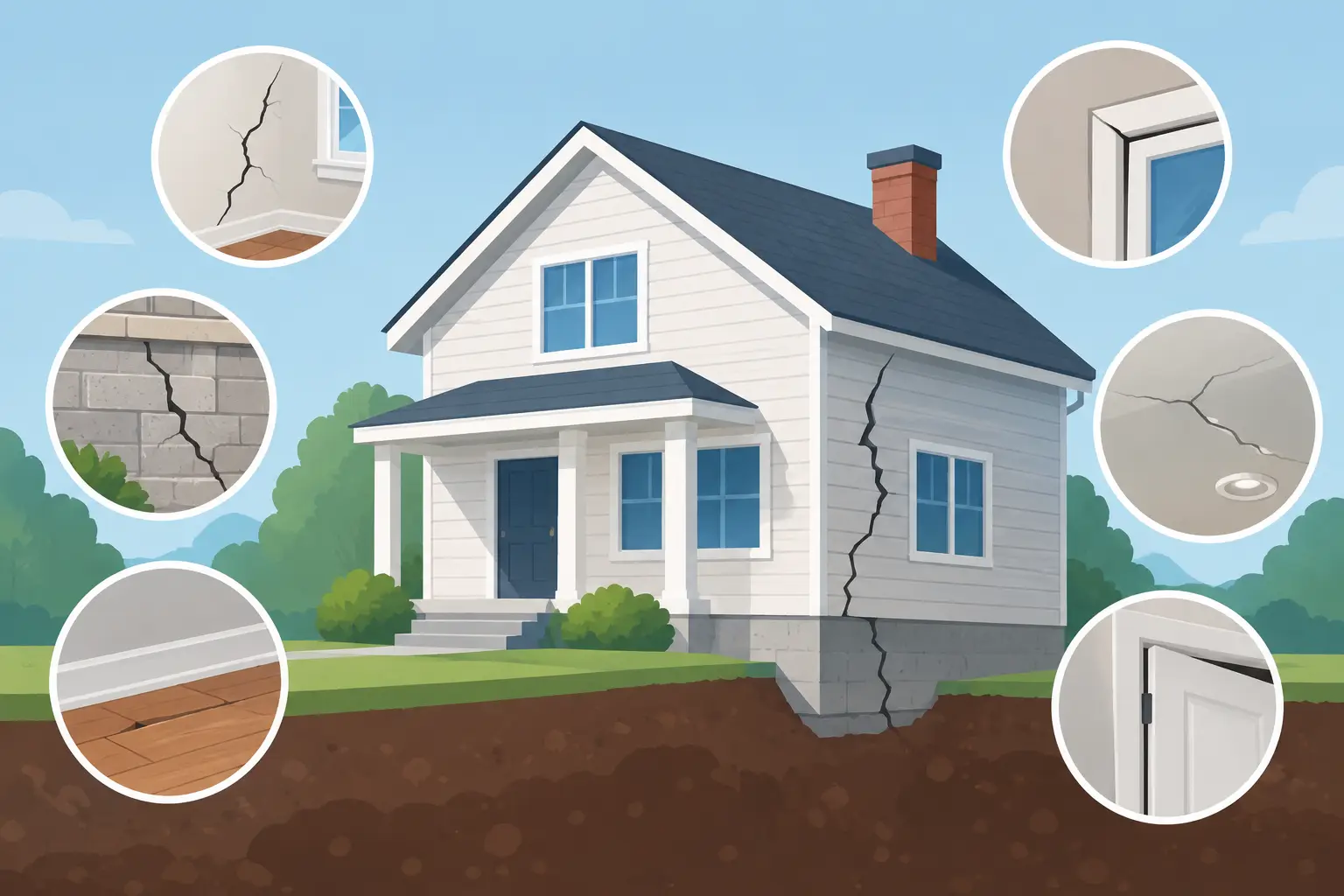
1. Cracks are wide, diagonal, or getting worse
Drywall cracks smaller than about one-sixteenth of an inch are often cosmetic, particularly if they are short and have not changed over time. Wider cracks deserve closer attention. So do diagonal cracks extending from the corners of doors and windows, stair-step cracks in brick or block, and cracks that reopen after being patched.
Exterior brick cracking can be especially useful evidence because brick does not flex easily. A stair-step pattern along mortar joints, separation around windows, or a noticeable gap between brick and trim may signal foundation movement. Cracks alone do not diagnose the problem, but their location and direction help an experienced inspector understand how the structure may be moving.
2. Doors and windows stick, drag, or separate from frames
A door that sticks during humid weather may be reacting to normal seasonal expansion. A door that suddenly rubs the frame, will not stay open, develops a large gap at the top, or stops latching is more concerning – particularly if several doors or windows are affected.
As the house shifts, frames can become out of square. Windows may be harder to open, interior doors may swing by themselves, and trim can pull away from walls. These are practical signs homeowners notice early because they affect normal use of the home.
3. Floors feel uneven or gaps appear at baseboards
A floor that slopes enough to be felt while walking should be evaluated. You may notice a rolling object moving across a room, furniture that rocks, or a distinct high or low area near an exterior wall. While no house is perfectly level forever, a measurable change in elevation can reveal settlement, heave, or support issues.
Look along baseboards and flooring transitions as well. New gaps between the floor and baseboard, separated caulk lines, cracked tile, or laminate flooring that pulls apart may be signs of movement beneath the finished surfaces. These symptoms can also result from normal material changes, so the full pattern matters.
4. Exterior walls, chimney, or porch are pulling away
Separation where a porch meets the home, gaps around exterior trim, or a leaning chimney should never be ignored. These areas may be built on different support systems than the main structure, which means they can move independently. A settling porch does not always mean the entire house foundation is failing, but it still needs a clear diagnosis before the gap worsens or creates a water-entry point.
A chimney that visibly leans or separates from the home calls for prompt attention. It carries substantial weight and can create a significant safety concern when movement is active.
5. Cracks appear in concrete, tile, or the garage floor
Concrete naturally develops some cracks as it cures and ages. A thin, stable crack in a driveway is usually not a structural emergency. However, cracks in a garage slab that have vertical displacement, wide openings, or clear growth may reflect soil movement below.
Inside the home, cracked tile can be a useful clue because tile is rigid. When tile cracks in a long line, multiple rooms, or the same direction as wall cracking, foundation movement should be considered. A qualified inspection separates surface-level issues from a broader structural pattern.
6. Water is collecting near the foundation
In North Texas, water management and foundation performance are closely connected. Expansive clay soil swells when saturated and shrinks as it dries. Large swings in moisture around the home can place uneven pressure on the foundation over time.
Standing water beside the house after rain, gutters that discharge next to the foundation, negative grading, broken downspouts, and leaking plumbing all deserve attention. In some cases, correcting drainage is part of protecting a foundation repair. Repairing supports without addressing recurring water problems can leave the home exposed to continued soil movement.
7. The changes are new, widespread, or accelerating
The strongest warning sign is progression. Take dated photographs of cracks, gaps, and affected areas. If a crack expands over months, doors become harder to close, or new symptoms appear in other rooms, do not wait for the damage to become more disruptive.
A home can show one isolated symptom for years without a major structural issue. When several signs arrive together or the condition changes quickly after a drought, heavy rain period, plumbing leak, or nearby construction, it is time to schedule an inspection.
Why Dallas-Fort Worth Homes Settle Differently
The Dallas-Fort Worth area is known for expansive clay soils. These soils react strongly to moisture. During dry weather, soil can contract and reduce support beneath parts of a foundation. During prolonged rain or poor drainage conditions, soil can swell and push upward.
Trees can add another variable. Large root systems draw moisture from the soil, sometimes creating drier conditions near one side of a home. That does not mean every tree near a house is a problem or should be removed. It does mean soil moisture, landscaping, drainage, and foundation performance need to be considered together.
Foundation type matters, too. Slab foundations, pier and beam systems, and block and base foundations each show movement differently and require different repair approaches. A proper recommendation should be based on measurements, site conditions, structural observations, and the source of the movement – not a one-size-fits-all solution.
What to Do Before a Foundation Inspection
Start by documenting what you see. Note when doors began sticking, where cracks first appeared, and whether symptoms followed a weather event or plumbing issue. If you have older photos from a home sale, renovation, or insurance inspection, they may help establish whether changes are recent.
Next, look for manageable water issues. Keep gutters clear, make sure downspouts carry water away from the house, and avoid allowing sprinkler systems to create constantly saturated soil beside the foundation. Do not attempt to fill major cracks or level floors yourself before an evaluation. Temporary cosmetic repairs can hide evidence without stopping the cause.
If you suspect an active plumbing leak, unexplained high water bill, or sewage issue, contact the appropriate licensed professional promptly. Water beneath or around a foundation can contribute to movement and should be addressed as part of the overall plan.
A Clear Evaluation Beats Guesswork
Foundation concerns can feel overwhelming because the stakes are high. The right next step is not to assume the worst or accept a vague explanation. It is to have the home evaluated by a local professional who understands North Texas soils, drainage behavior, and the foundation type beneath your property.
At All American Foundation Repair & Drainage, LLC, the focus is on identifying what is moving, why it is moving, and what work is truly needed to protect the home for the long term. A clear estimate can help you weigh repair options, drainage corrections, financing considerations, and warranty coverage without pressure or guesswork.
If the signs in your home are changing, do not wait for a small concern to become a larger repair. A timely inspection gives you practical answers and a path toward a safer, more stable property.