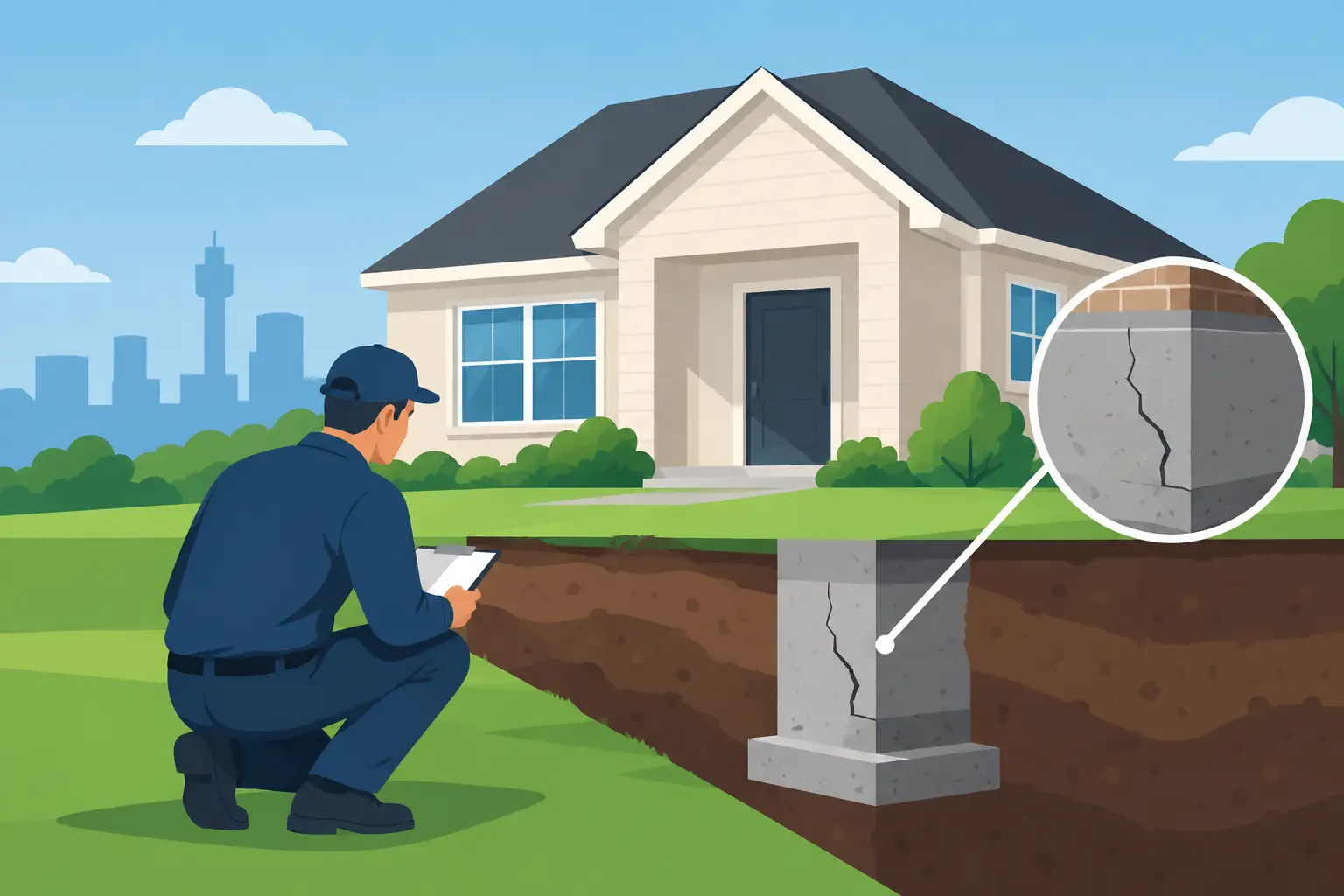
Plano Foundation Repair: When to Take Action
October 26, 2026
A crack above the living room doorway may look small, but it can be the first visible clue that your home is moving. Plano foundation repair is not about reacting to every hairline crack with alarm. It is about recognizing the difference between normal cosmetic settling and the structural movement that can worsen when North Texas soil and water conditions are left unaddressed.
For Plano homeowners, foundation concerns often begin quietly: a door that no longer latches, tile cracks that reappear after repair, or a floor that feels slightly uneven. A careful inspection and a repair plan built around the home, its foundation type, and its drainage conditions can protect the stability of the property for years to come.
Why Plano Homes Are Prone to Foundation Movement
Much of North Texas sits on expansive clay soil. This soil changes volume as its moisture level changes. During wet periods, clay absorbs water and expands. During hot, dry stretches, it loses moisture and shrinks. Those repeated shifts can place uneven pressure on a home’s foundation.
The issue is rarely just rain or drought alone. Trouble often comes from uneven moisture around the perimeter of the home. One side may stay wet because of poor grading, standing water, or a leaking plumbing line, while another side dries out because of intense sun, mature trees, or inadequate watering. When the soil does not support the foundation evenly, portions of the structure can rise, settle, or rotate.
That is why a foundation repair recommendation should never be one-size-fits-all. A slab foundation, a pier and beam foundation, and a block and base structure each behave differently. The visible symptom may be similar, but the right repair approach depends on what is moving, why it is moving, and how the home is built.
Signs You May Need Plano Foundation Repair
Not every crack signals a serious structural problem. Paint and drywall can crack with age, seasonal expansion, or normal settling. The concern rises when multiple symptoms appear, when they worsen over time, or when they occur alongside drainage problems.
Pay attention to interior and exterior changes that seem connected. Stair-step cracks in brick, cracks that run diagonally from doors or windows, separation around trim, and gaps between the wall and ceiling deserve a professional look. Indoors, sticking doors and windows, uneven floors, cracked tile, and cabinets pulling away from walls can point to foundation movement.
Exterior clues matter just as much. Water that pools beside the home after a storm, soil pulling away from the slab during dry weather, and gutters that discharge too close to the foundation all affect moisture levels. A homeowner may see a crack first, but the underlying cause may be a drainage condition that has been developing for years.
Watch for changes, not just flaws
A single crack that stays the same for years may be cosmetic. A crack that grows, returns after patching, or appears with other changes needs more attention. Taking dated photos of cracks, floor gaps, and drainage areas can help establish whether the condition is active.
It is also wise to notice where the problem is located. A sticking back door near a low spot in the yard tells a different story than a crack on the dry, tree-lined side of the house. These details help an experienced foundation professional identify patterns instead of treating only the surface damage.
What a Proper Foundation Inspection Should Address
A useful inspection does more than point out cracks. It should evaluate the structure, the foundation system, the site drainage, and the likely sources of moisture imbalance. The goal is to explain what is happening in plain language and identify whether repair is warranted now.
For a slab home, the evaluation may include elevation measurements across the floor to identify areas of differential movement. For pier and beam homes, the inspection may also consider beam condition, pier support, crawl space moisture, and ventilation. On any property, the surrounding grade, downspouts, surface runoff, trees, and nearby plumbing conditions can be part of the picture.
A trustworthy recommendation should explain the proposed repair method, the areas to be addressed, and what the work is intended to accomplish. Foundation repair is often designed to stabilize the structure and correct significant differential movement. It cannot always erase every cosmetic symptom or return an older home to perfectly level measurements. Clear expectations are part of a sound repair plan.
Repair and Drainage Often Need to Work Together
Foundation support and water management are closely connected in Plano. Installing piers may stabilize a section of a home, but unmanaged water can continue to create soil movement around the property. In some cases, drainage correction should happen before or alongside structural work.
Surface drains can help collect runoff in low areas, while French drains can move subsurface water away from the foundation. Properly extended downspouts, corrected grading, and thoughtful landscaping can also help keep water from collecting near the home. The best approach depends on the lot, the direction water naturally flows, and whether the property is dealing with excess moisture, drought-related drying, or both.
There are trade-offs to consider. A drainage system that moves water efficiently but discharges it into another problem area is not a complete solution. Likewise, aggressive watering without regard for rainfall or existing drainage can create overly wet soil near the foundation. Consistency is usually the objective: avoid extremes and keep moisture conditions around the home as balanced as practical.
Choosing a Repair Plan That Protects the Property
Foundation repair can feel overwhelming because homeowners are making a decision about one of their largest investments. The lowest estimate is not always the lowest long-term cost, especially if it does not address the actual cause of movement or leaves drainage conditions untouched.
Ask how the contractor determined the repair scope and whether the recommendation is specific to your foundation type. Understand the pier system being proposed, where supports will be installed, what access is required, and how landscaping, concrete, or utilities may be affected. You should also receive clear information about the warranty, payment options, and the expected project schedule.
Local experience matters because North Texas soil behavior is not theoretical here. A contractor who has worked through decades of wet seasons, droughts, and shifting clay conditions can bring practical perspective to the inspection. All American Foundation Repair & Drainage, LLC has served the Metroplex since 1969, pairing structural repair recommendations with drainage solutions when water management is part of the problem.
Do not wait for a small concern to become a larger repair
Foundation movement usually does not improve by itself. If doors are sticking, cracks are spreading, or water is repeatedly standing near the house, early evaluation gives you more options. Sometimes the answer is monitoring and improving drainage. Sometimes structural support is necessary. The value is in knowing which situation you are facing before secondary damage expands.
After Repair: Protecting the Work Over Time
A completed repair is a major step, but ongoing maintenance helps preserve the conditions around the home. Keep gutters clear, make sure downspouts direct water away from the foundation, and inspect the yard after heavy rain. If soil has settled near the house, restore positive grading so water flows away rather than toward the slab or crawl space.
During extended dry periods, follow a measured watering approach where appropriate for your property. The goal is not to saturate the soil. It is to reduce dramatic moisture swings, particularly around the foundation perimeter. Large trees, irrigation schedules, and existing drainage systems should all be considered before making changes.
Continue to watch for new symptoms, but avoid assuming every minor imperfection means the repair failed. Homes expand and contract with changing weather, and cosmetic materials can respond differently than structural components. If a concern appears, documenting it and asking for professional guidance is the practical next step.
A stable home begins with paying attention to the ground beneath it. When warning signs appear, a clear inspection and a repair plan tailored to Plano conditions can replace uncertainty with a path forward that protects your property and your peace of mind.