When Foundation Repair in Dallas Cannot Wait
October 22, 2026
A small crack near a window may look like a cosmetic issue. In North Texas, it can also be an early warning that the soil beneath your home is moving. Foundation repair Dallas homeowners need is rarely about one visible crack alone. It is about understanding what is causing movement, how far it has progressed, and what will protect the property over the long term.
Dallas-Fort Worth homes live with expansive clay soil, intense summer heat, heavy rain, and sudden shifts in moisture. Those conditions can make foundations move as the ground swells when wet and shrinks when dry. Acting early gives homeowners more choices, helps prevent secondary damage, and can make a repair plan more manageable.
Signs Foundation Repair in Dallas May Be Needed
Most foundation problems do not announce themselves with a single dramatic event. They tend to show up in several places at once. A door that used to close smoothly begins sticking. A crack develops above a doorway. Tile separates, floors feel uneven, or windows become difficult to open.
One isolated symptom does not automatically mean the foundation needs repair. Homes settle, materials expand and contract, and minor drywall cracks can occur for many reasons. The concern rises when symptoms are new, worsening, or appearing together on more than one part of the property.
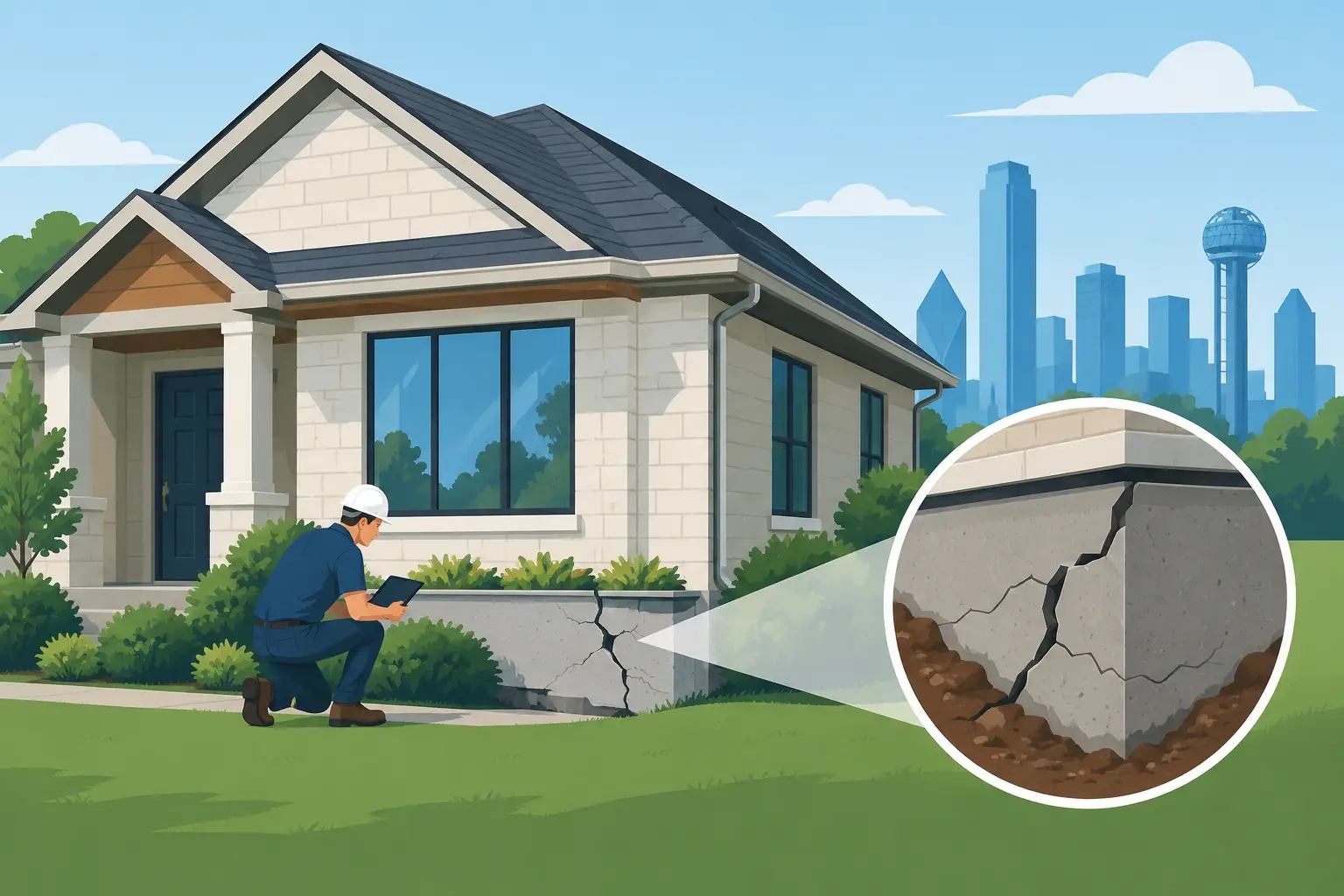
Pay close attention to stair-step cracks in brick or masonry, cracks that extend from corners of doors and windows, gaps between trim and walls, and separation around exterior openings. Inside, sloping floors, cracked sheetrock, and cabinets pulling away from walls can point to structural movement. Outside, standing water near the foundation, soil pulling away from the slab, or gutters discharging too close to the house can reveal the moisture conditions driving the issue.
Commercial property owners should take the same warning signs seriously. Uneven floors, cracked masonry, and drainage failures can affect tenant comfort, safety, maintenance costs, and property value. A timely inspection provides a clearer picture before a small concern disrupts operations.
Why Dallas Foundations Move
The foundation is only as stable as the soil supporting it. Much of the Dallas-Fort Worth area has clay-rich soil that changes volume with moisture. During wet periods, clay absorbs water and expands. During dry weather, it loses moisture and contracts. That repeated cycle can create uneven support beneath a slab or pier and beam home.
Water is often the deciding factor. Poor grading, short downspouts, leaking plumbing, clogged gutters, and low areas around a home can concentrate water in the wrong places. On the other hand, prolonged drought can leave soil dry and shrunken near the foundation perimeter. The goal is not to keep every inch of soil equally wet at all times. It is to manage drainage and maintain more consistent moisture conditions around the structure.
That is why a repair recommendation should not stop at installing piers. If drainage is contributing to movement, the long-term plan may also need surface drains, French drains, gutter adjustments, or grading improvements. Ignoring the water issue can leave the home vulnerable to future movement, even after structural work is complete.
The Right Repair Depends on the Home
There is no responsible one-size-fits-all answer to foundation repair. The best method depends on the foundation type, the direction and severity of movement, soil conditions, drainage patterns, and the home’s construction.
For many slab foundations, concrete piers can be installed beneath affected areas to transfer support to more stable soil. This process may include carefully lifting portions of the structure when appropriate. The objective is not to promise that every cosmetic crack will disappear. It is to stabilize the foundation and address the conditions causing the movement.
Pier and beam homes require a different approach. These structures may need adjustments to beams, joists, or interior supports, along with attention to crawl space moisture and drainage. Block and base foundations also have their own repair considerations. A qualified inspection should identify where support is needed and whether related issues, such as deteriorated wood or standing water, need to be addressed at the same time.
There are trade-offs. A smaller repair may cost less upfront, but it may not address the full affected area. A broader stabilization plan can be a larger investment, yet may better protect the structure over time. The right choice comes from clear findings, an honest explanation of options, and a plan matched to the property rather than a sales pitch built around a standard package.
What a Thorough Inspection Should Cover
A foundation inspection should look beyond the most noticeable crack. An experienced contractor evaluates interior and exterior symptoms, floor elevation changes, the condition of brick and trim, drainage pathways, and the terrain surrounding the property. The inspection should also consider whether a plumbing leak or another source of water may be involved.
Homeowners deserve straightforward answers. What evidence supports the recommendation? Which areas need repair now? Is drainage part of the problem? What results are realistic after the work is complete? A clear written estimate helps a property owner compare options without guessing what is included.
At All American Foundation Repair & Drainage, LLC, that local perspective comes from more than 57 years of working with North Texas homes and moisture conditions. A family-owned contractor should treat a foundation concern as a long-term property protection decision, not a rushed transaction.
What to Do While You Wait for an Estimate
If you are seeing signs of movement, avoid making cosmetic repairs first. Patching drywall or repainting cracks before the cause is evaluated can hide useful evidence and lead to repeat work later. Take dated photos of cracks, gaps, and areas where water collects after rain. Note when doors began sticking or when floor changes became noticeable.
You can also reduce obvious water problems around the home. Keep gutters clear, make sure downspouts direct water away from the foundation, and avoid allowing irrigation to repeatedly saturate one side of the house. Do not make major grading changes or attempt structural adjustments without professional guidance. Improper drainage changes can move water toward another vulnerable area.
If a leak is suspected, address it promptly. A plumbing issue beneath or near a foundation can create ongoing soil movement and should be part of the investigation. In some cases, homeowners may need coordination between a plumber and foundation specialist to get a complete answer.
Questions to Ask Before Choosing a Contractor
The contractor you choose matters as much as the repair method. Ask whether the company has experience with your foundation type and local soil conditions. Find out how the scope of work is determined, whether drainage is assessed, and what warranty applies to the proposed repair.
It is also reasonable to ask about the repair process itself. Will access be needed inside the home? How are landscaping and utilities handled? Is lifting expected, and what cosmetic changes may remain afterward? A dependable contractor will explain that foundation repair can stabilize a structure but may not reverse every effect of past movement. Existing cracks, brick separation, and finish damage sometimes need separate cosmetic repair after the foundation work is complete.
Cost is a real concern for most property owners. Financing options can help make necessary work more practical, but the decision should still be based on scope and quality, not the lowest number alone. A limited lifetime warranty and a clear explanation of what it covers can provide meaningful confidence when comparing estimates.
A home is one of the largest investments most families will make. When cracks, sticking doors, uneven floors, or drainage problems begin to create concern, a professional inspection can replace uncertainty with a practical path forward. The earlier you understand what your foundation is telling you, the better prepared you are to protect the home you have worked hard to build.