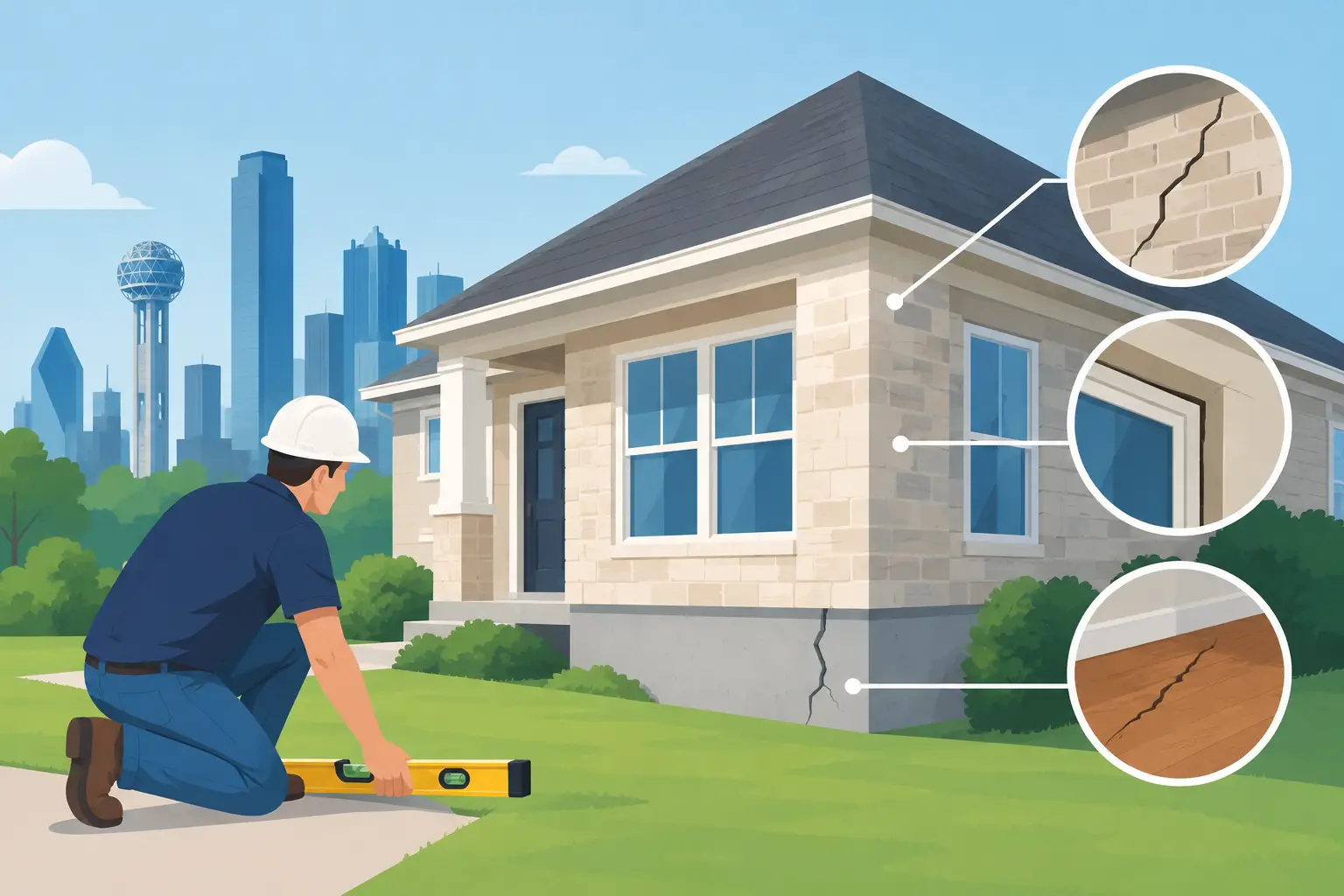
Dallas House Leveling Signs You Should Not Ignore
October 30, 2026
A door that suddenly will not latch, a new stair-step crack in brick, or a floor that feels noticeably off underfoot can make any homeowner uneasy. In North Texas, these are often signs that dallas house leveling may be needed. The earlier the cause of movement is identified, the more options you usually have for protecting your home and avoiding additional damage.
Dallas-Fort Worth homes sit on expansive clay soil. That soil swells when it absorbs water and shrinks during dry periods. Over time, repeated moisture changes can cause parts of a foundation to rise, settle, or move unevenly. House leveling addresses that movement by restoring support where the foundation needs it most, using a repair plan based on the home, the soil conditions, and the source of the problem.
What House Leveling Means for a Dallas Home
House leveling is often used as a general term for foundation repair. It can involve lifting settled areas of a slab foundation, adding support beneath a pier and beam home, or correcting movement in a block and base structure. The right approach depends on how the home was built and what the inspection reveals.
One point deserves a clear explanation: a successful repair does not always mean every floor or wall becomes perfectly level again. Older homes may have framing changes, finish damage, or long-standing movement that cannot be reversed without unnecessary disruption. The goal is to stabilize the structure, provide lasting support, and restore as much function and alignment as practical.
That distinction matters. A contractor who promises to make every house perfectly level before inspecting it is not giving you a realistic picture. A dependable repair recommendation explains what is moving, why it is moving, what can be corrected, and what the expected result will be.
Signs You May Need Dallas House Leveling
Foundation movement rarely announces itself with one dramatic event. More often, homeowners see a pattern of changes that becomes harder to ignore. A single hairline crack may be normal settling, especially near drywall seams. Multiple changes occurring together deserve professional attention.
Watch for interior and exterior signs such as cracks in drywall, brick, tile, or mortar; doors and windows that stick or no longer close properly; gaps around trim or cabinets; sloping or uneven floors; and separation where walls meet ceilings. Outside, you may notice cracks in the foundation itself, a chimney pulling away from the home, or soil that slopes toward the foundation after rain.
The timing of these symptoms can offer clues. If doors bind during a dry summer and improve after steady rain, shrinking soil may be contributing to movement. If a problem gets worse after storms, poor drainage or standing water may be placing uneven pressure around the foundation. Either way, the symptoms should be evaluated in the context of the property, not treated as a cosmetic issue alone.
Why North Texas Soil Creates Ongoing Risk
The clay-heavy soil common throughout the Metroplex is highly reactive to moisture. When one side of the home stays wet because of poor grading, leaking plumbing, overflowing gutters, or a low spot in the yard, that side may heave upward. When soil becomes too dry and pulls away from the foundation, a section of the home may settle.
Trees can add another variable. Mature roots do not automatically mean a foundation problem, but large trees near a home can draw substantial moisture from the soil during hot, dry weather. The issue is usually not one factor by itself. It is the uneven moisture conditions around the foundation over months or years.
Why Drainage and Foundation Repair Belong Together
Leveling a foundation without addressing the water conditions that contributed to the movement can leave a homeowner with an incomplete solution. If roof runoff continues to collect beside the house, or the yard continues to direct water toward the foundation, the soil can keep expanding and contracting after the repair.
A complete evaluation should look beyond cracks and elevations. It should consider gutter discharge, roof drainage, grading, surface runoff, low areas in the yard, plumbing concerns, and signs of water pooling near the structure. In some cases, a drainage correction such as a French drain or surface drain is recommended alongside foundation work. In other cases, improving grading and extending downspouts may be enough.
There is no one-size-fits-all drainage fix. A French drain can be useful when groundwater or persistent subsurface moisture is the concern, while a surface drain is designed to collect water moving across the yard. The correct choice depends on where the water originates and where it can be safely directed.
How a Professional Leveling Inspection Works
A proper inspection begins with listening. Homeowners often know when they first noticed the problem, which rooms have changed, and whether symptoms appear during certain weather conditions. That history helps connect visible damage to possible causes.
The inspector should then review both the interior and exterior of the home. This can include checking floor elevations, examining cracks and door operation, looking at foundation exposure, reviewing drainage patterns, and noting nearby landscaping or moisture concerns. For pier and beam homes, the crawl space and supporting piers may also need close inspection.
Afterward, you should receive a clear explanation of the findings and recommended options. Not every crack requires foundation repair. Sometimes monitoring, drainage work, or minor adjustments are the appropriate next steps. When structural support is needed, the plan should identify the repair method, the areas to be supported, and the factors that affect the scope of work.
Repair Options Depend on the Foundation Type
Slab foundations are commonly repaired by installing concrete or steel piers at targeted locations around the perimeter or beneath interior load-bearing areas. These piers transfer the home’s weight to more stable bearing material below the active soil zone. The foundation can then be lifted carefully where appropriate.
Pier and beam homes require a different approach. Repairs may involve leveling the structure, adding or repairing support piers, replacing deteriorated beams or joists, and addressing crawl-space moisture. Because the framing beneath a pier and beam home is accessible, the repair plan must account for both the foundation support system and the condition of the wood structure.
Block and base homes also need a tailored evaluation. Their support systems, age, and construction details vary widely. The right repair protects the home without applying a generic solution that does not match the way it was built.
What Affects the Cost and Timeline
Foundation repair costs vary because homes and causes vary. The number and placement of piers, accessibility around the home, foundation type, repair depth, drainage needs, and the amount of lifting required can all affect the price. Cosmetic repairs, such as drywall and paint work, may also be needed after structural repairs are complete.
Homeowners should be cautious about choosing solely on the lowest estimate. A lower price may reflect a smaller scope, fewer support points, or no plan for the drainage issue that helped create the movement. The best value is a repair plan that is appropriate for the home and supported by workmanship accountability.
Ask direct questions before approving work: What is causing the movement? What repair method is being recommended and why? Is drainage part of the solution? What warranty applies? A contractor should be comfortable answering each question in plain language.
For more than 57 years, All American Foundation Repair & Drainage has helped North Texas property owners understand those answers before moving forward. Free estimates, next-business-day responses, financing options, and a limited lifetime warranty can make a serious home concern more manageable without minimizing its importance.
Do Not Wait for Small Signs to Become Major Damage
Foundation movement tends to be less stressful and less disruptive when it is addressed early. Waiting can allow cracks to widen, doors to become harder to operate, drainage issues to worsen, and repairs to extend into finishes, plumbing connections, or masonry.
If you are seeing changes in your home, take photos, note when they appeared, and pay attention to how water moves around the property after rain. Then arrange for a professional assessment that considers the entire situation, from the soil below your foundation to the drainage above it. A clear diagnosis is the first practical step toward protecting the home you have worked hard to build and keep.