Does Rain Affect Foundations in North Texas?
November 4, 2026
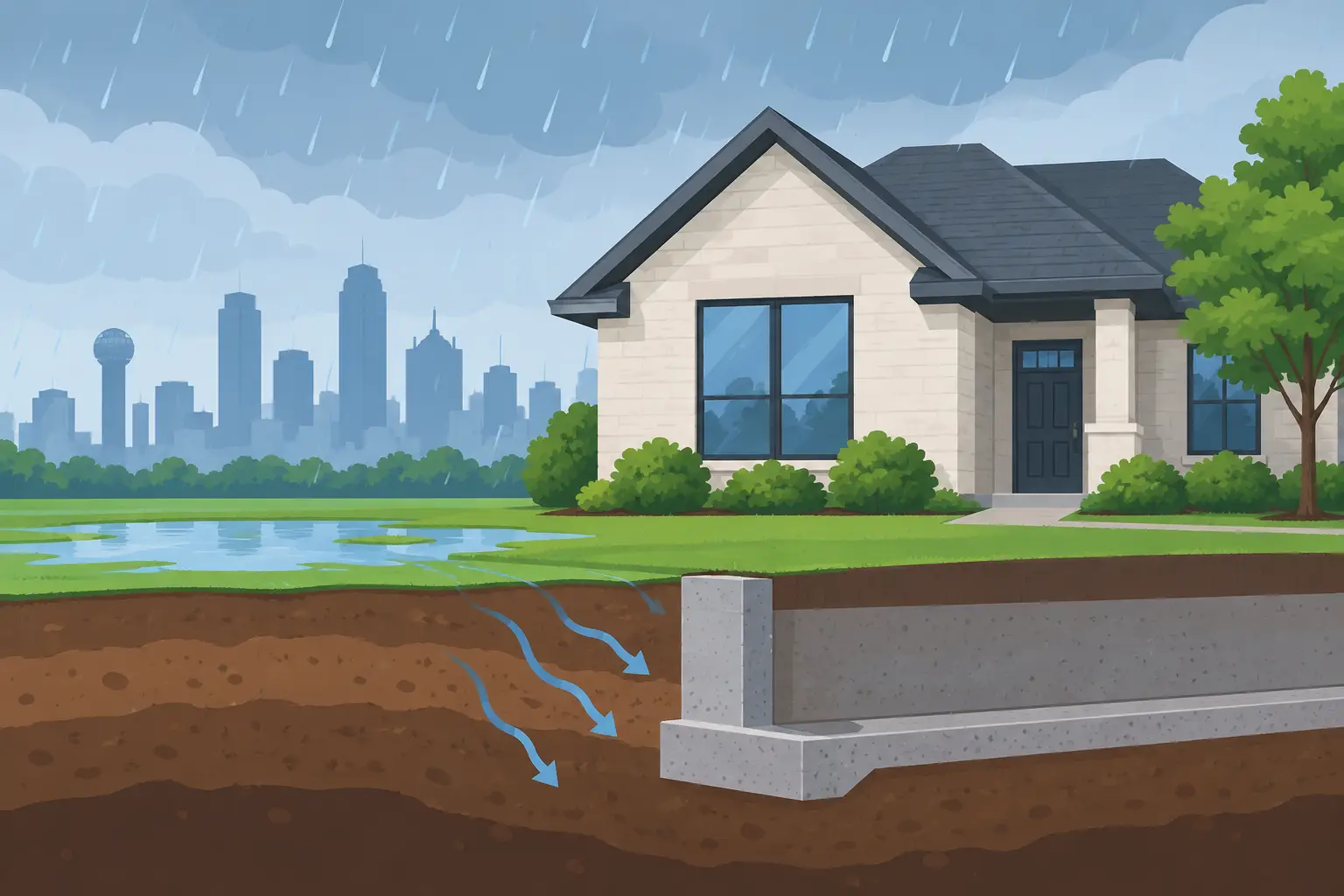
A heavy North Texas storm can turn a dry yard into standing water in a matter of minutes. That raises a reasonable concern for property owners: does rain affect foundations? Yes, it can. Rain itself does not usually damage concrete on contact, but the way rainwater changes the soil around and beneath a home can lead to foundation movement, drainage problems, and expensive repairs when left unaddressed.
In Dallas-Fort Worth, the answer is closely tied to our expansive clay soils. These soils swell when they absorb water and shrink as they dry. When moisture levels around a foundation are uneven or change rapidly, the soil can push on some areas of the structure while leaving other areas less supported. That movement is where trouble begins.
How Rain Affects Foundations
A foundation depends on the soil beneath it for support. After prolonged rainfall, clay-rich soil absorbs moisture and expands. This can place upward pressure on portions of a slab foundation, a condition often called heave. Water can also collect near the home and soften the supporting soil, especially where drainage is poor.
The greater concern is rarely one normal rainfall. Foundation issues are more likely when a property experiences repeated saturation, water pooling next to the house, a leaking gutter system, or the familiar cycle of drought followed by sudden heavy rain. North Texas homes can see all of these conditions within the same year.
Pier and beam homes have their own water-related risks. Excess moisture in a crawl space can contribute to wood deterioration, high humidity, mold concerns, and shifting support conditions. On slab foundations, uneven soil expansion and contraction can cause sections of the slab to move at different rates.
Concrete is strong, but it is not designed to bridge major changes in soil support indefinitely. The goal is not to keep every drop of rain away from your property. The goal is to manage water so moisture conditions remain as consistent as possible around the foundation.
Why North Texas Soil Makes Rain a Bigger Concern
The Dallas-Fort Worth area is known for soils with a high clay content. During dry weather, this soil can pull away from the perimeter of a home as it shrinks. When rain returns, those dry areas may absorb water quickly and swell. The resulting movement can be uneven from one side of the house to the other.
That is why a home may develop symptoms after a wet period even though the underlying issue started during a dry spell. It is also why watering practices and drainage both matter. A foundation can be affected by too little water, too much water, or water concentrated in the wrong location.
Lot grade plays a major role as well. If the yard slopes toward the house, rainwater may repeatedly collect against the foundation. Short downspouts that discharge beside the home can create the same problem. In some cases, a neighboring property, retaining wall, patio, or landscape feature changes the natural water flow and sends runoff toward the structure.
Signs Rain May Be Affecting Your Foundation
Not every crack means a foundation failure, and not every sticking door requires structural repair. Homes naturally settle over time, and minor cosmetic cracks can occur for several reasons. What deserves attention is a pattern of changes, particularly after periods of heavy rain or repeated moisture problems.
Watch for cracks that widen, lengthen, or reappear after repair. Interior wall cracks near doors and windows, exterior brick cracks, gaps at trim, and separations around garage doors can all indicate movement. Doors or windows that suddenly stick, uneven or sloping floors, and tile cracks are also worth evaluating.
Outside, look for standing water near the foundation several hours after rainfall has stopped. Eroded areas, overflowing gutters, soil washed away from the perimeter, and downspouts dumping water beside the home are clear drainage concerns. With pier and beam homes, musty odors, damp insulation, or visible moisture in the crawl space should not be ignored.
One sign alone may not tell the full story. A professional inspection considers the entire property: foundation elevations, crack patterns, drainage paths, soil conditions, and the age and construction type of the home.
Can Heavy Rain Cause Foundation Cracks?
Heavy rain can contribute to cracks, but it is usually part of a larger moisture-management issue rather than the sole cause. If soil becomes saturated unevenly, it can expand under one part of the foundation more than another. That differential movement can stress walls, masonry, flooring, and the slab itself.
Cracks are also more likely to become noticeable after rain because water can enter existing openings or make soil movement more pronounced. Still, repair should never be based on a crack alone. Sealing a visible crack without addressing poor drainage or structural movement may only hide the symptom.
The practical question is not simply whether a storm caused damage. It is whether water is repeatedly changing the support conditions around your home. That is the condition that calls for a long-term plan.
Protecting Your Foundation From Rainwater
Good drainage is one of the most effective ways to reduce rain-related foundation risk. Start by observing your property during and after a storm. You want rainwater to move away from the home, not collect at the perimeter.
Keep gutters clear so they do not overflow beside the foundation. Downspouts should direct water well away from the house, and the soil around the structure should slope away where practical. Avoid building up mulch, soil, or landscaping materials so high that they trap moisture against siding or brick.
For homes with persistent runoff, a drainage system may be the right solution. Surface drains can collect water from low spots and hardscape areas. French drains can help manage subsurface water in certain conditions. The right system depends on the grade of the lot, soil behavior, existing drainage routes, and where water is entering or collecting.
During extended dry periods, consistent foundation watering may also be recommended for some North Texas properties. The key word is consistent. Alternating between bone-dry soil and oversaturated soil can make expansion and contraction more severe. A soaker hose used carefully around the foundation perimeter is often more useful than occasional heavy watering, but the correct approach depends on the property and should not create pooling.
When to Request a Foundation and Drainage Evaluation
If you see recurring cracks, floor changes, sticking doors, or water that regularly stands near your home, it is wise to have the situation evaluated before it becomes more disruptive. Waiting can allow drainage problems to continue affecting the soil, and structural symptoms may become more extensive over time.
A thorough evaluation should explain what is happening, whether repairs are necessary now, and whether drainage correction should be handled first or alongside foundation work. Sometimes the right answer is monitoring and water management. Other times, the home needs leveling, concrete piers, crawl space support work, or a tailored drainage solution.
At All American Foundation Repair & Drainage, LLC, our experience with North Texas soil conditions helps homeowners separate normal concerns from issues that need a clear repair plan. A free estimate can provide practical answers, including the expected scope of work, financing options, and warranty coverage when repairs are recommended.
Rain is part of life in North Texas, but repeated water problems around your home do not have to become part of its foundation story. Pay attention after the next hard storm, correct water flow concerns early, and seek an experienced opinion when the signs point to movement.