How to Stabilize Sinking Floors Before Damage Spreads
November 2, 2026
A floor that slopes toward one wall, feels soft underfoot, or has suddenly dropped near a doorway is more than an inconvenience. It can be an early warning that the structure beneath your home is moving. Knowing how to stabilize sinking floors starts with identifying whether the problem is in the foundation, the floor framing, or the soil and water conditions supporting the home.
In Dallas-Fort Worth, that distinction matters. North Texas clay soils expand when wet and shrink during dry periods. Repeated moisture changes can place uneven pressure on a foundation, while poor drainage can keep water concentrated where it does the most harm. A lasting repair addresses the cause of movement, not just the floor’s appearance.
Recognize the Signs of a Sinking Floor
A sinking floor may develop gradually, so homeowners often adapt to it before realizing how much the home has changed. You may notice that furniture no longer sits level, a ball rolls toward one side of a room, or gaps have appeared between flooring and baseboards. Doors that once closed easily may rub, stick, or swing open on their own.
Other warning signs can include cracks in interior drywall, separation at trim, cracked tile, uneven countertops, or exterior brick cracks around windows and doors. One sign alone does not always mean foundation failure. Several changes appearing in the same area, especially after heavy rain or extended drought, deserve a professional evaluation.
The location of the low spot also provides useful clues. A dip near the center of a slab home can point to soil movement or a plumbing leak below the foundation. A sagging area in a pier and beam home may be related to weakened joists, deteriorated beams, settling support piers, or excessive moisture in the crawl space. The repair plan should follow the actual cause.
Why Floors Sink in North Texas Homes
Foundation movement is often tied to moisture. When water collects near the home, expansive clay soil can swell and lift portions of the structure. During dry weather, the same soil can contract and leave areas of the foundation without consistent support. That cycle can create uneven settlement, cracks, and sloping floors over time.
Drainage problems are a frequent contributor. Gutters that discharge too close to the house, low yard grading, clogged drains, and standing water can all saturate the soil around the foundation. On the other hand, long dry spells without controlled moisture management can allow soil to shrink significantly.
Not every sinking floor is a foundation problem. In pier and beam construction, damaged wood framing, inadequate supports, termite activity, or long-term crawl space moisture can allow the floor system itself to sag. A qualified inspection should examine the home from the foundation to the framing before recommending repairs.
What Not to Do When a Floor Starts Sinking
It is tempting to cover a low spot with new flooring, add shims beneath furniture, or patch drywall cracks and hope the issue is finished. Those steps may improve the appearance temporarily, but they do not stabilize the structure. Installing new tile or hardwood before correcting active movement can also lead to expensive damage later.
Avoid making drainage changes that simply push water toward another vulnerable area. For example, extending a downspout away from the house is helpful, but it should direct water to a safe drainage path rather than toward a neighbor’s property or back toward the foundation during a storm.
Do not rely on a single crack or a quick visual check to determine the repair needed. Foundation and floor issues can be connected to conditions below grade that are not visible from inside the home. Accurate measurements, structural observations, and a review of drainage patterns help prevent guesswork.
How to Stabilize Sinking Floors for the Long Term
The right method depends on the home’s construction and why the floor is moving. A responsible repair plan often combines structural support with drainage correction so the home is protected after leveling work is complete.
Stabilizing a Slab Foundation
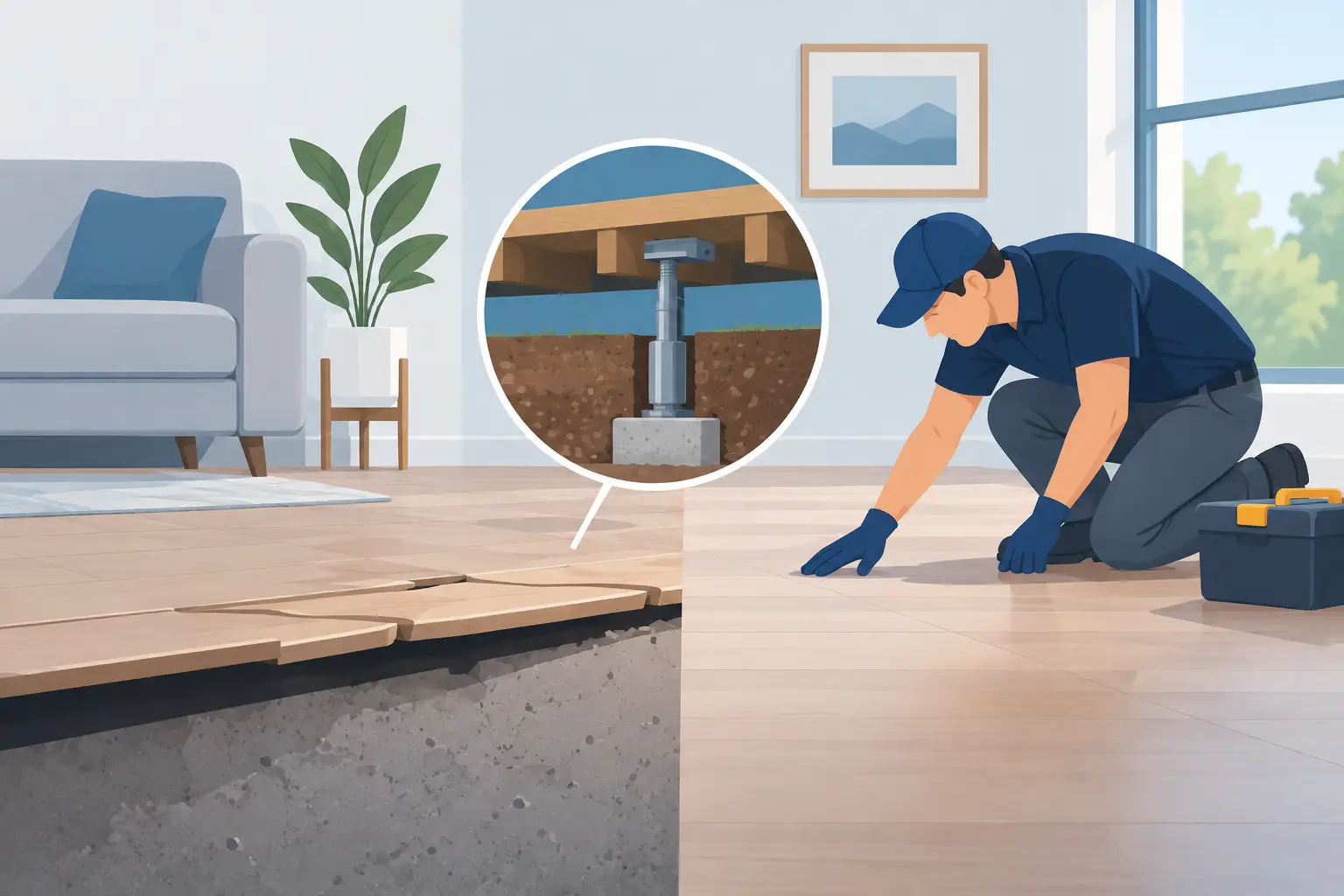
For slab homes, settling sections of the foundation may need additional support from engineered concrete piers. Piers are installed beneath the foundation at carefully selected locations and driven or drilled to stable bearing material, depending on site conditions. They can help support the home and, when appropriate, allow controlled lifting toward a more level position.
Leveling is not always about forcing every surface back to perfect. Older homes may have settled for years, and aggressive lifting can place stress on brittle finishes, plumbing, or framing. The goal is safe, practical stabilization with a repair approach that respects the condition of the structure.
If a plumbing leak is suspected beneath a slab, that issue should be investigated and corrected as part of the overall plan. Without addressing the source of excess moisture, foundation movement can continue even after structural repairs are made.
Stabilizing Pier and Beam Floors
Pier and beam homes offer access beneath the floor, which allows a contractor to inspect beams, joists, piers, and crawl space conditions directly. Repairs may involve adding or rebuilding support piers, replacing deteriorated beams or joists, installing shims where appropriate, and re-leveling sections of the floor system.
Crawl space moisture must be taken seriously. Standing water, plumbing leaks, inadequate ventilation, or poor exterior drainage can contribute to wood deterioration and unstable soils beneath interior piers. Structural repairs will last longer when the crawl space is kept dry and water is carried away from the home.
Correcting Drainage Around the Property
Drainage correction is often the protection that keeps a foundation repair working as intended. Surface drains can collect water from low areas in a yard, while French drains help manage water moving through saturated soil. Proper grading, gutter maintenance, and downspout extensions also reduce the amount of water that reaches the foundation perimeter.
The best drainage solution depends on the lot, roof runoff, soil conditions, and available discharge areas. A system that works well on a flat lot may not be the right answer for a sloped property or a home with heavy roof runoff concentrated on one side.
What a Professional Inspection Should Include
A thorough inspection should do more than identify visible cracks. It should include floor elevation measurements, a review of interior and exterior damage, an assessment of drainage patterns, and an evaluation of the foundation type. For pier and beam homes, the crawl space framing and support system should also be inspected.
You should receive a clear explanation of what is causing the movement, which areas need repair, and what work is recommended now versus what can be monitored. Ask how the proposed repair addresses future soil movement and water management, not simply how it raises the floor.
For homeowners concerned about cost, it helps to remember that repair scope varies widely. A localized framing repair is different from stabilizing multiple areas of a settling slab. A clear estimate, financing options when needed, and a meaningful warranty can make a difficult decision more manageable.
Protect Your Floors After Repairs
After stabilization, keep water management on your regular home-maintenance schedule. Clean gutters, inspect downspouts after storms, and watch for water pooling near the foundation. Repair plumbing leaks promptly, especially leaks under sinks, around water heaters, or in irrigation lines close to the house.
During extended dry weather, follow professional guidance on maintaining more consistent soil moisture around the foundation. The goal is not to soak the ground. It is to reduce extreme swings between overly dry and overly saturated soil.
A sinking floor does not automatically mean your home is beyond repair. It does mean the structure is asking for attention. A careful inspection and a repair plan built around local soil, drainage, and construction conditions can protect the home you have worked hard to maintain.