Why Drainage Matters for Foundations
June 25, 2026
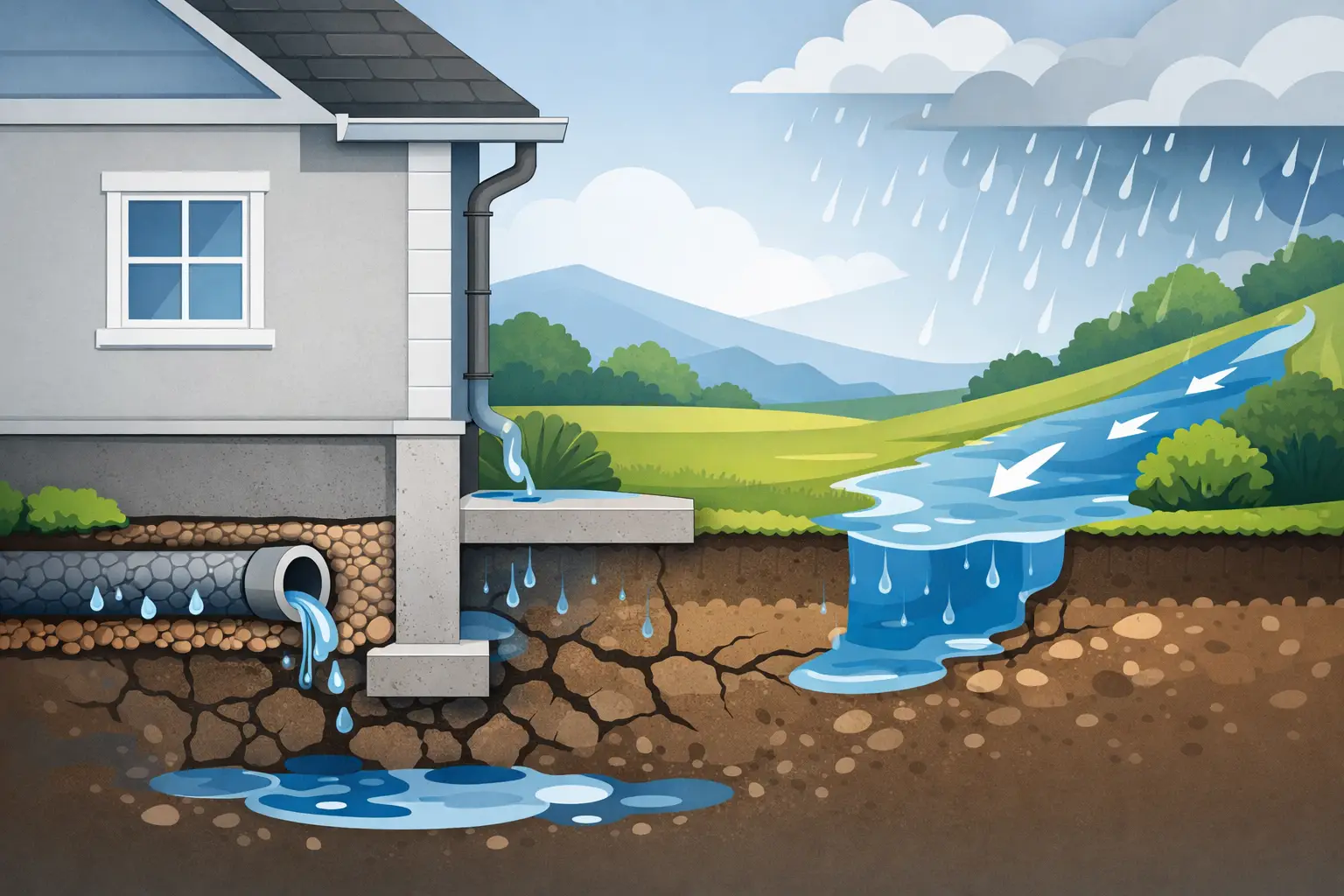
A foundation problem rarely starts with concrete alone. In North Texas, it often starts with water – where it collects, how long it sits, and whether it drains away from the home the way it should. That is why drainage matters for foundations more than many property owners realize. When water is allowed to pool near the slab or soak the soil around pier and beam supports, the ground beneath the structure can shift, swell, or wash out, and the building starts reacting to that movement.
For homeowners in Duncanville and across the Dallas-Fort Worth area, this is not a small maintenance issue. It is one of the main reasons cracks show up in walls, doors stop latching correctly, and floors begin to feel uneven. Good drainage is not an add-on. It is part of protecting the structure itself.
Why drainage matters for foundations in North Texas
North Texas soil has a reputation for a reason. Much of this region sits on expansive clay, which means the soil changes size as moisture levels rise and fall. When that clay gets saturated, it expands. When it dries out, it shrinks. Those repeated cycles put stress on foundations over time.
If moisture around a home stays reasonably balanced, the foundation has a better chance of remaining stable. But when one area around the house gets too much water and another area stays dry, the slab or support system can move unevenly. That is where trouble begins. One side may lift while another settles, and even a small amount of movement can show up inside the home.
This is why drainage matters for foundations even when there is no standing water inside the house. The damage often starts below the surface, long before a property owner realizes what is happening.
What poor drainage does to a foundation
Water affects foundations in more than one way. In some cases, too much moisture causes the soil to expand and push upward against the slab. In other cases, runoff can erode supporting soil and leave sections of the foundation with less bearing support. Pier and beam homes can face moisture buildup in crawl spaces, wood deterioration, or shifting support conditions if drainage is neglected.
The exact pattern depends on the property, the type of foundation, grading, gutter performance, and recent weather. But the result is often the same: structural movement.
Soil expansion and contraction
This is one of the most common issues in the Dallas-Fort Worth area. Expansive clay absorbs water quickly, and when the moisture content changes unevenly around a home, the soil does not move uniformly. Foundations are strong, but they are not designed to ignore ground movement forever.
Erosion and washout
Fast-moving roof runoff or surface water can wash away soil near the foundation perimeter. That creates voids or weak spots beneath slabs, walkways, and adjacent structures. In a heavy rain, a drainage issue can go from minor to serious quickly.
Hydrostatic pressure
When water builds up around below-grade walls or structural components, pressure increases. Over time, that pressure can contribute to cracking, leaks, and moisture intrusion. This is more common in certain layouts and elevations, but it is a real concern when drainage is poor.
Signs your drainage may be affecting the foundation
Many property owners notice the symptoms before they understand the cause. A crack above a doorway may seem cosmetic at first. A sticking back door might feel like normal settling. But when several issues appear together, drainage should be part of the conversation.
Common warning signs include cracks in interior walls, brick cracks on the exterior, gaps around windows, doors that drag or will not close properly, sloping floors, and water pooling near the home after rain. You may also see mulch washed away, exposed roots, soggy flower beds against the house, or downspouts dumping water too close to the foundation.
Not every crack means major structural failure. Houses move some over time, and not every drainage problem leads to foundation repair. But waiting too long usually makes the fix more expensive, not less.
The drainage problems we see most often
In this area, drainage trouble usually comes from a handful of recurring issues. Sometimes the yard slopes toward the house instead of away from it. Sometimes gutters overflow or downspouts discharge right next to the slab. Other times, low spots in the landscape trap water near one corner of the property.
French drains and surface drains can help, but only if they are designed for the site and installed correctly. A drain that is too shallow, poorly located, or tied into an ineffective outfall may not solve much. The goal is not simply to move water. The goal is to move it away from the structure in a controlled, lasting way.
That is where experience matters. A drainage plan should account for roof runoff, soil behavior, elevation changes, hardscape layout, and how water moves across the whole property. There is no one-size-fits-all answer.
Why foundation repair without drainage correction can fall short
This is the part many contractors do not explain clearly enough. If a foundation has already moved and the water issue that contributed to that movement is still active, repairing the structure alone may not fully protect the property long term.
Foundation repair can stabilize affected sections of the home, but drainage correction helps address the conditions that caused or worsened the problem in the first place. In many cases, the two should be evaluated together. Ignoring the drainage side of the equation can leave the property vulnerable to continued stress.
That does not mean every home needs a full drainage overhaul. Sometimes a few practical improvements make a meaningful difference. It depends on what the inspection shows, how the water is behaving, and how advanced the structural movement is.
Drainage solutions that help protect foundations
The right solution depends on the property. Surface drains can capture water in low areas before it gathers against the structure. French drains can redirect subsurface water and reduce saturation near the foundation. Downspout extensions can carry roof runoff farther away from the house. Grading corrections can improve the natural slope of the yard so water drains away instead of back toward the slab.
In some cases, the answer is straightforward. In others, several smaller corrections work better than one major change. That is especially true on older properties where landscaping, patios, additions, or previous repair attempts have altered water flow over the years.
A good contractor will explain the trade-offs. For example, adding drainage may solve ponding, but if the discharge point is poorly chosen, it can create a problem elsewhere on the lot. Regrading may improve runoff, but it needs to work with existing concrete elevations and property lines. Proper drainage design is practical work, not guesswork.
Why local experience matters
North Texas weather can be hard on foundations. Long dry stretches are often followed by sudden heavy rains. That pattern puts expansive soils through repeated stress. A contractor who understands local soil conditions, seasonal moisture changes, and common drainage failures in this region is better equipped to recommend a durable solution.
That local knowledge also helps distinguish between a drainage issue, a structural issue, and a combination of both. The right recommendation should not be based on a sales script. It should be based on what the home is actually doing.
For that reason, many property owners work with companies such as All American Foundation Repair & Drainage, LLC that have spent decades dealing with the specific moisture and soil challenges found across the Dallas-Fort Worth Metroplex.
When to have your property inspected
If water stands near your home for more than a day or two after rain, if you have seen new cracks forming, or if parts of the house feel out of level, it is time to have the property evaluated. The same goes for crawl space moisture, recurring drainage trouble in the yard, or visible separation around doors, windows, and trim.
An inspection does not always lead to major work. Sometimes it confirms the issue is minor and manageable. Sometimes it catches a developing problem before repair costs climb. Either way, getting clear answers early gives you more options.
Protecting a foundation is really about managing what happens around it every day – especially water. When drainage is handled correctly, the structure has a better chance to stay where it belongs, and that peace of mind is worth taking seriously before the next storm tests your property again.