Can Poor Drainage Damage Foundation? Yes, Here’s How
July 16, 2026
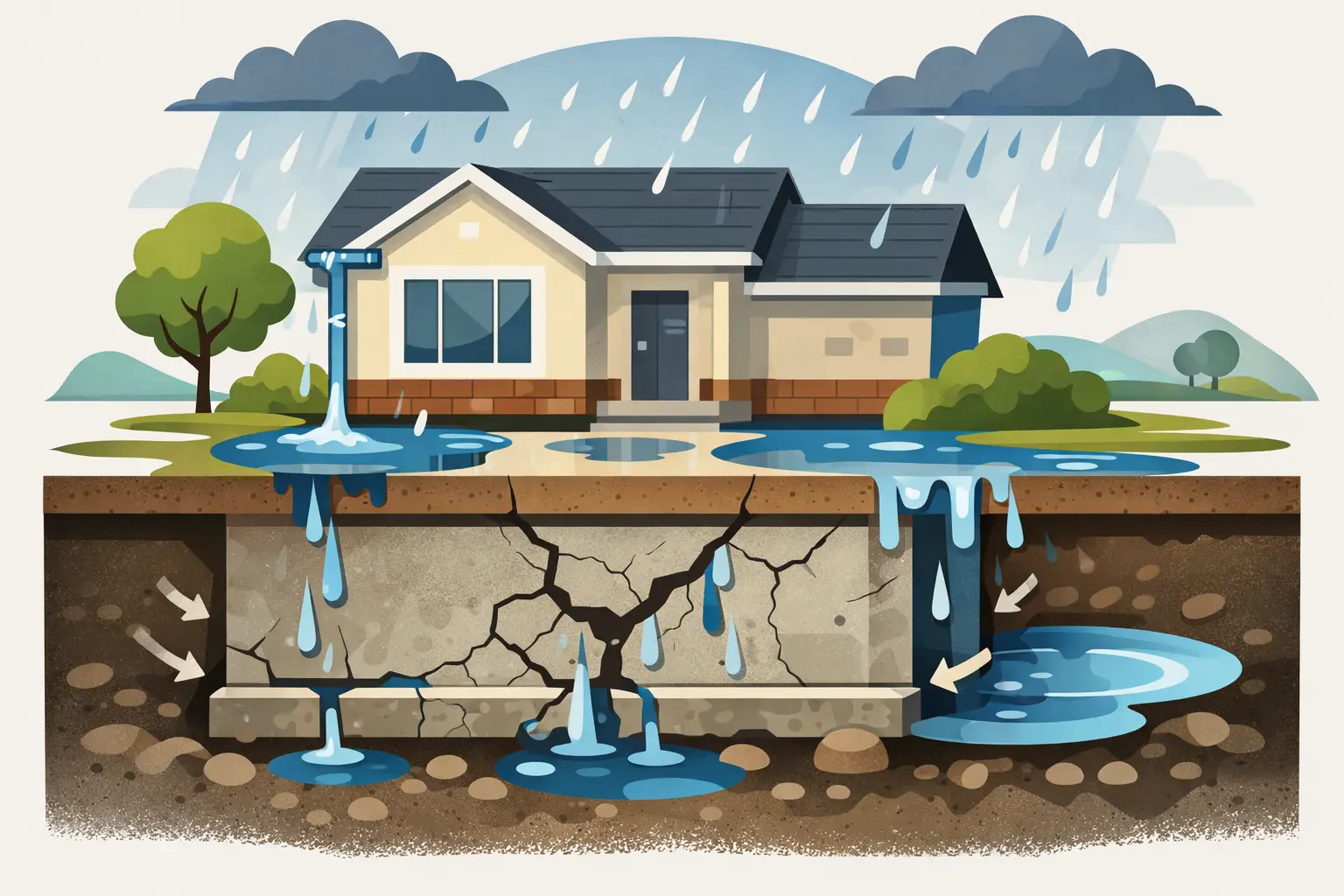
A hard rain should leave water moving away from your home, not pooling beside it for hours or days. If water routinely collects near the perimeter, can poor drainage damage foundation systems? Yes. In North Texas, where expansive clay soils swell when wet and shrink as they dry, unmanaged water can create the uneven soil movement that leads to costly structural concerns.
The issue is not simply that water touches concrete. A foundation is supported by the soil beneath and around it. When moisture levels change dramatically from one side of the home to another, that soil can push upward, pull away, or lose its ability to support the structure evenly. Over time, small drainage problems can become visible cracks, sloping floors, sticking doors, and foundation movement.
How Poor Drainage Damages a Foundation
Most foundation damage tied to drainage happens gradually. Roof runoff, overflowing gutters, improperly graded landscaping, short downspouts, and standing water can saturate the soil along the foundation edge. Clay-rich soil absorbs that water and expands. When the soil dries out later, it contracts.
That repeated cycle places changing pressure on the foundation. One section of a slab may be lifted by wet soil while another section settles as soil dries and pulls away. On pier and beam homes, excess moisture can soften soils below piers, encourage wood deterioration in the crawl space, and create conditions that affect floor support. Block and base foundations can also shift when drainage is not controlled.
A single storm rarely causes a sound foundation to fail. The concern is repeated exposure and uneven moisture over months or years. That is why a drainage correction can be one of the most valuable ways to protect a home before structural movement becomes more severe.
Why Dallas-Fort Worth Soil Makes Drainage So Important
Dallas-Fort Worth properties face a combination that deserves attention: heavy rain events, long hot dry periods, and reactive clay soil. The soil can hold significant water after a storm, then lose moisture during a drought. A home with poor drainage may experience more extreme changes than a home where water is directed well away from the structure.
The goal is not to keep soil bone dry. Soil naturally contains moisture, and no property can be completely isolated from weather. The goal is consistency. Water should drain away from the home, roof runoff should be carried beyond the foundation area, and the ground around the structure should not remain saturated.
There are trade-offs to consider. Regrading may solve a surface-water issue, but it may not be enough where water is coming from multiple roof valleys or low points in the yard. A French drain may be appropriate for subsurface water, while a surface drain may better address water that flows across a patio, driveway, or low lawn area. The right approach depends on where the water originates and where it can be discharged responsibly.
Signs That Drainage May Be Affecting Your Home
Foundation movement and drainage trouble can have overlapping symptoms. A crack alone does not automatically mean a foundation needs repair, and a wet yard does not always mean structural damage has started. Still, these signs deserve a closer look when they appear together or continue to worsen:
- Water ponds near the exterior walls after rain or irrigation.
- Downspouts empty directly beside the slab or into landscaping that slopes back toward the house.
- Soil around the foundation is frequently muddy, deeply cracked, or pulling away from the slab.
- Interior doors begin sticking, windows become difficult to open, or floors feel uneven.
- Cracks grow at drywall corners, along brick mortar joints, or near doors and windows.
- Gutters overflow, leak at joints, or discharge large volumes of water in one location.
Pay attention to timing. If you notice new cracks or changes in door operation shortly after periods of heavy rain or drought, moisture-related soil movement may be part of the problem. Take dated photos of standing water and visible cracks. They can help document patterns and give a foundation professional useful context during an inspection.
Common Drainage Problems Around Foundations
Poor drainage is often caused by several small issues working together. A downspout that ends one foot from the house, for example, may be manageable on its own. Add a clogged gutter, a negative slope near the slab, and a sprinkler head watering the same area every day, and the foundation soil may stay too wet.
Improper Grading
The ground near the house should generally slope away from the foundation so rainfall moves outward rather than back toward the slab. Landscaping projects, settling soil, decorative borders, and years of erosion can change the original grade. Low spots beside the home are especially concerning because they allow water to linger where it can affect supporting soil.
Roof Runoff in the Wrong Place
A roof sheds a surprising amount of water during a Texas downpour. Gutters and downspouts must collect that runoff and carry it away from the foundation area. If gutters are clogged or downspouts are too short, water can dump beside the home in concentrated volumes. Extensions and properly planned drainage routing can make a meaningful difference.
Hardscape That Directs Water Toward the House
Driveways, patios, walkways, and pool decks can channel water. When concrete has settled, cracked, or was installed with the wrong pitch, runoff may flow toward exterior walls instead of away from them. Correcting the drainage path may involve more than adding soil. It may require a drain system or targeted concrete and grading work.
Underground Water and Low Yard Areas
Some properties have low areas that stay wet even when the surface appears relatively level. Water may be traveling beneath the topsoil or collecting because there is no effective outlet. In those cases, a properly designed French drain can collect subsurface water and redirect it away from the home. Installation should be based on a clear understanding of the site, not a one-size-fits-all trench.
What Homeowners Can Do Now
Start by watching your property during the next rainfall. Look at where water leaves the roof, where it crosses the yard, and whether it remains against the foundation after the rain stops. Check that gutters are clean, downspouts are connected, and irrigation is not overwatering one side of the house.
Keep mulch, flower beds, and landscape edging from creating a basin next to the foundation. Be careful when adding soil. Raising the grade too high against brick veneer or exterior siding can create other moisture concerns. The objective is a controlled slope and a clear drainage route, not simply piling dirt against the house.
If you find recurring standing water, persistent soil separation, or structural warning signs, do not wait for the next season to see whether it improves. A professional inspection can distinguish between a drainage-only concern, active foundation movement, and a situation where both repairs should be coordinated.
Can Poor Drainage Damage a Foundation Even After Repairs?
Yes. Foundation repair addresses structural movement by stabilizing and supporting the home, but it does not automatically correct the water conditions that contributed to the movement. If runoff continues to saturate the same areas around the house, the property may remain vulnerable to future soil-related stress.
That does not mean every repaired foundation needs a large drainage project. It means drainage should be evaluated as part of the long-term repair plan. In many cases, correcting gutters, extending downspouts, adjusting grade, or installing a targeted drain system protects the investment made in structural repair.
For more than 57 years, All American Foundation Repair & Drainage has helped North Texas property owners understand how soil, water, and foundation performance work together. A clear inspection and tailored recommendation can replace uncertainty with a practical plan for protecting your home.
Water will always move through a property after rain. The key is making sure it has a path away from the structure you depend on every day. Addressing that path early can protect your foundation, your property value, and your peace of mind.