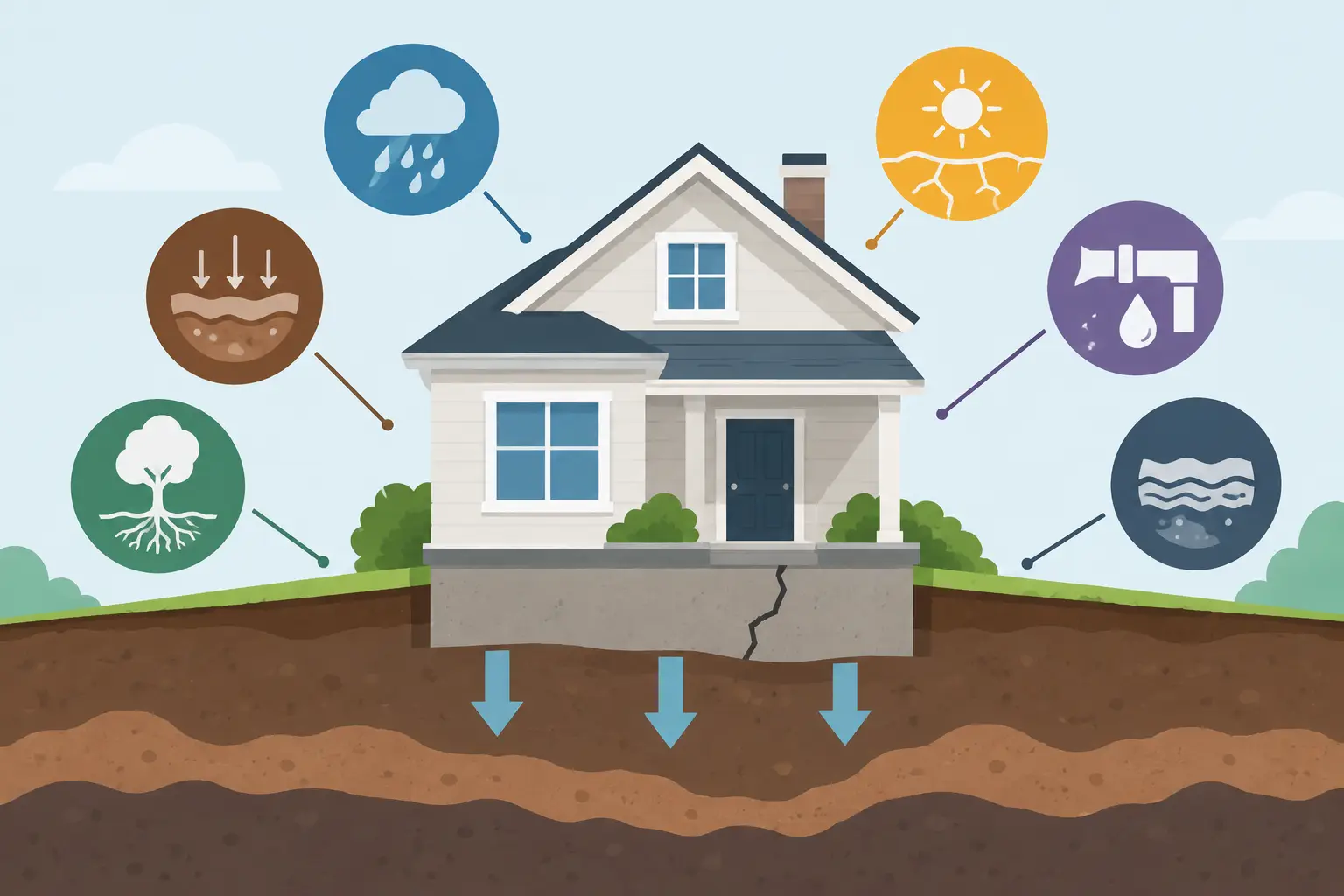
7 Common Causes of Foundation Settlement
November 11, 2026
A hairline crack above a doorway may not look urgent, but it can be the first visible sign that the soil beneath a home is moving. In North Texas, the common causes of foundation settlement often come back to one issue: uneven moisture in the ground supporting the structure. Knowing what is happening below the surface helps homeowners act before small changes lead to larger structural and drainage concerns.
Foundation settlement occurs when part of a foundation moves downward because the soil beneath it no longer provides consistent support. Some movement can be gradual and may not require immediate repair. However, uneven settlement can place stress on walls, floors, framing, plumbing, and doors or windows throughout the property.
Why Foundation Settlement Is So Common in DFW
Dallas-Fort Worth homes are built on expansive clay soils. These soils swell when they absorb water and shrink as they dry out. That constant expansion and contraction can change how the ground supports a slab foundation, pier and beam home, or block and base structure.
The goal is not to keep every inch of soil perfectly dry. A healthy foundation needs reasonably consistent moisture conditions around the home. Problems develop when one area stays saturated while another becomes severely dry, or when loose soil, erosion, or water loss creates voids beneath the foundation.
7 Common Causes of Foundation Settlement
1. Poor Surface Drainage
Rainwater should move away from the foundation, not collect beside it. Short downspouts, clogged gutters, flat grading, and low spots in the yard can keep water against the home for days after a storm. In clay soil, that excess moisture causes swelling. When the ground later dries, it can shrink and leave portions of the foundation without the support they had before.
Drainage is especially important where roof valleys discharge large volumes of water into one area. A properly planned surface drain or French drain may be appropriate, but the right solution depends on the property’s grade, soil conditions, and where the water is coming from. Adding a drain without addressing the water source or outlet location may simply move the problem elsewhere.
2. Extended Drought and Dry Soil
Dry weather can be just as hard on a foundation as heavy rain. During a long Texas summer, clay soil may pull away from the perimeter of a home as it loses moisture. Those gaps reduce support under the edges of the slab and can contribute to settlement, cracking, and sloping floors.
Homeowners sometimes respond by heavily watering the soil in one area. That can create a new imbalance if other areas remain dry. Consistent, moderate moisture management is generally more useful than cycles of flooding and extreme dryness. An inspection can help determine whether soil moisture is contributing to the movement you are seeing.
3. Plumbing Leaks Beneath or Near the Foundation
A hidden plumbing leak can saturate the soil under a slab for months before it becomes obvious. Water may soften or wash away supporting soils, creating voids that allow a section of the foundation to settle. In some cases, a homeowner notices a higher water bill, warm spots on the floor, unexplained damp flooring, or water pooling near the home.
Not every foundation crack points to a plumbing leak, and not every leak causes structural movement. Still, a leak should be investigated promptly when it appears alongside new cracks, floor changes, or persistent moisture near the foundation. Repairing the foundation without correcting an active leak does not address the underlying cause.
4. Trees and Large Shrubs Near the Home
Mature trees add beauty and shade, but their roots can draw significant moisture from North Texas clay soil. The issue is usually not that roots are pushing directly through a slab. More often, the root system creates drier soil on one side of the home than on the other, leading to uneven shrinkage and movement.
The risk depends on the tree species, size, distance from the foundation, and local moisture conditions. Removing a tree is not automatically the best answer. In fact, removing a mature tree can change soil moisture patterns again. A foundation professional can help assess whether vegetation is likely contributing to the problem before major landscaping decisions are made.
5. Poor Soil Compaction or Fill Material
Some homes are built on soil that was not adequately compacted before construction, particularly where a lot was graded or filled to create a level building site. Over time, loose or poorly prepared fill can compress under the weight of the structure. That compression may cause settlement in a specific area rather than across the entire home.
This type of movement may appear years after construction, especially when water enters the soil and changes its density. Repairs may involve concrete piers or other foundation support methods designed around the home’s actual movement pattern. A proper repair plan should be based on measurements and structural conditions, not a one-size-fits-all recommendation.
6. Erosion and Soil Washout
Fast-moving water can carry soil away from a foundation. This is common near downspout outlets, leaking irrigation lines, driveway edges, and areas with poor grading. Over time, erosion can create voids under concrete flatwork or beneath the foundation itself.
You may notice sunken areas in the yard, gaps along the edge of a patio, soil collecting in low spots, or concrete that has separated from the house. These are not cosmetic issues to ignore. If water is removing supporting soil, stopping the water path is as important as restoring support to the affected structure.
7. Construction Changes and Added Loads
Foundation settlement can also occur when changes to the property alter how water flows or how weight is distributed. A new patio, pool, room addition, retaining wall, or major landscaping project can affect drainage patterns. Added structural loads may also expose weaknesses in soil that previously supported the original home without obvious trouble.
Before beginning a major exterior project, consider where roof runoff and surface water will go after the work is complete. A beautiful patio that directs water toward the house can create expensive problems later. Planning drainage alongside construction protects both the new improvement and the foundation it sits near.
Signs That Settlement May Be Affecting Your Home
Foundation movement does not always announce itself with a dramatic crack. Often, homeowners first notice doors that stick, windows that no longer open smoothly, cracks in brick or drywall, separating trim, uneven floors, or gaps around exterior doors. Cracks that grow, reappear after patching, or occur with other movement signs deserve closer attention.
Look at the full picture. A single small drywall crack may be seasonal or related to normal material movement. A crack paired with sloping floors, exterior brick separation, drainage issues, or a door that suddenly will not latch is more concerning. The location, direction, and progression of the symptoms matter.
What to Do When You Notice Movement
Start by watching where water goes during rainfall and checking that gutters and downspouts are functioning properly. Keep an eye out for standing water, leaking hose bibs, broken sprinkler heads, and soil pulling away from the foundation. Taking dated photos of cracks and noting whether doors or windows are getting worse can also help establish whether movement is active.
Do not assume that every crack requires extensive foundation repair, but do not wait for a minor concern to become a major repair either. A professional inspection can identify whether the issue is related to drainage, plumbing, soil movement, or structural settlement. At All American Foundation Repair & Drainage, LLC, recommendations are built around the conditions of the individual property and the long-term stability of the home.
Your home is one of your largest investments. If you are seeing movement, getting clear answers early can help you protect it with the right repair or drainage plan before the damage spreads.