North Texas Expansive Clay and Your Foundation
September 15, 2026
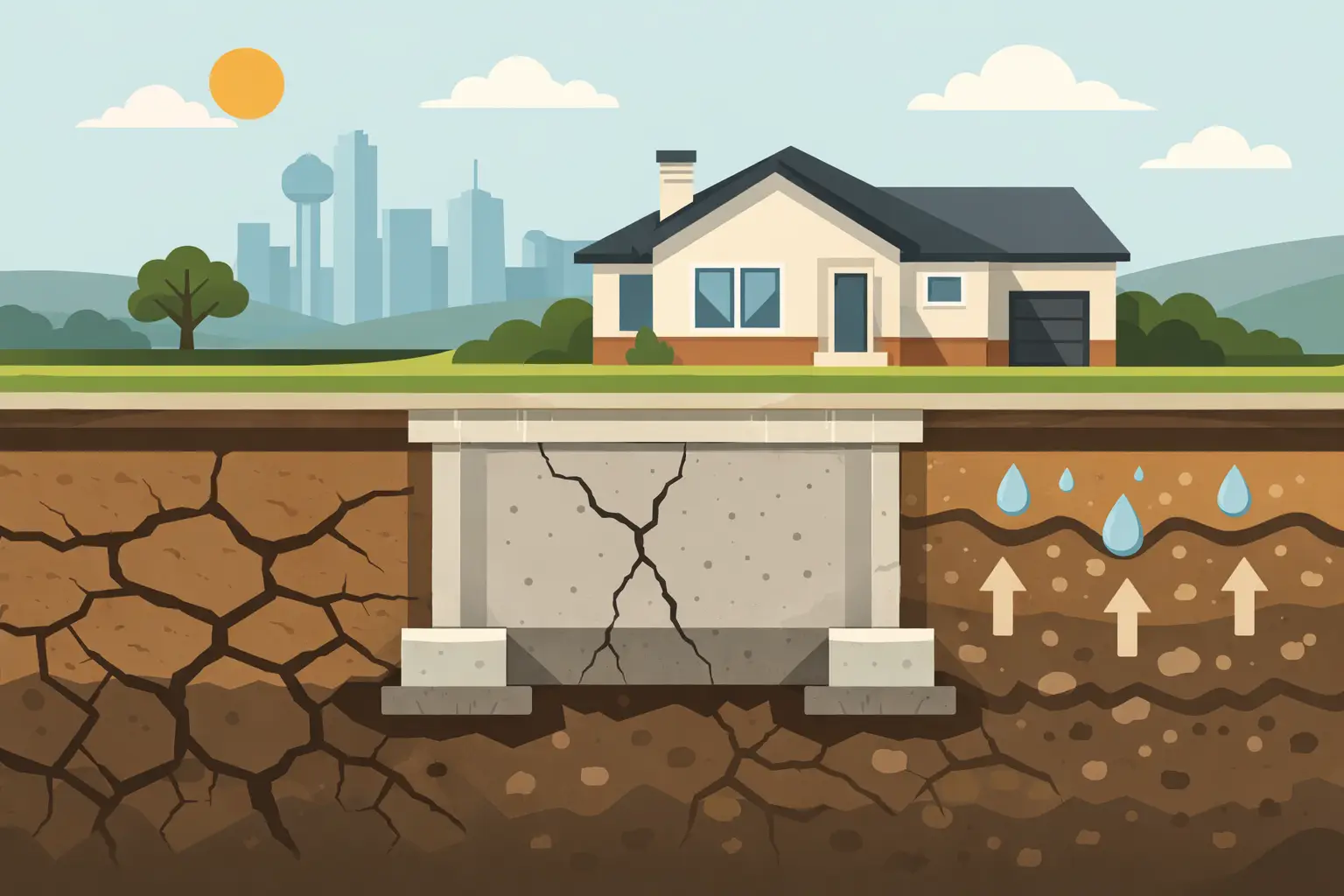
A foundation can look sound for years, then develop a crack across a living-room wall after one unusually dry summer or a season of heavy rain. In many Dallas-Fort Worth homes, the driving force is North Texas expansive clay. This soil moves as its moisture level changes, and that movement can place serious stress on a slab, pier and beam, or block and base foundation.
Homeowners often assume foundation problems happen only in old houses or after dramatic weather. Age and storms can play a role, but soil movement affects newer and older properties alike. The goal is not to panic at every hairline crack. It is to recognize when moisture-related movement is affecting the structure and address the cause before small changes become expensive repairs.
Why North Texas Expansive Clay Moves
Clay soil is made of very fine particles that hold water differently than sandy soil. When expansive clay takes on moisture, it can swell. When it loses moisture during drought or prolonged heat, it contracts and pulls away. In North Texas, those moisture swings can be substantial, especially around a home’s perimeter.
A foundation is designed to carry the weight of the structure on stable soil. The problem begins when one section of soil becomes wetter or drier than another. The foundation may rise, settle, or tilt unevenly. This is called differential movement, and it is the reason a house can show damage in one area while another area appears perfectly normal.
Water does not have to come from rainfall alone. Poor grading, clogged gutters, short downspouts, leaking plumbing lines, broken irrigation systems, and flower beds that trap water against the home can all create uneven soil conditions. On the other hand, large trees near the foundation can draw significant moisture from the soil during dry periods. The right solution depends on what is changing the moisture around that specific property.
Signs Clay Soil May Be Affecting Your Foundation
Most foundation concerns develop gradually. A single cracked tile or sticky door is not always proof of a structural problem. But when several signs appear together, or when they continue to worsen, it is time to have the property evaluated.
Common warning signs include cracks in interior sheetrock, especially above doors and windows; exterior brick cracks or gaps in mortar; doors and windows that stick or will not latch; uneven, sloping, or bouncy floors; separations between trim and walls; and gaps at the garage door, fascia, or exterior caulking.
Outside, look for standing water near the foundation after a rain, soil that slopes toward the house, erosion near downspouts, or areas where the soil has pulled away from the slab during dry weather. These conditions do not automatically mean the foundation has failed. They do, however, provide useful clues about the moisture environment below and around the home.
Take note of timing. If doors begin sticking after months of drought, soil shrinkage may be part of the issue. If cracks widen after repeated storms and water ponds beside the house, swelling soil or drainage failure may be contributing. Photos taken over time can help document whether changes are active.
Moisture Control Is Part of Foundation Protection
A repair plan that addresses only visible cracks can miss the underlying issue. When North Texas expansive clay is involved, managing water around the home is often just as important as correcting the structural movement itself.
Start with the basics. Gutters should be clear and securely attached, and downspouts should carry roof runoff away from the foundation instead of dumping it beside the slab. The ground should generally slope away from the house so surface water does not collect along the perimeter. Low areas, overflowing gutters, and roof valleys that concentrate water deserve prompt attention.
Consistent watering can help during extended dry weather, but it needs to be done carefully. The purpose is to reduce extreme drying around the foundation, not to soak the soil until it becomes saturated. A controlled soaker-hose approach may be appropriate for some properties, but schedules vary based on weather, landscaping, soil conditions, and the home’s drainage pattern. Overwatering one area while another remains dry can create the same uneven movement a homeowner is trying to prevent.
Landscaping also matters. Dense planting beds immediately against the home can hold moisture against the foundation. Trees and large shrubs can affect soil moisture through their root systems. Removing every mature tree is rarely the answer, but the relationship between vegetation, drainage, and foundation movement should be considered before making major landscaping changes.
When Drains Become the Right Solution
Surface corrections are sometimes enough, but not always. If a property receives repeated runoff from a roof, neighboring grade, patio, driveway, or low-lying yard, a professionally designed drainage system may be needed.
French drains are commonly used to collect subsurface water and redirect it to an appropriate discharge point. Surface drains can capture water that pools in lawns, near patios, or beside driveways before it reaches the foundation. The best option depends on where the water starts, where it travels, and where it can be safely discharged.
Drainage work is not a one-size-fits-all service. A drain installed without understanding the property’s grade may fail to move water effectively. In some cases, regrading, extending downspouts, repairing irrigation, or combining surface and subsurface drainage provides a more dependable result than one measure alone.
Foundation Repair Depends on the Structure and Movement
If soil movement has already caused structural damage, drainage alone may not restore the foundation to the needed level of support. A detailed inspection should determine the type of foundation, the areas of movement, visible damage, drainage conditions, and whether plumbing or other factors need further evaluation.
For slab foundations, concrete piers may be installed beneath affected portions of the home to provide deeper, more stable support. The number and location of piers should be based on the home’s actual movement pattern, not a generic layout. Proper lifting must be approached with care because some cosmetic cracks may improve while others may require separate repair after stabilization.
Pier and beam homes require a different approach. Floor-system adjustments, beam support, shimming, and pier repairs may be needed depending on the condition of the structure beneath the house. Moisture in the crawl space, inadequate drainage, and deteriorated wood components can all affect the repair recommendation.
The lowest price is not always the lowest long-term cost. A proposal should explain what is being repaired, why the repair is recommended, how drainage factors into the plan, and what warranty coverage applies. Homeowners deserve clear answers before approving work on one of their largest investments.
What to Do When You Notice Foundation Changes
Do not cover recurring cracks with caulk and assume the issue is resolved. Cosmetic repairs are worthwhile after the source of movement is understood, but they should not be used to hide an active structural concern.
First, inspect the outside of the home after rain and during dry conditions. Check for ponding water, overflowing gutters, leaking hose bibs, irrigation overspray, and soil gaps near the foundation. Inside, make note of doors, windows, cracks, and floor changes. Avoid making sudden, extreme changes to watering or landscaping without considering how they may affect soil moisture around the entire home.
Then schedule a professional foundation and drainage evaluation if the signs are widespread, worsening, or causing concern. An experienced local contractor can distinguish between normal cosmetic aging and conditions that require corrective work. At All American Foundation Repair & Drainage, LLC, recommendations are built around the structure, the soil, and the water conditions affecting the property – not a one-size-fits-all repair package.
Your home does not need perfect soil to remain protected. It needs consistent attention to water, a clear understanding of warning signs, and a repair plan that addresses the real cause of movement. Acting while the concern is manageable can help protect the stability, value, and comfort of the place your family depends on.