Foundation Drainage Design Guide for DFW Homes
September 25, 2026
A good foundation drainage design guide starts at the place many costly repairs begin: the soil directly beside your home. In Dallas-Fort Worth, rainwater that ponds near the foundation can soak expansive clay soils, while prolonged dry periods can cause those same soils to shrink. That repeated movement places stress on slabs, pier and beam foundations, walls, and floors.
Drainage is not simply about getting rid of rain. It is about managing moisture around the structure so water has a planned path away from the home. When the plan is right, it helps protect the stability of the property for years to come.
Start With How Water Moves Across Your Property
Before selecting a French drain, surface drain, or other drainage system, look at what happens during and after a hard rain. The high point of the property, roof runoff, driveway slope, neighboring lots, landscaping beds, and low areas all affect where water collects.
Watch for standing water near exterior walls, soil erosion under downspouts, muddy areas that remain wet for days, and water that runs toward the house from a patio or driveway. Inside, sticking doors, new cracks in drywall, uneven floors, and gaps around trim may point to foundation movement. These signs do not automatically mean drainage is the only cause, but they are a reason to inspect the property as a whole.
A drainage design should address the source of the water, its route, and its final discharge point. Moving water from one low spot to another without a proper outlet only relocates the problem.
Grade Soil Away From the Foundation
The first line of defense is surface grading. Soil next to the house should generally slope away from the foundation, rather than creating a flat shelf or a bowl that holds water. A common target is a drop of about 6 inches over the first 10 feet, although the right grade depends on lot size, existing elevations, landscaping, patios, and drainage paths.
Keep mulch, soil, and decorative rock below the brick weep holes on homes that have them. Covering those openings can trap moisture and interfere with the wall system’s ability to drain. Be careful when adding topsoil near the house. It can improve the slope in one area while creating a moisture problem in another if it blocks drainage or raises the ground too high against the exterior.
On a tight lot, a full 10-foot fall may not be possible. That is where swales, channel drains, surface inlets, and properly routed piping can help carry water away without changing the entire yard.
Control Roof Runoff Before It Reaches the Soil
A roof can send a surprising amount of water to the ground in a short North Texas storm. Gutters and downspouts should be clean, secure, and sized to handle the roof area. If a downspout empties at the corner of the house, it can saturate a small section of soil beside the foundation over and over again.
Downspout extensions or buried solid pipe can carry roof water to a suitable discharge area. The destination matters. Water should not be directed toward a neighbor’s property, against a fence where it backs up, or into a part of the yard that drains back toward the home. Local conditions, property lines, and drainage easements all need consideration before selecting the outlet.
Buried downspout lines should be installed with enough slope to drain and with cleanouts where future maintenance may be needed. Solid pipe is typically the better choice for carrying roof water because it keeps water contained until it reaches the discharge point. Perforated pipe is designed for a different job.
Choose the Right Drainage System for the Problem
A foundation drainage design is not one-size-fits-all. The best system depends on whether water is flowing over the surface, collecting below grade, entering from a neighboring elevation, or coming from a plumbing or irrigation issue.
Surface Drains for Fast-Moving Water
Surface drains work well where runoff travels across patios, driveways, walkways, or low areas in the yard. Catch basins and channel drains collect water at the surface and route it through solid pipe to an appropriate outlet.
These systems are often a practical answer when the problem is obvious after a storm: water is flowing toward the house or pooling in a defined low spot. They can also protect garage thresholds, patio doors, and areas where hardscape prevents proper grading.
Surface drains need regular maintenance. Leaves, mulch, grass clippings, and sediment can clog grates and basins. A drain that is installed correctly but never cleaned can still fail when the next major rain arrives.
French Drains for Wet Soil and Persistent Saturation
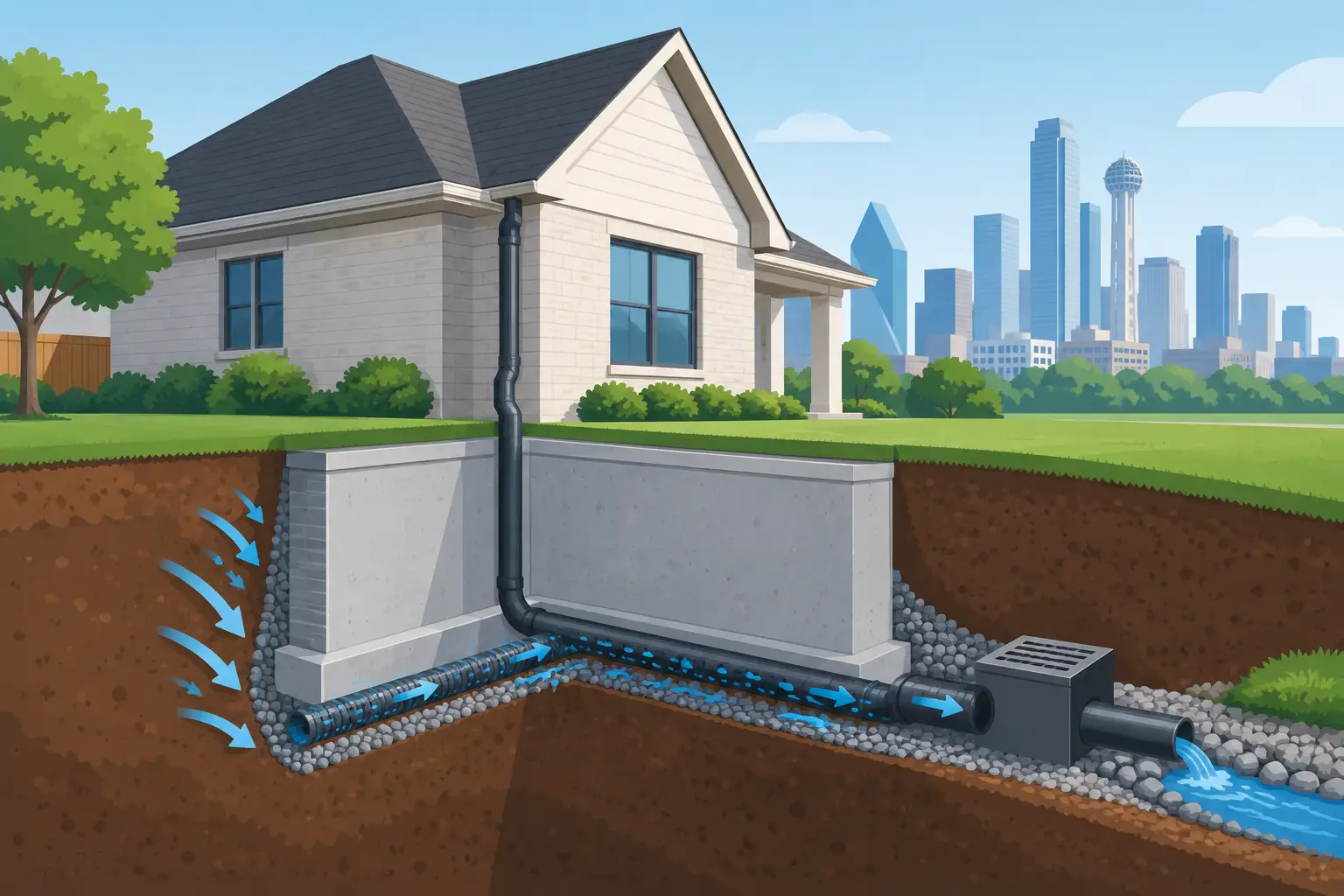
A French drain is generally used where water is saturating soil below the surface. It typically includes perforated pipe set in washed gravel, often with filter fabric used appropriately to keep surrounding soil from entering the stone. Water moves through the gravel, enters the pipe, and follows the pipe to a discharge point.
French drains are useful in areas that stay soft, wet, or boggy long after rain has stopped. They can also intercept water moving downhill toward the house. They are not always the answer for fast sheet flow across a driveway or patio, where a surface drain may perform better.
Depth, pipe slope, gravel coverage, and outlet location determine whether a French drain works as intended. A shallow trench with no reliable exit point is not a long-term solution. The system must be designed for the property’s actual elevations, not simply placed beside the foundation because water is present there.
Account for North Texas Expansive Clay Soil
Dallas-Fort Worth soil creates a special challenge. Expansive clay can swell when wet and shrink when dry, which is why homes in this area benefit from a balanced approach to moisture management. The goal is not to make the soil bone dry. The goal is to prevent major moisture swings around the foundation.
Too much roof runoff at one corner can contribute to soil expansion. A broken sprinkler head, plumbing leak, or poorly drained air-conditioning condensate line can create the same concern. On the other hand, extended drought can dry exposed soil and lead to shrinkage. Proper drainage should be coordinated with sensible foundation watering practices when conditions call for it.
Large trees also deserve attention. Their roots can draw moisture from the soil, especially during hot, dry weather. Removing a mature tree or adding one close to the structure can change moisture conditions over time. There is no universal rule for every tree and every foundation, so this is an area where an on-site evaluation is worthwhile.
Avoid Design Mistakes That Create New Problems
Some drainage repairs look effective at first but create trouble later. A drain line that has no dependable outlet can fill and back up. A downspout extension that dumps water at the edge of a patio may undermine soil beneath the concrete. A French drain installed too close to a shallow foundation may not address the actual source of moisture.
Before any trenching begins, identify underground utilities and irrigation lines. Consider future access as well. Cleanouts, accessible catch basins, and protected discharge points make routine service far easier than a buried system with no way to inspect it.
It also helps to separate drainage concerns from plumbing concerns. If water appears in the same spot during dry weather, or a water bill rises unexpectedly, a supply or sewer leak may be involved. Installing yard drainage without finding an active leak can leave the real cause untreated.
When a Professional Drainage Evaluation Makes Sense
Homeowners can clean gutters, extend downspouts, and correct small grading issues. But recurring ponding, foundation symptoms, negative slope around the home, or water entering a crawl space call for a closer look. The right recommendation may be simple, or it may require a coordinated plan involving grading, drainage piping, foundation repair, and moisture management.
At All American Foundation Repair & Drainage, LLC, drainage recommendations are based on the way water, soil, and the foundation work together on the specific property. A clear inspection can help prevent unnecessary work while identifying the conditions that deserve prompt attention.
If water keeps returning to the same place after every storm, do not wait for cracks or uneven floors to make the decision for you. Addressing the path of water now is one of the most practical ways to protect the home you have worked hard to own.