When Commercial Property Foundation Repair Is Needed
November 9, 2026
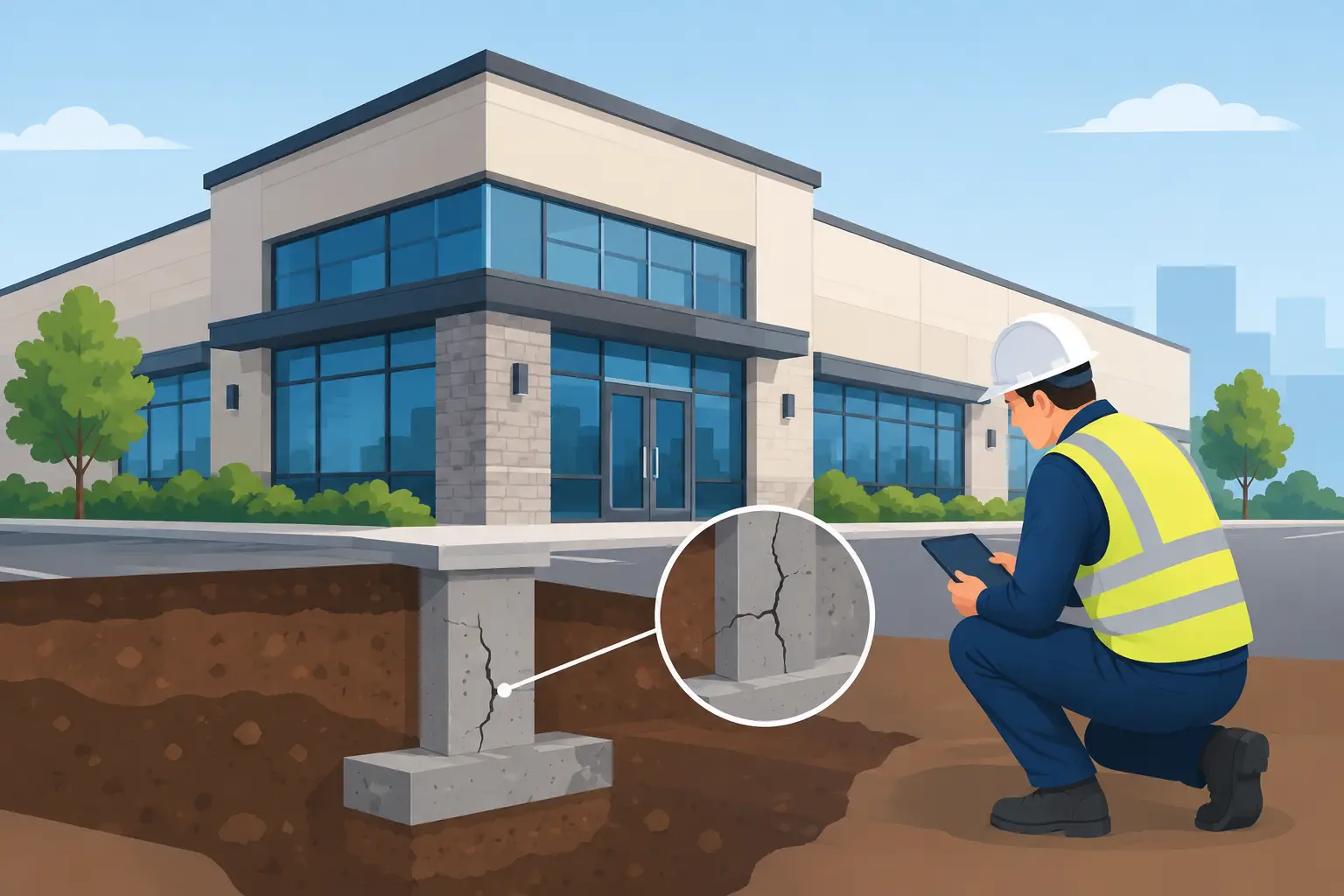
A cracked exterior wall at a retail center, a warehouse floor that slopes toward one bay door, or office doors that suddenly will not close properly can create more than a maintenance headache. These may be warning signs that commercial property foundation repair is needed. In North Texas, expansive clay soils and inconsistent moisture levels can put steady pressure on a building long before the damage becomes impossible to ignore.
For a commercial property owner, manager, or investor, the goal is not simply to patch visible cracks. It is to identify why the structure is moving, protect the people and operations inside it, and make a repair plan that holds up over time. Acting early often gives you more options and helps limit disruption to tenants, customers, and daily business.
Why Commercial Foundations Move in North Texas
Commercial buildings can have concrete slab foundations, pier and beam systems, block and base foundations, or combinations of structural elements added over time. Each system responds differently to movement, but the underlying challenge in the Dallas-Fort Worth area is often the same: soil moisture is changing beneath the building.
Clay-rich North Texas soil expands when it absorbs water and shrinks during dry periods. If one area beneath a building stays wetter than another, the foundation can rise unevenly. During extended dry weather, soil can pull away from portions of the foundation and reduce support. Water from poor grading, leaking plumbing, roof runoff, broken irrigation lines, or inadequate drainage can make the difference even more severe.
Commercial sites bring additional variables. Large paved parking areas can direct water toward a structure. Landscaping may hold moisture along exterior walls. Heavy equipment, delivery traffic, additions, and renovations can change loads or water flow around the building. A repair recommendation should account for the whole property, not just the crack that first drew attention.
Signs Your Building Needs a Foundation Evaluation
Not every crack means a foundation is failing. Concrete naturally develops some minor cracking as it cures and ages. The concern is a pattern of changes, worsening conditions, or structural symptoms that point to uneven movement.
Inside a commercial building, watch for doors and windows that stick, gaps around frames, cracks that run across walls or ceilings, separated trim, and floors that feel uneven. In offices and retail spaces, these problems are often noticed first when a tenant reports a door dragging or display fixtures no longer sitting level.
Outside, warning signs can include stair-step cracks in brick or masonry, cracks in exterior concrete, separation where walls meet, gaps near garage or loading doors, and visible movement around the perimeter. A slab that has settled near an entry or loading area can also create trip hazards and accessibility concerns.
Plumbing issues deserve attention as well. A hidden leak can soften or wash out soil below a slab, while foundation movement can strain plumbing lines. Higher water bills, damp flooring, recurring drain problems, or unexplained moisture near the building should be evaluated alongside structural concerns.
The most useful question is not, “Can we cover this crack?” It is, “Is this condition stable, and what is causing it?” A professional inspection provides the measurements and site observations needed to answer that question.
What a Commercial Foundation Inspection Should Cover
A dependable inspection begins with listening to the people who know the property. A manager may know when doors began sticking. A maintenance team may know that a drain overflows during heavy rain. A long-term tenant may recall previous repairs or seasonal changes.
The evaluation should then look at elevation changes across the structure, visible interior and exterior damage, the condition of the slab or support system, surface drainage, roof runoff, landscaping, and signs of plumbing leaks. On larger properties, it may also include distinct building sections because an addition, storefront, warehouse bay, or detached office area may move differently than the rest of the structure.
This process matters because the same crack can have different causes. A wall crack near a downspout may be tied to concentrated runoff. A low area in a warehouse slab may need a different solution than a perimeter wall that has settled. Repairing without addressing the cause can lead to repeat problems and wasted expense.
At All American Foundation Repair & Drainage, LLC, the focus is on a practical repair plan based on the property’s actual conditions. Property owners deserve a clear explanation of what is being recommended, why it is recommended, and what work may be needed to manage water around the building afterward.
Commercial Property Foundation Repair Options
The appropriate repair depends on the foundation type, the direction and amount of movement, access around the building, soil conditions, and the intended use of the property. There is no one repair method that fits every commercial structure.
Concrete Piers and Structural Support
For many settling foundations, concrete piers can provide support at targeted perimeter areas. Piers transfer part of the building load to more stable soil below the active upper layer. They may be used to stabilize a settled area and, when conditions allow, help restore elevation.
The number and placement of piers should be based on measured movement and the building’s structural needs, not a one-size-fits-all formula. Commercial structures can have heavier loads, longer walls, and more complex layout considerations than a typical home.
Slab Foundation Repair
A slab foundation may show settlement, heave, cracks, or changes in floor elevation. The repair plan may involve perimeter support, interior support where accessible and necessary, and correction of drainage conditions that are contributing to soil movement.
Leveling can be beneficial, but it is not always wise to force every area back to a previous elevation. Older buildings, brittle finishes, plumbing connections, and existing structural conditions all affect how much adjustment is appropriate. The priority is stable, safe support with a realistic plan for the property.
Pier and Beam or Block and Base Repair
Commercial buildings with crawl spaces or older support systems may need attention to beams, joists, piers, shimming, or deteriorated structural components. Moisture beneath the building is especially important in these cases. Standing water, poor ventilation, damaged drainage, and wood deterioration can weaken a structure even when the perimeter appears sound.
A thorough plan addresses both the support system and the moisture source. Replacing a weakened component without correcting the water problem may only delay the next repair.
Drainage Is Part of Protecting the Foundation
Foundation repairs and drainage correction often belong in the same conversation. If water continues to collect against the building or saturate soil near a repaired area, the foundation remains exposed to the conditions that contributed to movement.
Surface drains can move water away from low spots and exterior walls. French drains may help manage subsurface water where conditions call for it. Downspout extensions, grading adjustments, and repairs to irrigation or plumbing leaks can also be part of the solution. The right approach depends on how water enters, travels through, and leaves the site.
There are trade-offs. Drainage work must be designed around parking, walkways, utilities, landscaping, tenant access, and local site conditions. A drainage system that looks simple on paper can create problems if it sends water toward another building area or fails to provide a proper discharge path. That is why an on-site evaluation is essential.
Plan Repairs Around Business Operations
Commercial repairs require more coordination than a typical residential project. A restaurant may need to protect customer access and equipment. A medical office may need quiet work windows and clear routes for patients. A warehouse may need loading operations maintained. Retail centers may need phased work to keep storefronts open.
Before work begins, property stakeholders should discuss access points, parking restrictions, utility locations, operating hours, tenant communication, safety barriers, and restoration expectations. Some projects can be completed in sections to reduce disruption. Others require a focused work period to protect quality and safety.
Cost is understandably a concern, but the lowest proposal is not always the best value. Compare the repair scope, materials, drainage recommendations, warranty terms, expected site restoration, and the contractor’s experience with North Texas soil. A vague estimate can leave a property owner responsible for important work that was never included.
Protect the Building Before Damage Spreads
Foundation movement rarely improves by being ignored. Cracks can widen, doors can become less functional, drainage can worsen, and a manageable repair can grow into a broader structural and operational problem. At the same time, rushing into a repair without a proper evaluation can be just as costly.
If your commercial building shows signs of movement or recurring water problems, schedule a professional assessment while the scope is still clear and options are still available. A careful inspection and a tailored plan can help protect the structure, the people who use it, and the investment you have worked hard to build.