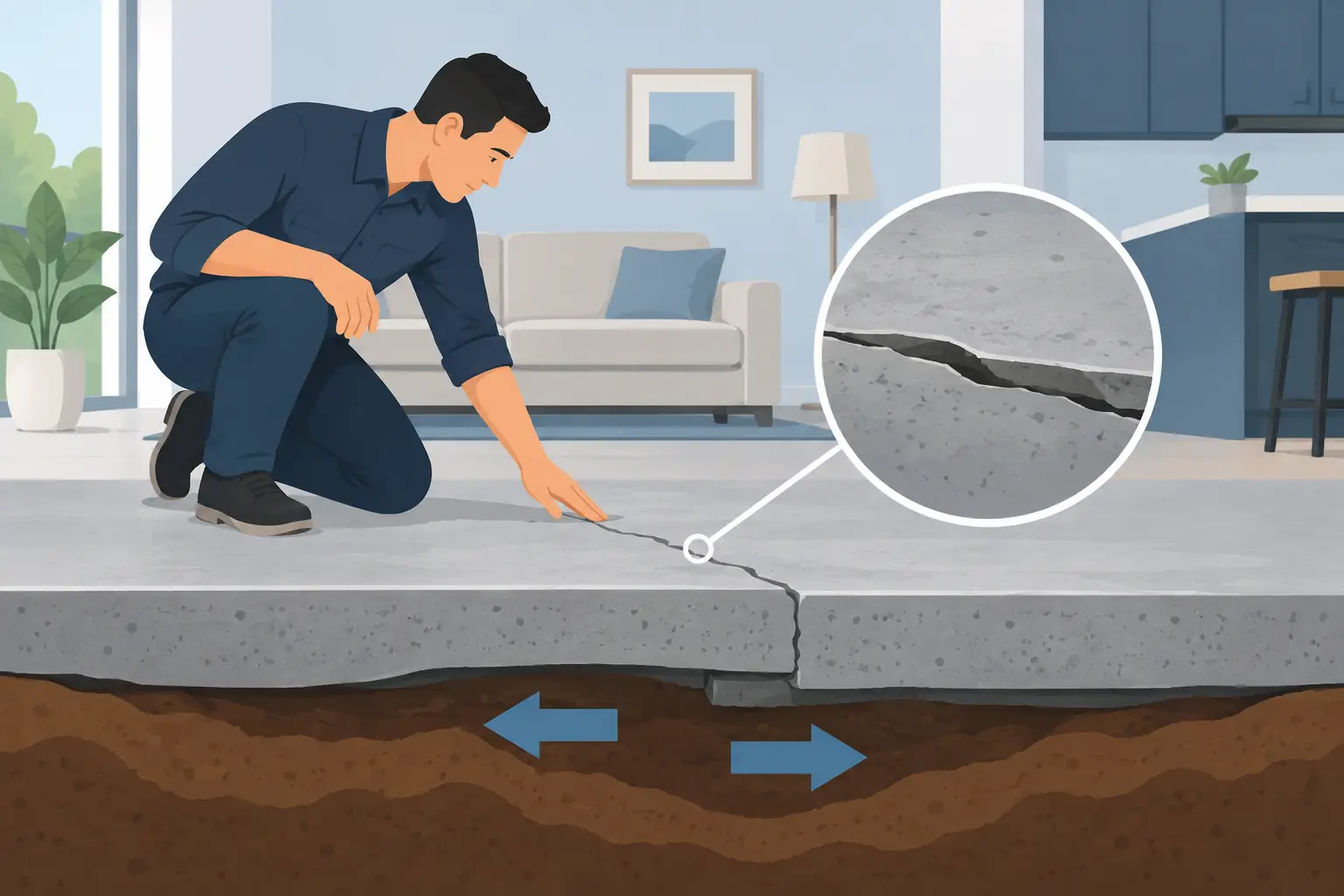
How to Spot Slab Movement Before Damage Spreads
November 3, 2026
A door that suddenly scrapes the frame, a new crack above a window, or a floor that no longer feels level can be more than an ordinary home-maintenance issue. Knowing how to spot slab movement early gives North Texas homeowners time to address the cause before minor changes turn into broader structural damage.
Dallas-Fort Worth homes are built on soils that expand when wet and shrink during dry weather. That seasonal cycle can place uneven pressure on a concrete slab foundation. Some movement is common in this region, but certain patterns deserve a closer look. The goal is not to panic over every hairline crack. It is to recognize when multiple signs point to an active foundation or drainage concern.
How to Spot Slab Movement Inside Your Home
The most useful clues often appear indoors because the house itself responds as the foundation shifts. Start by paying attention to changes rather than isolated flaws that may have been present for years.
Cracks in walls, ceilings, and trim
Drywall cracks are common, especially around doors, windows, and ceiling corners. A thin, stable crack may be cosmetic. Slab movement becomes more likely when cracks are new, growing, diagonal, or wide enough to catch a fingernail.
Look closely at the upper corners of doors and windows. Diagonal cracks that extend outward from those corners can indicate that one section of the structure is moving differently from another. Cracks where walls meet ceilings, separations in crown molding, and gaps between baseboards and flooring can also be part of the same pattern.
One crack alone does not prove a foundation problem. Several cracks in different rooms, particularly when they keep returning after repair, call for a professional evaluation.
Doors and windows that stick or will not latch
When a slab settles or rises unevenly, door and window openings can become slightly out of square. You may notice interior doors that swing open by themselves, rub the frame, or refuse to latch. Windows may become harder to open, and locks may no longer line up as they once did.
Humidity can make wood doors swell, so a sticky door during a damp spell is not automatically a structural warning. The concern increases when several doors and windows develop similar issues, the problem lasts through changing weather, or it appears alongside wall cracking and uneven floors.
Sloping, sagging, or uneven floors
A floor that feels off-level is one of the more direct signs of possible slab movement. Homeowners sometimes notice it when a ball rolls across a room, furniture seems to lean, or they feel a slope while walking down a hallway.
Do not rely on a phone app alone to diagnose the issue. Flooring materials, transitions, and normal construction tolerances can create misleading readings. Still, a consistent slope across a room or a noticeable change from one area of the home to another is worth documenting and discussing during an inspection.
Gaps at cabinets, counters, and built-ins
Cabinets and countertops are fixed in place, so movement in surrounding walls or floors can reveal itself at those connections. Watch for gaps between a cabinet and the wall, countertops separating from the backsplash, or tile cracking near a kitchen island.
These signs can also result from aging caulk or ordinary wear. The difference is whether the separation is spreading or showing up with other structural changes nearby.
Check the Exterior for Foundation Movement Clues
Outside observations help connect interior symptoms to the conditions around the slab. Walk slowly around the home after daylight, paying particular attention to corners, brickwork, and the ground line.
Brick veneer cracks that form a stair-step pattern along mortar joints can be a warning sign. Cracks through bricks, separations around windows, and widening gaps where brick meets trim also deserve attention. Small mortar cracks can occur with age, but active or expanding cracks should not be ignored.
Look at the foundation perimeter as well. A visible gap between the soil and the slab may develop when dry soil pulls away from the house. In contrast, soil that remains saturated beside the foundation after rain can contribute to movement by keeping one area wetter than another.
Pay attention to concrete flatwork. A driveway, patio, or walkway that slopes toward the home may direct water where it does not belong. Separation between a porch and the house, or a newly uneven patio, does not always mean the main slab is failing, but it can reveal drainage and soil conditions that affect the structure.
Why North Texas Drainage Matters So Much
Slab movement is often a moisture-management problem before it becomes a repair problem. North Texas clay soils can hold substantial water, swell, and place upward pressure on portions of a foundation. During extended dry conditions, the same soil can contract and leave other areas with less support.
The issue is usually uneven moisture. For example, one side of a home may receive runoff from a roof valley while another side dries out in full afternoon sun. A leaking plumbing line, clogged gutters, missing downspout extensions, poor grading, or an improperly placed landscape bed can all create inconsistent moisture around the slab.
This is why a thorough foundation assessment should consider more than cracks. The condition of gutters, drainage paths, soil grade, trees near the home, plumbing, and exterior concrete can help explain why movement is occurring. Repairing only the visible symptom without addressing water behavior may leave the underlying condition in place.
Separate Normal Wear From a Real Concern
Homes settle somewhat over time, and materials expand and contract with temperature and humidity changes. It depends on the age of the home, its construction, local soil conditions, and whether the signs are stable or changing.
A cosmetic crack generally stays small and does not coincide with functional problems. A more serious pattern tends to involve change: a crack lengthens, doors begin sticking, floor slopes become noticeable, or exterior brick gaps widen. Keep a simple record with dated photographs and notes about where each issue appears. This can help you determine whether conditions are stable and give an inspector useful context.
Avoid repeatedly patching cracks without finding out why they are returning. Fresh paint and caulk may improve appearance temporarily, but they will not correct slab movement or a drainage problem.
When to Schedule a Foundation Inspection
Call for a professional inspection when you see several warning signs, when damage appears to be progressing, or when a major weather event exposes a drainage issue. It is also wise to schedule an assessment before selling, buying, or undertaking a costly remodel if you have questions about the slab.
A qualified foundation professional should inspect the home as a whole, not make a recommendation based on one crack. Measurements, visual observations, exterior drainage conditions, and the location of damage all matter. Sometimes the appropriate recommendation is monitoring, maintenance, or drainage correction rather than immediate structural repair. If repair is needed, the plan should explain where support is needed, why that method fits the home, and how water will be managed going forward.
At All American Foundation Repair & Drainage, homeowners receive straightforward recommendations shaped by decades of experience with Dallas-Fort Worth soil conditions. A clear inspection gives you a practical basis for deciding what to do next, whether the answer is repair, drainage work, or watchful monitoring.
Protect the Home While You Gather Answers
Until you have the situation evaluated, keep water moving away from the foundation. Clear gutters, make sure downspouts discharge away from the house, and avoid allowing irrigation to soak one small section of the perimeter every day. Do not make drastic watering changes or install drainage systems without understanding the property’s existing conditions, since the right approach depends on the home and site.
Your home does not need to be visibly falling apart before it deserves attention. If the changes you see are new, recurring, or affecting how doors, floors, and walls function, a timely inspection can replace uncertainty with a clear plan to protect your property.