When to Schedule Grand Prairie Foundation Repair
October 1, 2026
A bedroom door that suddenly scrapes the floor, a crack that stretches farther across the living room wall, or water collecting beside the slab after every storm can make a homeowner worry fast. For foundation repair Grand Prairie property owners can depend on, the first step is not guessing at the cause. It is getting a clear look at how the home is moving, what is contributing to that movement, and what will protect it for the long term.
North Texas homes are built on soils that expand when wet and shrink as they dry. That constant change in moisture can place uneven pressure on a foundation. Not every crack means a major repair is needed, but waiting on active movement can allow a manageable concern to affect floors, framing, plumbing, brick, and drainage.
Why Grand Prairie Foundation Repair Is Different
Grand Prairie properties face the same broad challenge found throughout the Dallas-Fort Worth area: expansive clay soil. During rainy periods, clay absorbs moisture and swells. During extended heat and dry weather, it loses moisture and contracts. A foundation does not always move evenly with those changes. One side of a home may have wetter soil because of a low yard, a leaking gutter, irrigation, or poor drainage, while another side becomes overly dry near large trees.
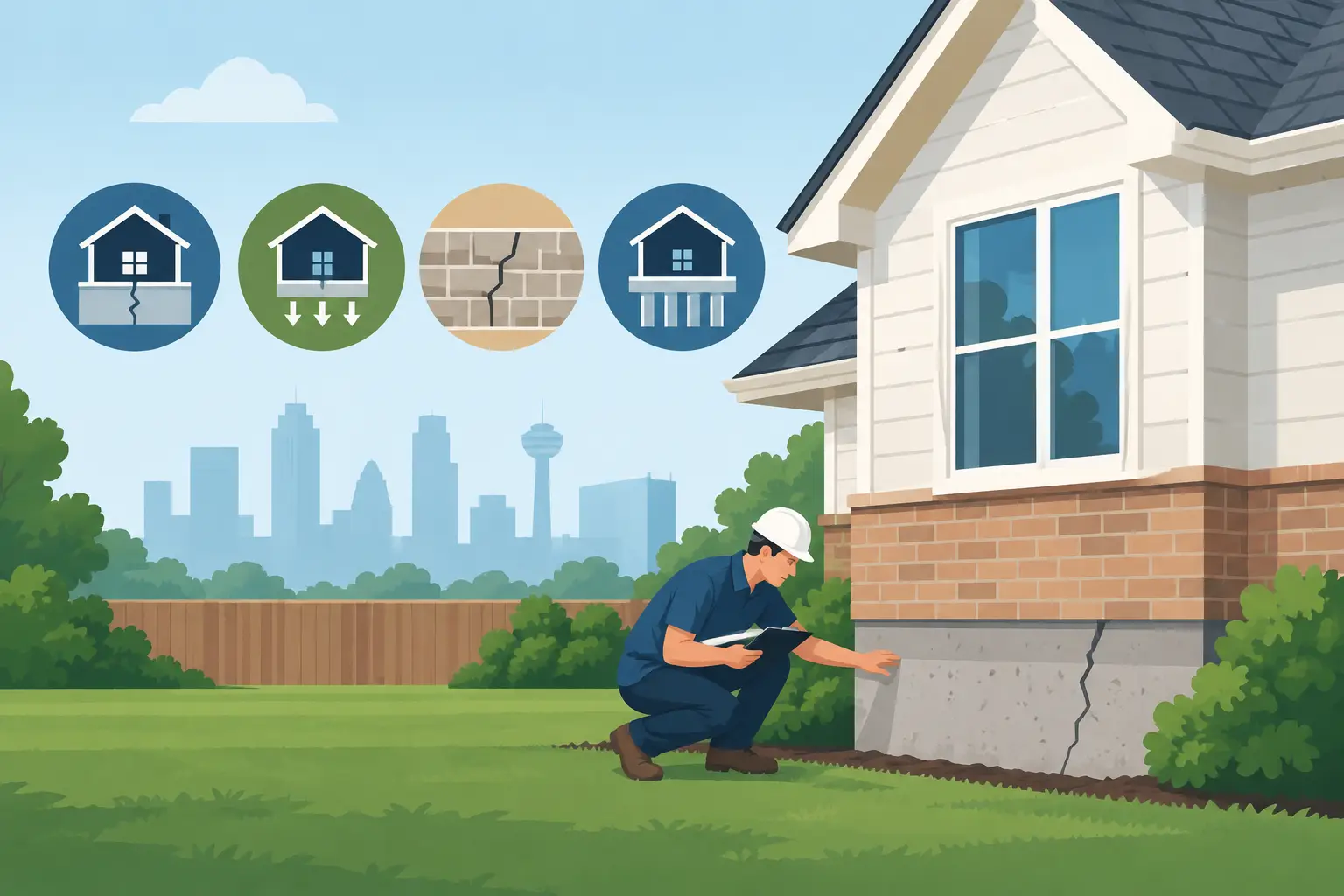
That uneven support is what can lead to differential movement. You may see cracks near doors and windows, gaps where trim separates from a wall, sloping floors, or doors that no longer latch properly. Brick veneer may show stair-step cracking, while an interior drywall crack may appear above a doorway or at a ceiling corner.
The pattern matters more than any single symptom. Hairline drywall cracks can occur from normal seasonal movement or ordinary settling. Cracks that widen, recur after patching, appear with floor changes, or occur alongside sticking doors deserve a professional inspection. The goal is to understand whether the concern is cosmetic, moisture-related, or structural before choosing a repair plan.
Signs That Call for a Foundation Inspection
Homeowners often notice foundation concerns in stages. A small crack may seem easy to ignore until it is joined by a door that will not close or a floor that feels uneven. Taking note of changes gives an inspector useful context and helps you make a better decision.
Watch for multiple symptoms occurring in the same area of the house. Interior signs can include diagonal drywall cracks, separated baseboards, windows that bind, and gaps between cabinets and walls. Outside, look for cracks in brick or mortar, separation around garage doors, cracks in the slab edge, and soil pulling away from the foundation during dry conditions.
Water behavior is just as important. Standing water near the home, overflowing gutters, downspouts that discharge beside the slab, and soil that slopes toward the structure can all keep moisture levels uneven. On the other hand, deeply dry soil around the perimeter may also contribute to movement. A proper evaluation looks at the structure and the conditions around it.
Do Not Rely on One Crack Alone
A crack is a symptom, not a diagnosis. Its size, direction, location, and whether it is changing all matter. For example, a straight hairline crack in paint may have a different cause than a widening diagonal crack that continues through drywall and trim.
It also depends on the foundation type. A concrete slab, a pier and beam home, and a block and base structure each have different support systems and repair considerations. That is why a one-size-fits-all recommendation is rarely the right answer.
What a Thorough Evaluation Should Cover
A useful foundation inspection should provide more than a quick statement that the home needs leveling. The inspection should consider visible structural symptoms, elevations across the floor when appropriate, soil and grading conditions, drainage patterns, and the foundation type. It should also identify whether plumbing leaks, roof runoff, irrigation, or landscape conditions may be affecting the soil.
After the evaluation, ask for a clear explanation of what was found and why the proposed work addresses it. If piers are recommended, you should understand where they will be placed and what portion of the home they are intended to support. If the concern involves a pier and beam system, the recommendation may involve adjustments, support work, or moisture management beneath the home.
Good recommendations are specific. They recognize that foundation repair and drainage correction often work together, but not every property needs both. Repairing structural movement without correcting water that is repeatedly saturating one area may leave an important cause unaddressed. Installing drainage when a home has an unrelated framing or support issue may not solve the actual problem.
Drainage Is Part of Long-Term Protection
Water should move away from the house in a controlled way. That simple principle has a major effect on foundation performance in Grand Prairie. Surface drains can help collect runoff across a low area, while French drains may be used to manage subsurface water. Gutter extensions, properly sloped soil, and thoughtful landscape grading can also make a meaningful difference.
The right solution depends on where the water comes from and where it can safely go. A yard that holds rainwater near the slab needs a different approach than a property affected by a concentrated downspout discharge. Drainage work must be planned carefully so it directs water away without creating a new problem for a neighboring area, driveway, or landscaping.
Homeowners should also be cautious about dramatic moisture changes around the foundation. Avoid allowing sprinkler systems to soak only one side of the home, and address obvious gutter leaks promptly. Consistent conditions around the perimeter are generally better for North Texas foundations than repeated wet-to-dry extremes.
What Foundation Repair May Involve
When structural support is needed, concrete piers are a common solution for slab foundations. Piers are installed at planned locations to support and stabilize affected areas. Depending on the condition of the structure and the repair design, lifting may be performed where appropriate. The objective is to improve support, not to make unrealistic promises that every cosmetic crack will disappear or that soil will never move again.
For pier and beam homes, repair may involve correcting support issues below the floor system, addressing deteriorated components, or improving drainage and moisture conditions in the crawl space. Block and base homes require their own approach because their support systems and access conditions differ from modern slabs.
There are trade-offs to discuss before work starts. Some cosmetic repairs should wait until structural work is complete and the home has had time to settle into its corrected position. Landscaping, flatwork, and utilities near work areas may need protection or temporary access. A trustworthy contractor explains those details ahead of time rather than surprising you after the project begins.
Choose a Contractor Who Explains the Why
Foundation work is a major decision for any homeowner or property manager. Look for an established local contractor that understands Dallas-Fort Worth soil conditions, provides a written scope of work, and is willing to explain the recommendation in plain language. Ask about warranty terms, payment and financing options, project timing, and what conditions are excluded from the warranty.
Experience matters because local foundation problems are rarely just about concrete. They involve drainage, grading, soil behavior, construction type, and the history of the property. All American Foundation Repair & Drainage, LLC has served North Texas since 1969, bringing more than 57 years of experience to foundation and water-management concerns with clear estimates and long-term protection in mind.
If you are seeing changes in your floors, walls, doors, or drainage, do not let uncertainty make the decision for you. A professional evaluation can replace worry with a practical plan, helping you protect the home and the investment your family depends on.