Foundation Repair Desoto: Signs You Should Act
September 27, 2026
A crack over a doorway, a floor that feels slightly out of level, or a back door that suddenly sticks can make a DeSoto homeowner wonder what is happening beneath the house. Foundation repair Desoto property owners need is not about reacting to every cosmetic flaw. It is about identifying active movement early, understanding what is causing it, and putting a practical plan in place before small symptoms become larger repairs.
North Texas homes live on soils that expand when wet and shrink when dry. That repeated change in moisture can place uneven pressure on a slab foundation, pier and beam home, or commercial structure. A careful inspection separates ordinary settling from conditions that need attention, so you can protect both your property and your budget.
Why DeSoto Foundations Move
The clay soils found throughout DeSoto and the Dallas-Fort Worth area hold water differently from sandy or rocky ground. After extended rain, soil can swell and lift portions of a foundation. During hot, dry periods, it can pull away as it contracts, leaving less support below the structure. Neither condition is ideal when the moisture around one side of the home is different from the other.
Drainage often plays a major role. Gutters that empty beside the house, short downspouts, low spots near the foundation, and standing water can oversaturate the soil. On the other hand, trees planted close to a home may draw significant moisture from one area of the yard during dry weather. Plumbing leaks can create a similar imbalance below or around the slab.
Foundation movement is rarely caused by one issue alone. The age of the home, original construction, grading, nearby vegetation, and water management can all matter. That is why a one-size-fits-all recommendation is not the right approach. The repair should match the structure and the conditions affecting it.
Signs Foundation Repair Desoto Homeowners Should Watch For
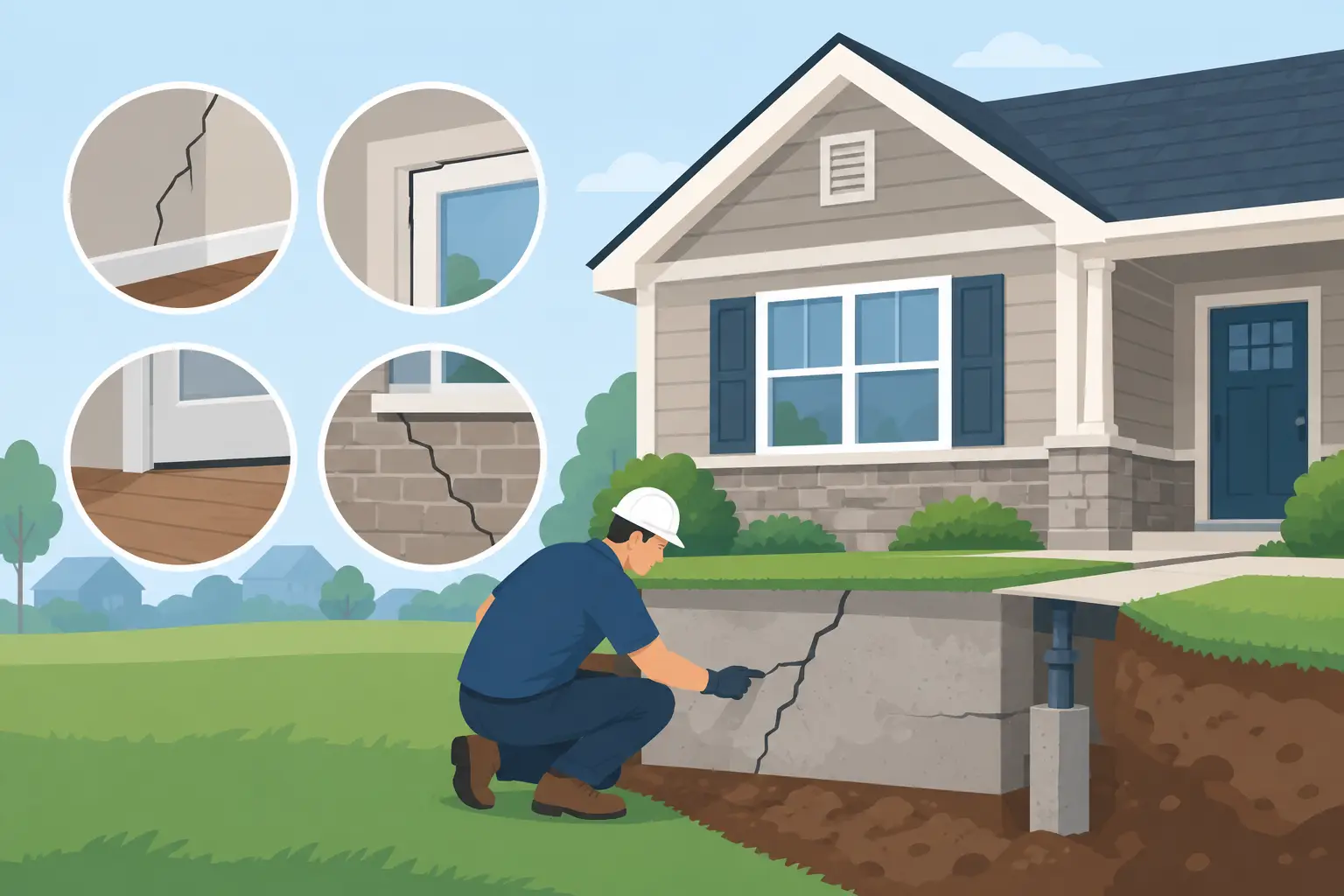
Many foundation concerns first show up inside the house. Doors and windows that begin sticking, gaps around trim, cracks in drywall, or flooring that no longer feels level can all point to movement. Outside, look for brick cracks, separation at corners, cracks in the slab, or soil that slopes toward the home and stays wet after rain.
A single thin drywall crack does not automatically mean the foundation needs repair. Homes naturally experience some seasonal change, and materials expand and contract. The concern rises when cracks widen, reappear after patching, run diagonally from doors or windows, or appear alongside other symptoms such as uneven floors and sticking doors.
Pay attention to changes rather than relying on one snapshot. If a door worked normally last season but now will not latch, or if a crack has grown over several months, make a note of it. Photos with dates can help document whether a condition is stable or progressing.
Water should never be ignored simply because there are no visible interior cracks yet. Persistent puddling beside the foundation, erosion around a downspout, or water flowing toward the home during storms are opportunities to correct a cause before structural symptoms worsen.
What a Professional Inspection Should Provide
A useful foundation inspection should leave you with more than a repair quote. You should understand what the inspector observed, what may be contributing to the movement, whether the issue appears active, and which repair options make sense for your property.
For a slab foundation, the inspection may include checking floor elevations, reviewing cracks and exterior brick, and evaluating drainage patterns around the house. For pier and beam homes, the condition of support piers, beams, joists, crawl space moisture, and ventilation may also need attention. A block and base structure has its own support considerations and should be evaluated accordingly.
The most important part is an honest recommendation. Some homes need structural support through concrete piers or another engineered support approach. Others need drainage correction, minor adjustments, or monitoring. Repairing a foundation without addressing a water problem can leave the underlying conditions in place. Likewise, installing drainage where the structure already needs support may not resolve existing movement.
A clear estimate should explain the scope of work, expected results, warranty coverage, and any site conditions that could affect the project. Ask questions until the plan makes sense. Foundation work is a major decision, and you deserve straightforward answers before work begins.
Repair and Drainage Work Best as a System
Foundation leveling and drainage correction are sometimes discussed as separate services, but they often protect the same goal: stable soil support around the structure. The right combination depends on what an inspection finds.
Concrete piers can be used to support sections of a settling slab by transferring load to more stable bearing material below the active soil zone. House leveling may improve functional problems such as sloping floors, misaligned doors, and gaps caused by movement. With older pier and beam homes, repairs may include adjusting or replacing failing supports and addressing moisture beneath the home.
Drainage solutions help manage the water that affects the soil. A French drain can collect subsurface water in problem areas, while a surface drain may redirect runoff from low spots. Extending downspouts and correcting grading can also make a meaningful difference. The best drainage solution is not necessarily the most extensive one. It is the one that moves water away from the foundation reliably and fits the layout of the property.
There are trade-offs to consider. Drainage work can reduce future moisture swings, but it will not reverse structural movement that has already occurred. Foundation piers can stabilize a settling area, but landscaping, irrigation, and drainage should still be managed afterward. A long-term repair plan considers both the immediate structural need and the conditions that could affect the home in the years ahead.
What Homeowners Can Do While Planning Repairs
You do not need to diagnose the foundation yourself, but you can reduce avoidable moisture problems around the home. Keep gutters clear and make sure downspouts discharge well away from the foundation. Watch irrigation systems for broken heads or overspray that repeatedly wets one side of the house. Avoid allowing flower beds or mulch to hold water against exterior walls.
During dry weather, follow a sensible watering plan for the soil around the foundation if recommended for your property. The goal is consistency, not saturation. Overwatering can be as harmful as allowing the soil to become extremely dry. If large trees are close to the home, ask a qualified professional how root-related moisture loss may factor into the situation before making major landscaping changes.
Inside, avoid repeatedly patching cracks without checking whether they are changing. Cosmetic repairs are worthwhile after structural conditions are addressed, but fresh paint and caulk should not be used to hide a problem that is still moving.
Choosing a Foundation Contractor in DeSoto
Experience with North Texas soil conditions matters. A contractor should be able to explain the proposed work in plain language, inspect both structure and drainage conditions, and provide documentation of the repair plan. Look for a company that stands behind its workmanship with clear warranty terms rather than vague promises.
It is also reasonable to ask about scheduling, financing options, what access is needed around the property, and how landscaping or concrete areas will be handled. The lowest estimate is not always the best value if it leaves out drainage concerns, uses an unclear repair scope, or does not provide dependable follow-through.
All American Foundation Repair & Drainage has served North Texas property owners since 1969 with repair plans built around the individual home, not a rushed, generic answer. A free estimate and a next-business-day response can give you a clear place to start when foundation concerns are creating uncertainty.
If you have noticed new cracks, uneven floors, or water collecting near your home, the most helpful next step is a professional evaluation while the signs are still manageable. Clear information now can help protect the stability, safety, and value of the property you have worked hard to keep.