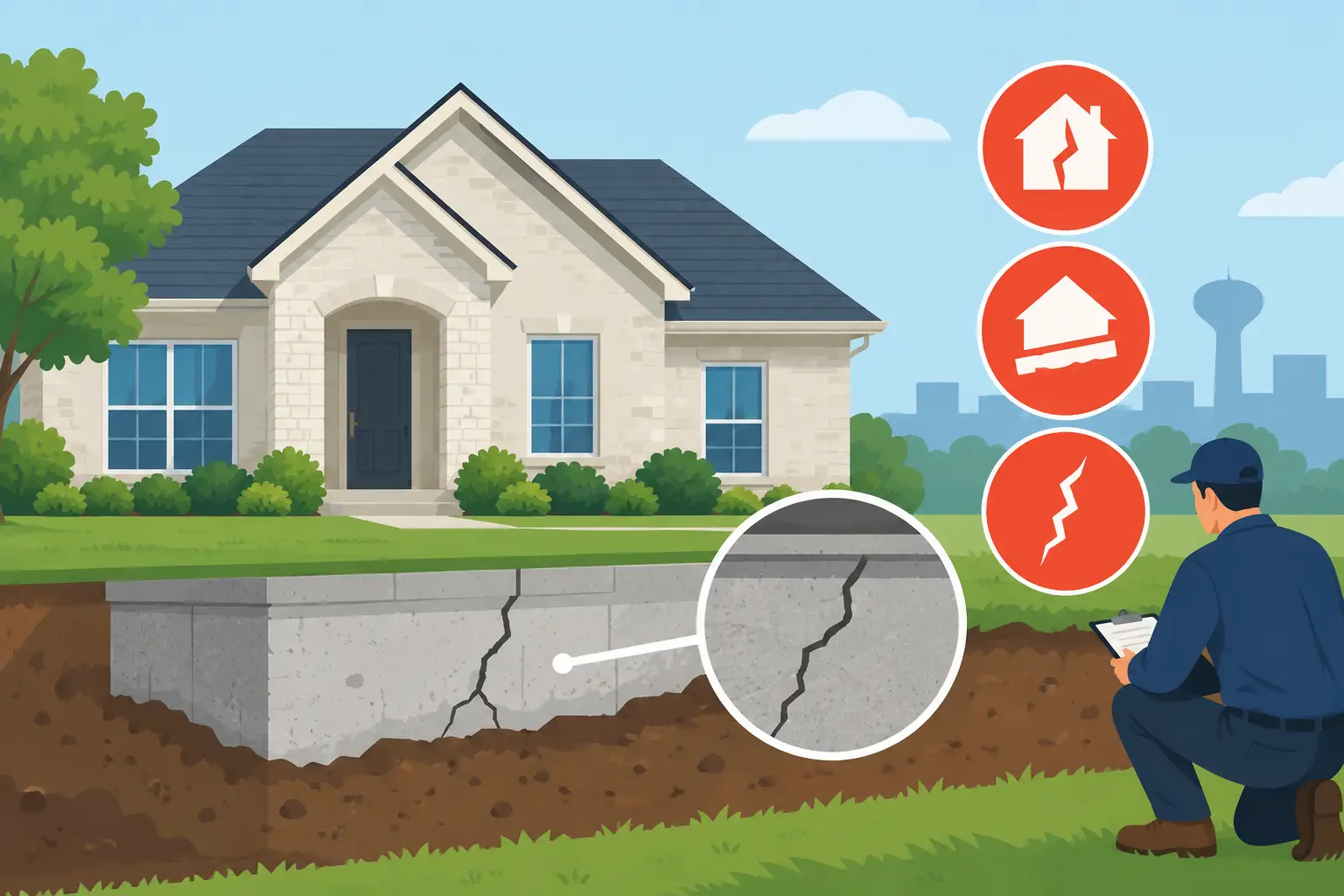
Foundation Repair Coppell Warning Signs to Watch
September 18, 2026
A small crack above a doorway can be easy to dismiss. A door that suddenly sticks may feel like a minor annoyance. But when these changes appear together, they can point to movement beneath your home. Foundation repair Coppell homeowners can trust starts with recognizing the signs early, identifying what is causing the movement, and building a repair plan that addresses the structure and the water around it.
Coppell homes face the same challenge seen throughout North Texas: expansive clay soil. That soil swells when it holds too much water and shrinks during dry periods. Repeated changes in moisture can place uneven pressure on a slab or pier and beam foundation. The result may be settling, heaving, interior damage, drainage problems, or a combination of all three.
Why Coppell Foundations Move
A foundation is not usually damaged in a single day. Movement often develops gradually as soil moisture changes around different sides of the home. One area may stay wet because of poor grading, overflowing gutters, or a leaking line, while another becomes dry from heat, trees, or inadequate watering. That uneven soil condition can cause one section of the structure to move differently from another.
Coppell’s clay-heavy soil makes moisture control a central part of protecting a property. During dry weather, soil can pull away from the foundation and reduce support beneath portions of the slab. During heavy rain, water can collect near the home and cause the soil to expand. Neither condition is ideal, and switching back and forth between them creates additional stress.
Not every crack means major structural trouble. Homes naturally experience some minor settling, and concrete itself can develop surface cracks over time. The concern is a pattern of changes that suggests the house is no longer moving evenly. A professional inspection helps separate normal aging from conditions that need repair.
Warning Signs That Deserve a Closer Look
Foundation concerns often show up inside the house before homeowners notice a problem outdoors. Look for cracks in drywall, especially diagonal cracks extending from the corners of doors and windows. Cracks that widen, return after patching, or appear alongside other symptoms deserve attention.
Doors and windows can also tell an important story. A door that will not latch, a window that becomes difficult to open, or gaps around a frame may indicate shifting. These issues can occur for other reasons, including humidity or worn hardware, but they should not be ignored when floors feel uneven or wall cracks are also present.
Pay attention to flooring and trim. Sloping floors, separated baseboards, cracked tile, and gaps between cabinets and walls can develop when the structure moves. Outside, stair-step cracks in brick, separation around garage openings, or cracks in the concrete around the property may add to the picture.
The most useful approach is to document what you see. Take dated photographs, note whether a crack is growing, and pay attention to when doors begin sticking. This information gives a foundation professional a clearer view of whether movement is active and where it may be occurring.
Foundation Repair Coppell Homes May Need
There is no one-size-fits-all fix for foundation movement. The correct repair depends on the type of foundation, the direction and extent of movement, soil conditions, drainage, and the condition of the structure itself. A responsible recommendation should follow an on-site inspection, not a guess based on one visible crack.
For many slab foundations, concrete piers may be installed beneath affected areas to transfer the home’s weight to more stable supporting soil. The goal is to stabilize the structure and, when conditions allow, carefully lift it toward an appropriate elevation. House leveling can improve operation of doors, reduce visible gaps, and help prevent further movement, but cosmetic cracks may still need separate repair after structural work is complete.
Pier and beam homes require a different evaluation. Problems may involve settling supports, deteriorated or misaligned beams, moisture in the crawl space, or drainage around the perimeter. Repairs can involve improving support beneath the home, leveling affected sections, and correcting moisture conditions that contributed to the issue.
Block and base foundations also call for an experienced assessment. These older foundation systems can have unique support and ventilation concerns. The repair plan should account for the original construction, current structural condition, and the need to manage water around and beneath the home.
Homeowners should be cautious of broad promises that every house can be restored perfectly to its original position. Lifting a structure requires careful planning, and the safest outcome depends on how the home was built and how it has moved. The priority is long-term stability, not an unrealistic quick fix.
Drainage Is Often Part of the Repair Plan
Foundation work and drainage correction are closely connected in North Texas. If water continues to collect beside a repaired foundation, the original source of soil movement may remain. Likewise, drying conditions can worsen if runoff is not directed properly and moisture is not managed consistently.
A drainage evaluation may look at gutter discharge, roof runoff, yard slope, low spots, downspout placement, and areas where water stands after rain. Surface drains can collect water before it reaches the foundation area. French drains may be appropriate where subsurface water needs a path away from the home. In some cases, simple grading adjustments or extended downspouts can make a meaningful difference.
The right drainage solution depends on the property. A system that works on one lot may not be suitable for another because of landscaping, elevation, soil, utilities, and where water can safely discharge. Good drainage work is designed around the home rather than sold as a standard package.
What to Expect From a Professional Inspection
An inspection should give you more than a repair price. It should help you understand what is happening to your property and why. A qualified foundation specialist will typically review interior and exterior symptoms, inspect drainage conditions, take elevation measurements when appropriate, and discuss the property’s history.
Be prepared to share when you first noticed the problem, whether the damage has changed, and how water behaves around the house during storms. Mention plumbing repairs, past foundation work, major tree changes, or drainage projects. These details can help identify contributing conditions.
After the assessment, ask clear questions. Which areas are moving? Is the recommended work intended to stabilize, lift, or both? Does the plan include drainage correction? What site access will be needed? What warranty applies, and what does it cover? A contractor who takes time to answer these questions is helping you make an informed decision about a major investment.
All American Foundation Repair & Drainage has served North Texas property owners since 1969, with repair recommendations built around the structure, soil conditions, and water-management needs of each property. Free estimates, financing options, and a limited lifetime warranty can help make a necessary repair more manageable without losing sight of long-term protection.
When to Schedule an Estimate
You do not need to wait for severe cracks or a visibly sloping floor to request an evaluation. An estimate is especially worthwhile when you notice several warning signs, see damage growing over time, or have standing water near the foundation after rain. It is also wise to have concerns checked before listing a home, completing a major remodel, or purchasing a property with visible signs of movement.
Early action can preserve more than appearance. Unresolved foundation movement may affect framing, masonry, plumbing connections, floors, and doors. Addressing drainage and structural concerns before they become larger can give homeowners more repair options and greater control over the process.
Your home does not need a rushed decision. It needs a clear diagnosis, an honest explanation, and a repair plan built to protect the structure beneath the walls you see every day.