Block and Base Foundation Repair Basics
June 18, 2026
A floor that feels slightly off under your feet can be easy to ignore – until doors start sticking, wall cracks spread, and one side of the home seems to settle lower than the other. That is often how block and base foundation repair enters the conversation for North Texas property owners. What starts as a small change in level can turn into structural stress, moisture problems, and more expensive repairs if it is left alone.
Block and base foundations are common in older homes, and they can perform well for decades when they stay properly supported and dry. But in the Dallas-Fort Worth area, shifting clay soils, seasonal moisture swings, drainage trouble, and age all put pressure on these systems. If you own a home with a raised foundation, understanding how this repair process works can help you make a calm, informed decision instead of waiting until the damage gets worse.
What a block and base foundation is
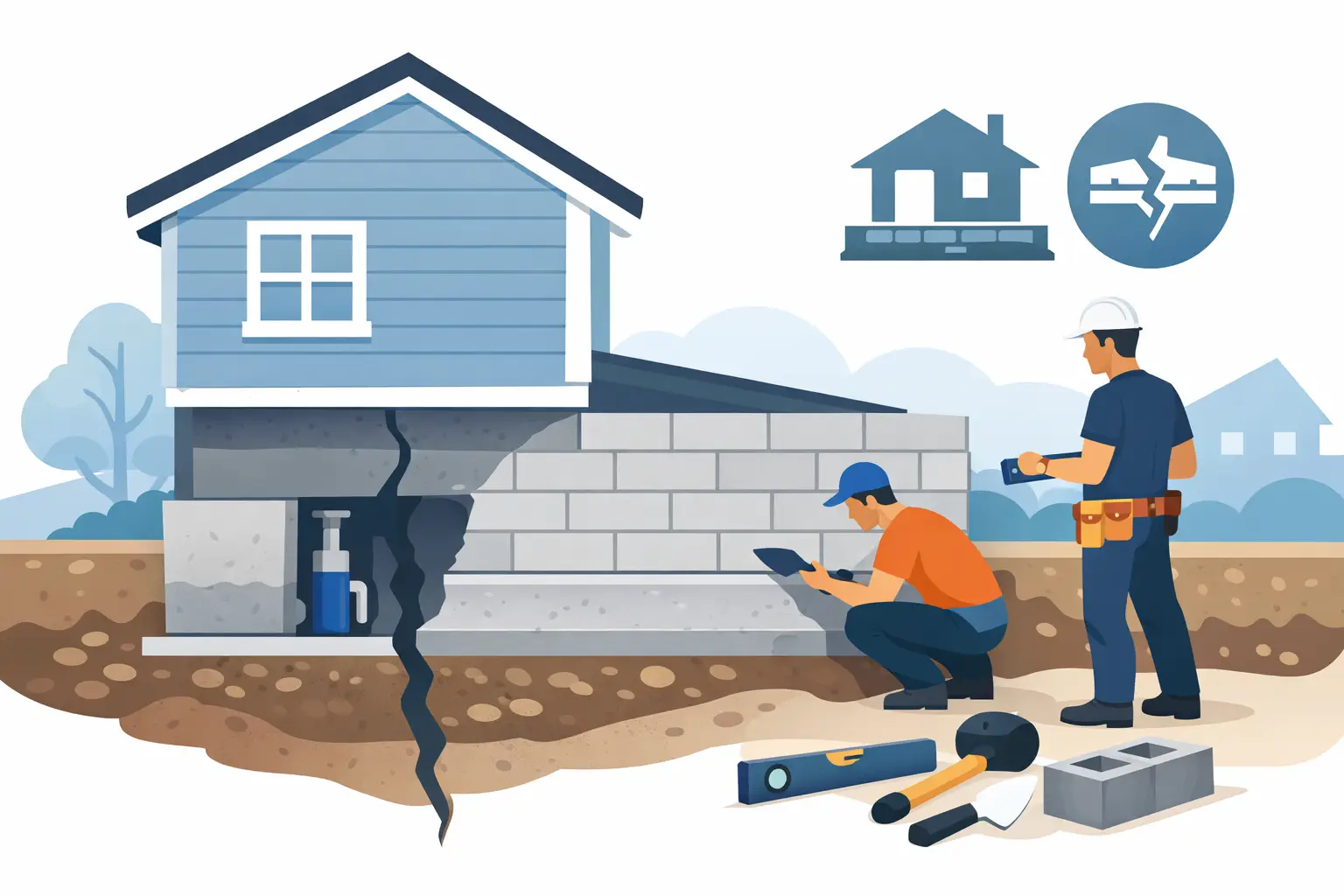
A block and base foundation is a type of raised foundation system that uses stacked blocks and support bases beneath beams and floor framing. In many cases, the home is elevated above the ground, creating a crawl space under the structure. That crawl space makes it easier to access plumbing and structural elements, but it also means the foundation depends on multiple support points staying stable over time.
Unlike a monolithic slab, a block and base system has several components that can move independently if conditions change under the home. Soil can expand and shrink. Moisture can collect where it should not. Blocks can shift, settle, or lose proper alignment. Wood framing can also react to long-term moisture exposure. When that happens, the floor system above starts telling the story.
Signs you may need block and base foundation repair
Most homeowners do not notice foundation movement all at once. They notice changes around the house that keep showing up. Floors may slope or bounce in certain areas. Interior doors may rub or refuse to latch. Windows may become harder to open. Cracks can appear in drywall, especially around door frames and corners.
Outside, you may see signs of moisture holding near the perimeter, poor drainage, or gaps that suggest movement below the structure. Inside the crawl space, support blocks may be leaning, separated, or no longer carrying weight evenly. Some homes also develop creaking floors or visible sagging along major beam lines.
Not every crack or sticking door means a major structural problem. Houses naturally age. Materials expand and contract. But when several symptoms appear together, or when they get worse over time, it is time for a professional inspection.
Why block and base foundations move in North Texas
In this region, the main issue is usually not one dramatic event. It is repeated movement caused by the relationship between soil and moisture. North Texas soils are known for expanding when wet and shrinking when dry. That constant cycle can affect support points under a raised home and create uneven settlement.
Drainage is another major factor. If water collects near the foundation after rain, the soil under one portion of the home can soften while other areas remain dry and stable. That imbalance can lead to differential movement, which means one section settles or shifts differently from another.
Age also matters. Older support systems may have materials that have simply reached the point where adjustment or replacement is needed. In some homes, previous repairs may not have addressed the root cause. A house can be releveled once, but if drainage problems remain, movement often returns.
How block and base foundation repair is diagnosed
A proper inspection should go beyond the symptoms you see inside the living space. The important work happens below the floor. A foundation specialist will usually look at floor elevation changes, support block conditions, beam alignment, crawl space moisture, drainage patterns, and any visible signs of wood deterioration or settlement.
This part matters because the right repair plan depends on the real cause of movement. Some homes need re-shimming and re-leveling. Others need support points rebuilt or reinforced. In more serious cases, damaged beams or unstable areas below the home may need a more involved structural correction. A one-size-fits-all approach is rarely the right answer.
That is why experienced local evaluation is so important. Homes in Dallas-Fort Worth deal with soil behavior and drainage patterns that are specific to this region. A repair plan should reflect that reality, not just the visible damage inside the home.
Common block and base foundation repair methods
The repair itself depends on the condition of the existing supports and how much movement has taken place. In many cases, the process includes re-leveling the home by adjusting the support system beneath the beams. This may involve adding shims, resetting blocks, or restoring contact where support points have shifted.
If blocks or bases are no longer stable, they may need to be replaced or rebuilt. The goal is to transfer the weight of the structure evenly and securely again. If wood beams have suffered moisture damage or deterioration, repairs may also include replacing compromised structural members.
Some homes need more than structural adjustment. If water has been contributing to the problem, drainage improvements are often part of the long-term solution. French drains, surface drains, and grading corrections can help control moisture around the foundation so the repaired system has a better chance of staying stable.
This is where honesty matters. Not every house needs an aggressive repair plan. But not every house can be fixed with a quick adjustment either. Good contractors explain the difference clearly and tell you what is necessary now versus what should be monitored over time.
What to expect during block and base foundation repair
Most property owners want to know two things right away: how disruptive it will be and whether the house will be perfectly level afterward. The truthful answer is that it depends on the age of the home, the amount of movement, and the condition of the materials underneath.
A repair crew will typically work from the crawl space, which limits disruption inside the home compared with some other foundation systems. Even so, adjustments below the structure can affect doors, trim, drywall, and flooring as the house settles into a corrected position. That does not always mean something went wrong. It often means the structure is responding to being brought back toward proper support.
As for levelness, the goal is stable structural support, not cosmetic perfection at any cost. In an older home, trying to force every room back to perfectly level can create unnecessary stress on materials that have adjusted over many years. A responsible contractor looks for the safest and most practical balance between correction and preservation.
Cost, value, and the risk of waiting
Foundation concerns make many homeowners nervous because they expect the worst on price. The actual cost of block and base foundation repair can vary widely based on how much settlement has occurred, how accessible the crawl space is, whether materials need replacement, and whether drainage work is also needed.
What usually costs more is delay. Small support issues can grow into larger structural problems. Moisture under the home can lead to wood damage, mold concerns, or plumbing complications. Minor floor slope can turn into significant movement that affects more of the house. The earlier a problem is identified, the more options you usually have.
There is also the value side to consider. A properly repaired and documented foundation helps protect your home’s usability, resale position, and long-term structural condition. For many families, that peace of mind matters just as much as the repair itself.
Choosing the right contractor for block and base foundation repair
Raised foundations require a different kind of experience than slab repairs. You want a contractor who understands crawl space structures, support systems, wood framing interaction, and the moisture patterns that drive movement in this part of Texas.
Look for clear explanations, practical recommendations, and a willingness to discuss trade-offs. If a contractor promises a quick fix without a close inspection, that is a red flag. If they explain what they found, why it happened, and how the repair plan addresses both the structure and the conditions around it, that is a better sign.
For homeowners in Dallas-Fort Worth, local history matters too. A company with deep roots in North Texas has likely seen the full range of problems these soils and drainage conditions can create. That kind of experience helps turn a stressful situation into a manageable one. At All American Foundation Repair & Drainage, LLC, that local knowledge has been part of the work for generations.
If your floors are uneven, your doors are sticking, or your crawl space supports look questionable, trust what your house is telling you. The right repair plan does more than lift a sagging floor – it helps protect the home you have worked hard to build and keep.