Arlington Foundation Repair Signs You Should Not Ignore
October 29, 2026
A door that suddenly rubs the frame, a crack that keeps growing across the living room wall, or rainwater standing beside the house can make any Arlington property owner uneasy. Arlington foundation repair begins with separating cosmetic wear from signs that the structure is responding to changing soil and moisture conditions. Acting on the right warning signs early can protect your home, limit related damage, and give you clearer repair options.
North Texas homes are built on expansive clay soils that swell when wet and shrink during dry stretches. That movement does not automatically mean a foundation has failed. It does mean that drainage, plumbing leaks, landscaping, and seasonal weather can affect how the soil supports your home over time.
Why Arlington Homes Are Vulnerable to Movement
The ground beneath a house should provide consistent support. In Arlington, that is not always easy. Clay-rich soil can hold significant moisture during rainy periods, then lose volume during heat and drought. When one area beneath the foundation is wetter or drier than another, the home may move unevenly.
This is why foundation concerns are often connected to water management. A gutter discharge that dumps water near one corner of the house, a low spot that directs runoff toward the slab, or a hidden plumbing leak can create uneven soil conditions. On the other side of the equation, very dry soil can pull away from the foundation perimeter and leave portions of the structure with less support.
Older homes can be especially susceptible because drainage patterns, landscaping, and previous repairs may have changed over decades. Newer homes are not immune, either. Construction age alone does not tell the whole story. A proper evaluation looks at the structure, the site, and the moisture conditions around it.
Arlington Foundation Repair Warning Signs
A single hairline crack is not always cause for alarm. Drywall can crack from normal settling, framing changes, or minor temperature shifts. The concern rises when several symptoms appear together, when damage is worsening, or when cracks are paired with operational problems in doors, windows, or floors.
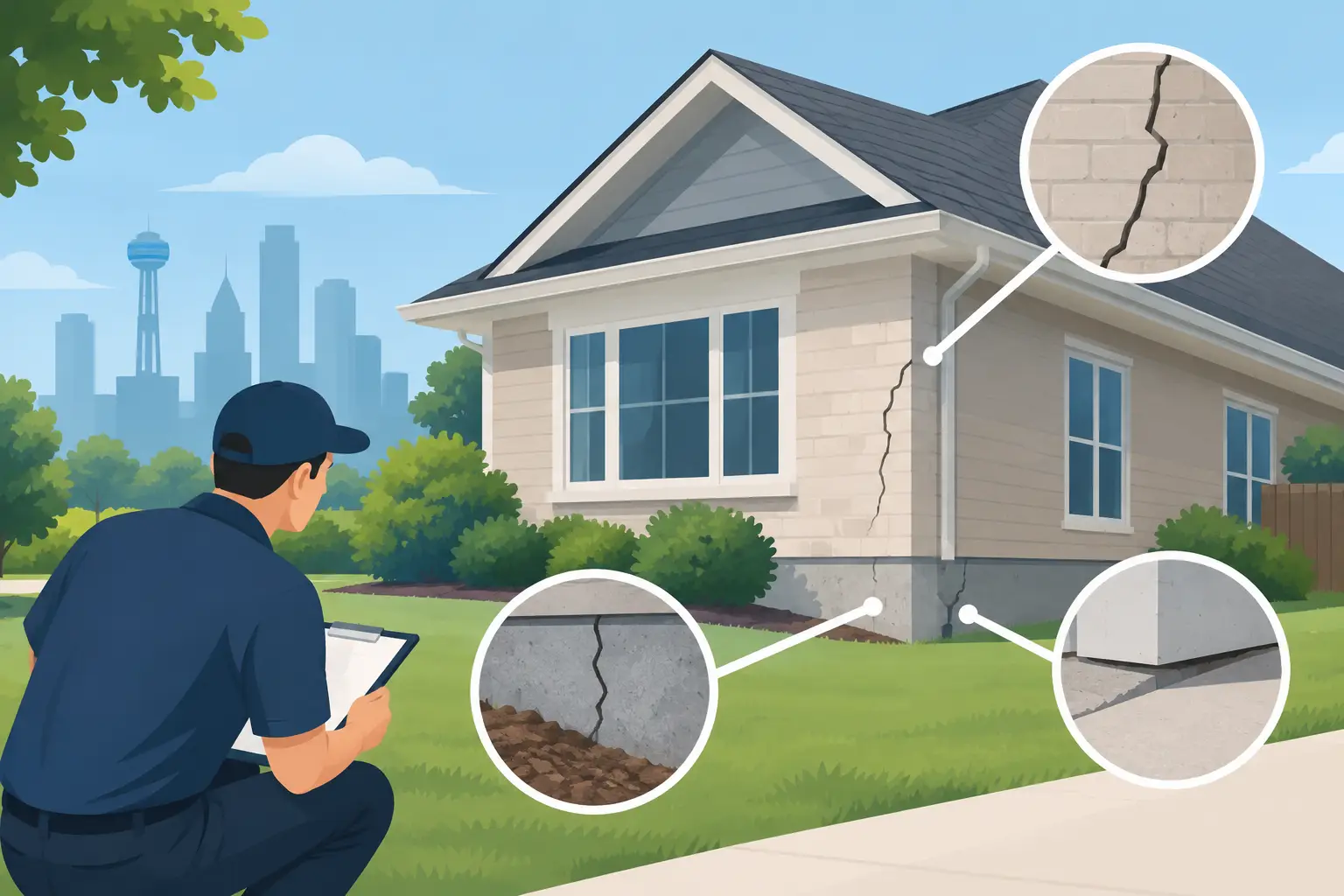
Watch for cracks that run diagonally from the corners of doors and windows, cracks in exterior brick or masonry, and separations where walls meet ceilings. Floors that slope, feel uneven, or develop gaps beneath baseboards can also point to movement. Doors and windows that stick after years of operating normally deserve attention, particularly if several are affected in different parts of the home.
Outside, look for brick cracks, gaps around trim, separating fascia, or a visible slope in patios and walkways near the home. These conditions may be related to foundation movement, but they can also show drainage problems that need correction before structural repairs are considered.
The best time to document a concern is when you first notice it. Take dated photos and make note of which doors are sticking, where cracks are located, and whether symptoms change after heavy rain or extended dry weather. That information helps an experienced contractor understand the pattern rather than judging the house from one symptom alone.
When a Crack Needs Prompt Attention
Call for a professional inspection promptly when a crack is widening, when brick is separating, or when a door will no longer latch because the frame has shifted. Significant changes following a plumbing leak, a major storm, or prolonged drought also warrant a closer look.
Do not assume the most expensive repair is the only solution. Some problems are primarily drainage-related. Others may require localized support, house leveling, or a more comprehensive repair plan. The goal is to identify the cause and recommend work that fits the actual condition of the property.
Drainage Is Part of Long-Term Foundation Protection
A foundation repair can address structural movement, but the conditions that contributed to that movement should not be ignored. If water consistently collects at the foundation, the soil may remain oversaturated along one side of the home. If roof runoff pours into beds near the house, that moisture can create the same imbalance.
Effective drainage solutions vary by property. Surface drains can collect runoff from low areas, while French drains can help manage water below the surface. Extending downspouts, correcting grading, and keeping gutters clear may also be part of a practical water-management plan. The right approach depends on the lot, soil conditions, roof layout, and where water naturally moves after rain.
There is a trade-off to consider. Adding drainage without understanding where the water will discharge can simply shift the problem to another area of the yard. Likewise, foundation work without addressing persistent drainage concerns may leave the home exposed to repeated soil movement. A long-term plan should consider both structural support and moisture control.
What a Professional Foundation Evaluation Should Include
A reliable inspection is more than a quick look at a wall crack. The contractor should review visible interior and exterior symptoms, evaluate elevations across the structure when appropriate, and examine drainage patterns around the property. They should also ask about past repairs, plumbing events, recent weather-related changes, and the age of the home.
You deserve a clear explanation of what was found. That includes whether the observed movement appears active, what repair options are appropriate, and what may happen if the issue is left untreated. If drainage correction is recommended, the explanation should connect the water issue to the foundation concern in plain language.
Be cautious of anyone who offers a repair price without evaluating the home or who pressures you to approve work before you understand the recommendation. Foundation work is a major investment. A detailed, property-specific plan is more valuable than a one-size-fits-all answer.
For Arlington homeowners, local experience matters because repair decisions should account for North Texas soil behavior and the way homes in this area are commonly built. At All American Foundation Repair & Drainage, LLC, our team has worked with local foundation and drainage conditions since 1969. We believe a homeowner should know what is happening, why it is happening, and what the recommended work is designed to accomplish.
Repair Options Depend on Your Foundation Type
The repair method should match the foundation system and the source of the movement. Slab foundations may require concrete piers or other support methods to stabilize and, when appropriate, lift areas that have settled. The exact placement and number of piers should be based on measured conditions, not guesswork.
Pier and beam homes require a different approach. These foundations may need adjustments to support beams, shimming, replacement of damaged wood components, or attention to crawl space moisture and drainage. Block and base systems also need a plan tailored to their construction and support layout.
House leveling can improve function and reduce visible symptoms, but it is not always realistic or advisable to remove every cosmetic crack from an older home. Some finishes may not return to perfect alignment after structural correction. A trustworthy contractor will set practical expectations before work starts, explain what the repair is intended to achieve, and discuss any cosmetic repairs that may be needed afterward.
Do Not Wait for Small Problems to Become Major Repairs
Foundation symptoms tend to create secondary problems over time. Gaps can allow moisture and pests inside. Misaligned doors can damage frames and hardware. Cracks in masonry and drywall may grow, and uneven floors can affect how a home feels and functions. In commercial properties, movement can also disrupt operations, damage finishes, and create maintenance concerns.
Early action does not mean rushing into repairs. It means getting dependable information while you still have time to make a measured decision. A free estimate, a next-business-day response, financing options, and warranty-backed workmanship can make that decision less overwhelming for property owners facing an unexpected structural concern.
If your home is showing multiple warning signs or water is regularly collecting near the foundation, trust what you are seeing. A careful evaluation can turn uncertainty into a practical plan for protecting the place you have worked hard to call home.