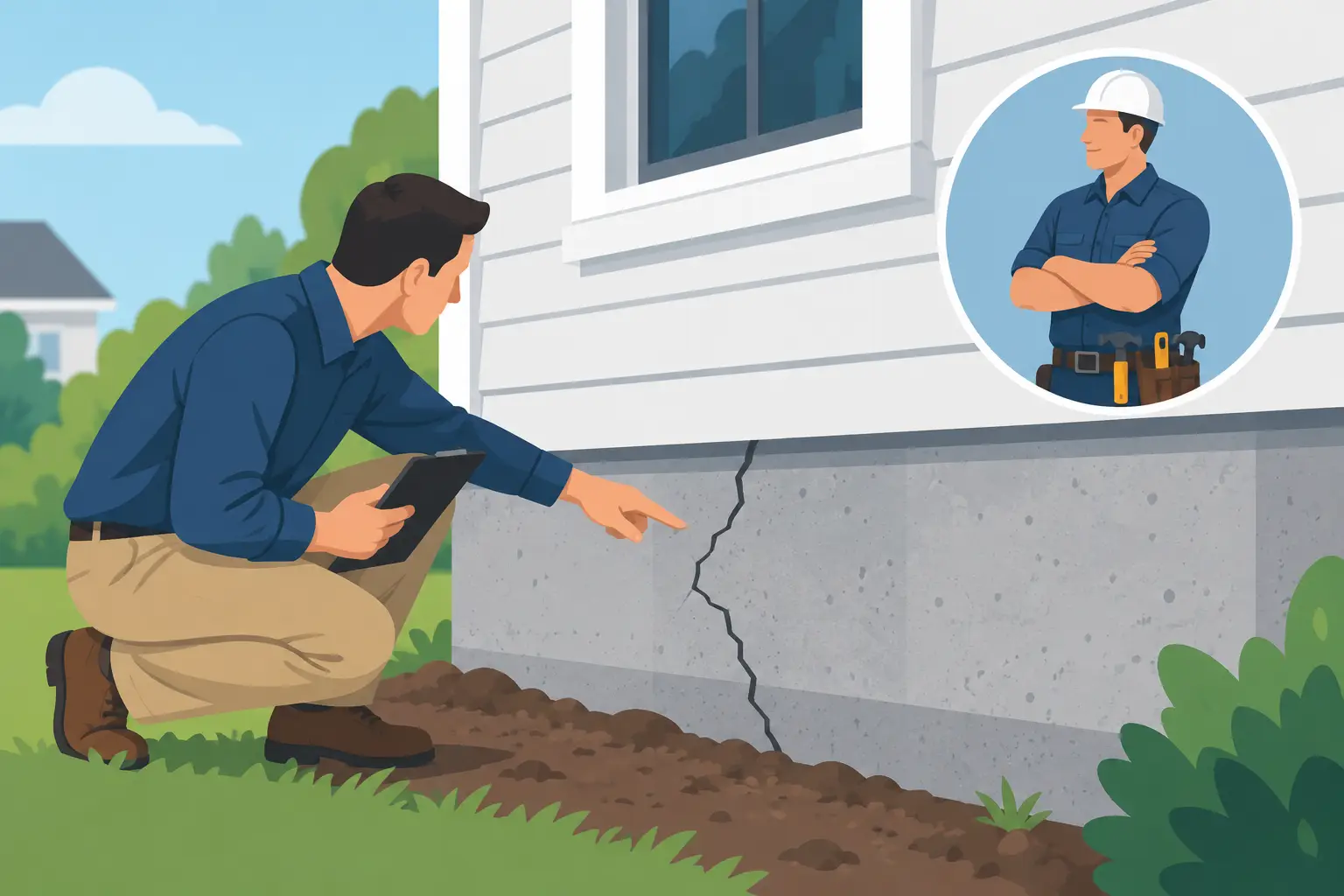
Foundation Cracks: When to Call a Repair Pro
October 14, 2026
A hairline line across a garage slab may be nothing more than concrete curing. A stair-step crack in brick, a widening gap above a window, or a crack paired with doors that suddenly will not latch is a different conversation. Foundation cracks are not all emergencies, but they are always worth understanding – especially in Dallas-Fort Worth, where expansive clay soil can move dramatically as moisture levels change.
The goal is not to panic over every mark in concrete or drywall. It is to recognize when a crack may be showing you that the house is moving, why that movement is happening, and what should be done before a manageable issue becomes a larger repair.
What Foundation Cracks Can Tell You
Concrete is strong under compression, but it can crack when it shrinks, settles, bends, or experiences uneven pressure. Some cracks occur as a slab cures and may remain stable for years. Others develop because one area of the foundation is rising, dropping, or rotating differently than the rest of the structure.
The pattern, location, width, and change over time matter more than whether a crack exists at all. A professional inspection looks at the entire property rather than judging one crack by itself. Interior wall damage, floor elevation, brick lines, plumbing history, grading, gutter discharge, and soil moisture around the home all help explain the cause.
For North Texas properties, the usual question is not simply, “Is the concrete cracked?” It is, “What is the soil and water doing beneath and around this building?”
Hairline and Vertical Cracks
Small hairline cracks, particularly in exposed concrete, garage floors, or along a poured foundation wall, can be related to normal curing or minor settlement. A narrow vertical crack is often less concerning than a horizontal crack, but it should still be monitored. Take a dated photo and note whether the crack grows, branches, or begins allowing water inside.
A crack that stays thin and unchanged may only need cosmetic attention. If it widens or appears alongside other movement signs, it deserves a closer look.
Diagonal and Stair-Step Cracks
Diagonal cracks through drywall, especially those extending from door and window corners, often point to movement in the structure. On brick veneer, stair-step cracks that follow mortar joints can indicate uneven foundation movement. They do not automatically prove a major structural failure, but they should not be dismissed as ordinary cosmetic wear.
These cracks are particularly significant when they are widening, repeated on multiple exterior walls, or accompanied by gaps between brick and trim.
Horizontal Cracks and Bowing Walls
Horizontal cracks in a foundation wall or cracks paired with inward bowing require prompt professional evaluation. They can be associated with lateral soil pressure, water buildup, or compromised wall performance. This concern is more common with basements and retaining walls than with typical North Texas slab homes, but any horizontal cracking below grade deserves serious attention.
Why Foundation Movement Happens in Dallas-Fort Worth
North Texas clay soil expands when it absorbs water and contracts as it dries. That cycle can create uneven support beneath a slab foundation. One side of a home may receive runoff from a neighboring roof, poor grading, or an irrigation leak while another side dries under trees and summer heat. Over time, that difference can cause parts of the foundation to shift.
Dry weather can be just as troublesome as heavy rain. During extended drought, soil can pull away from the foundation, reducing support in certain areas. Afterward, heavy rainfall may rapidly rehydrate the soil and create upward pressure. The change itself is often the problem.
Plumbing leaks can also contribute to movement. A leak under a slab or near the perimeter can soften soil and create localized settlement. Drainage failures, overflowing gutters, short downspouts, negative grading, and poorly placed landscaping can concentrate water where it does not belong.
Tree roots are sometimes blamed for every foundation issue, but the more common concern is moisture competition. Large trees can draw significant moisture from clay soil, particularly when planted close to the home. The right solution depends on the tree, its distance from the foundation, the soil conditions, and the actual movement pattern. Removing a tree without a proper evaluation can create its own problems.
Signs That Cracks Need Professional Attention
A single small crack does not tell the whole story. Homeowners should pay more attention when cracks appear with changes in how the house functions. Doors and windows that stick, tile cracks, sloping floors, separated trim, cracked brick, gaps at garage openings, and cabinets pulling away from walls can all be part of the same movement pattern.
Call for an inspection when you notice a crack that is growing, wider than a hairline, diagonal, horizontal, or present with other signs of movement. It is also wise to request help after a major plumbing leak, repeated standing water near the foundation, or a sudden change following drought or heavy storms.
Do not cover fresh cracks with caulk or paint and assume the issue is solved. Cosmetic repair can hide the evidence needed to identify active movement. If you want to patch a crack for appearance, document it first with clear photographs and measurements.
How a Foundation Inspection Should Work
A dependable evaluation begins with listening. When did you first notice the damage? Has it changed? Has the home had prior work, water leaks, drainage modifications, or recent landscaping changes? These details help establish a useful history.
The inspection should include the exterior, interior, drainage conditions, and accessible structural areas. For slab homes, elevation readings help identify whether the floor has experienced measurable variation. For pier and beam homes, the crawlspace, beams, piers, joists, and moisture conditions should be examined where accessible.
The result should be a clear explanation, not pressure. Some homes need foundation repair. Others need drainage correction, plumbing investigation, moisture management, monitoring, or no structural work at all. A good recommendation identifies the likely cause and explains why a particular repair plan fits the property.
Repair Is Not One-Size-Fits-All
When repair is needed, the method should match the foundation type and movement conditions. Slab foundations may require carefully placed concrete piers or other support systems to stabilize and, where appropriate, adjust affected areas. Pier and beam homes may need leveling, beam work, pier support, or repairs to deteriorated components.
There are trade-offs. Lifting a structure can improve function and reduce visible damage, but some older finishes may not return perfectly to their original appearance. Drywall, brick, flooring, and trim can respond differently as a house is adjusted. An honest contractor explains what the repair is intended to accomplish and what cosmetic work may remain afterward.
Drainage Is Often Part of the Long-Term Solution
Foundation repair addresses support and movement. Drainage work helps control one of the most common causes of future movement: uncontrolled water. If roof runoff pools beside the home or the yard slopes toward the slab, repairing the foundation without improving water management may leave the underlying conditions unchanged.
Depending on the property, a solution may include correcting surface grading, extending downspouts, installing a surface drain, or using a French drain to collect and redirect water. The right approach depends on where the water originates, where it travels, and where it can safely discharge.
Avoid the temptation to water or dry out the soil aggressively in response to cracks. Consistency is generally more helpful than extremes. Keep gutters maintained, direct water away from the foundation, repair obvious leaks promptly, and avoid creating concentrated wet spots around the perimeter.
Protect the Home Before Damage Spreads
Foundation concerns can feel overwhelming because your home carries both financial value and family history. The most useful next step is usually a clear assessment while the evidence is still visible and the options are still broad. Waiting does not always make repairs more expensive, but active movement can lead to additional damage in walls, floors, brick, plumbing, and drainage systems.
For more than 57 years, All American Foundation Repair & Drainage has helped Dallas-Fort Worth property owners understand what their homes are telling them and choose practical, long-term solutions. A free estimate, straightforward findings, financing options, and warranty-backed work can replace uncertainty with a plan.
If a crack is changing, paired with sticking doors or uneven floors, or followed by water problems around the home, trust what you are seeing. A timely professional evaluation can protect your property, your comfort, and the stability you have worked hard to build.