Foundation Cracks Versus Settling Explained
June 27, 2026
A hairline crack over a doorway can feel minor until the back door starts sticking and the floor seems just a little off. That is usually when homeowners start asking about foundation cracks versus settling and whether what they are seeing is normal aging or a real structural warning.
In North Texas, that question deserves a careful answer. Homes in the Dallas-Fort Worth area deal with expansive clay soil, shifting moisture levels, long dry stretches, and sudden heavy rain. Those conditions can put stress on a foundation over time. Some movement is common. Some cracking is cosmetic. But some signs point to settlement that should be addressed before the damage spreads into walls, floors, plumbing, and drainage problems.
Foundation cracks versus settling: what is the difference?
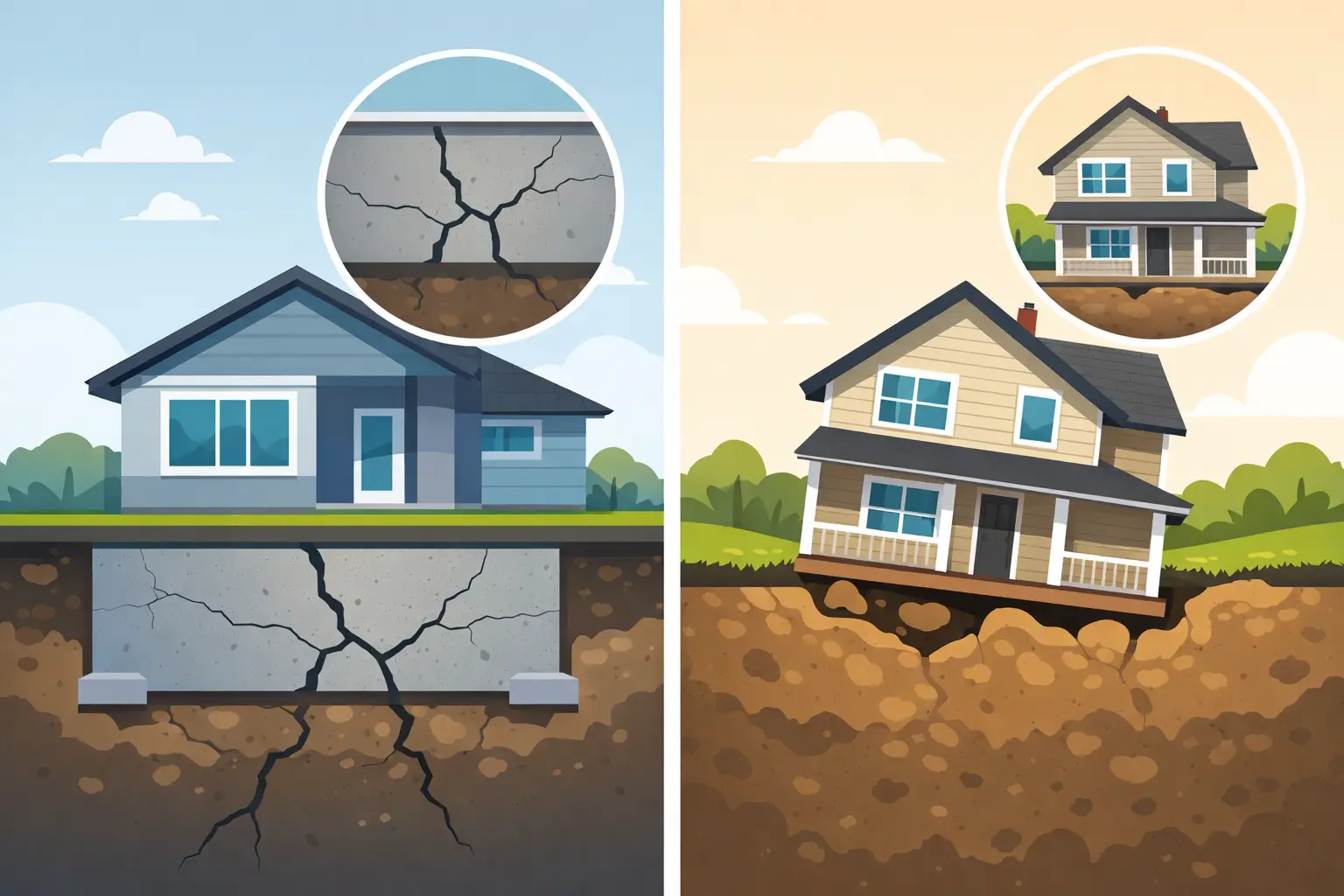
The two terms are related, but they are not the same thing. Foundation settling describes movement of the structure as the soil beneath or around it changes. That movement may be downward, uneven, or concentrated in one area of the home. Cracks are one possible symptom of that movement.
In other words, settling is the condition. Cracks are often the evidence.
That distinction matters because not every crack means major settlement, and not every settling problem shows up first as a dramatic crack in the foundation itself. Sometimes the earliest clues are inside the home – doors that rub, windows that stop latching, gaps at trim, sloping floors, or stair-step cracking in brick or masonry.
A homeowner can usually see the symptom, but not always the cause. That is why a foundation inspection should look at the whole picture rather than a single crack in isolation.
What normal settling looks like
Most buildings experience some degree of settling after construction. Materials dry, framing adjusts, and the home finds its place over time. Small cosmetic cracks can appear as part of that process, especially in drywall. A thin vertical crack at a door corner or a slight seam opening in tape and texture does not always mean the foundation is failing.
Normal settling tends to be minor, gradual, and limited in effect. You may see a small crack that stays the same size for years. Doors and windows still operate normally. Floors remain level enough that daily use feels unchanged.
The challenge in North Texas is that homes do not just deal with age. They deal with active soil movement. Expansive clay can swell when wet and shrink when dry. That cycle can make a house move beyond what most people would call normal settling.
When cracks point to a bigger problem
A crack becomes more concerning when it shows a pattern of active movement or appears alongside other symptoms. Width matters, location matters, and so does the direction of the crack.
For example, diagonal cracks extending from the corners of doors and windows often suggest stress from uneven movement. Stair-step cracks in exterior brick can indicate one section of the foundation is moving differently than another. Long cracks in concrete slabs, separation between walls and ceilings, or gaps around window frames can also signal settlement.
One crack by itself may not tell the whole story. Several cracks in different parts of the home, especially if they are growing, deserve prompt attention.
There is also a practical difference between cosmetic cracking and structural cracking. Cosmetic cracks affect appearance. Structural cracks suggest the home is responding to movement underneath it. Homeowners do not need to diagnose that on their own, but they should take recurring or worsening signs seriously.
Signs of settling that homeowners notice first
In many cases, homeowners notice functionality before they notice the foundation. A bedroom door that suddenly will not close, cabinets separating from the wall, or a floor that feels uneven underfoot may be the first clear warning.
Common signs associated with settlement include interior wall cracks, exterior brick cracks, doors and windows that stick, gaps at trim or molding, sloping floors, and visible separation where walls meet ceilings. On pier and beam homes, you may also notice floor bounce or shifting under certain rooms. On slab foundations, the symptoms can feel more rigid – cracked tile, split grout lines, or a pattern of movement concentrated in one section of the house.
If several of these signs start appearing together, that usually points to more than simple aging.
Why North Texas homes are especially vulnerable
Dallas-Fort Worth foundations work against one of the toughest soil profiles in the country. Expansive clay moves with moisture. During dry periods, the soil contracts and can leave gaps under parts of a slab or around support areas. When heavy rain returns, the soil swells again. If moisture levels are uneven around the home, one side may move differently than the other.
Poor drainage makes the problem worse. Water collecting near the foundation can oversaturate one area while another area remains dry. Leaking plumbing, short downspouts, negative grading, and missing drainage control can all contribute. Over time, repeated movement stresses the structure.
That is why foundation repair and drainage correction are often connected. Repairing movement without addressing water management can leave the underlying cause in place.
Foundation cracks versus settling in slab and pier and beam homes
Both foundation types can settle, but they often show symptoms differently.
In slab foundations, movement may appear as floor cracks, tile damage, wall separation, or brick cracking on the exterior. Because the home sits directly on the concrete slab, stress often transfers visibly into the finished surfaces.
In pier and beam homes, settling can show up through sagging floors, gaps under baseboards, shifting supports, or softness and unevenness in certain areas. Moisture under the home, drainage issues, and support deterioration can all affect performance.
The important point is that the same visible crack can mean different things depending on the type of foundation, the age of the structure, and the soil and drainage conditions around it. That is where local experience matters.
When should you schedule an inspection?
A good rule is simple: if the signs are new, worsening, or showing up in more than one area, schedule an inspection. You do not need to wait until a crack becomes dramatic.
You should also act sooner if you notice repeated seasonal movement, large exterior cracks, doors and windows failing across multiple rooms, pooling water near the home, or interior damage that has been repaired before and keeps returning. Recurring symptoms usually mean the source of movement was never fully corrected.
For property owners, early action is often the less expensive path. Small issues can become larger repair projects when movement continues unchecked. Brick damage can spread. Floor finishes can crack. Plumbing lines under a slab can be stressed. Buyers and lenders may also raise concerns when visible movement has been ignored.
What a professional evaluation should include
A proper inspection should not stop at measuring a crack. It should evaluate the structure, the pattern of movement, and the conditions around the home that may be contributing to settlement.
That means looking at elevation changes, foundation type, interior and exterior symptoms, drainage layout, grading, moisture conditions, and any signs of plumbing or water intrusion issues. If a company jumps straight to a repair recommendation without explaining why the movement is happening, that should raise questions.
Homeowners deserve a clear explanation of what is being seen, whether the issue appears cosmetic or structural, and what options make sense for the property. Sometimes the answer is active repair. Sometimes the better next step is monitoring, drainage correction, or a combination approach.
That honest middle ground matters. Not every home needs major underpinning right away. But when real settlement is present, delaying repairs can leave the house more vulnerable.
The right fix depends on the cause
There is no one-size-fits-all repair for settlement. A slab foundation may need concrete piers to stabilize and support areas that have dropped. A pier and beam home may need leveling and support adjustments. If drainage is the driver, French drains, surface drains, grading improvements, or runoff control may be part of the long-term solution.
The best repair plan should address both stability and moisture control. Otherwise, you may fix the symptom without reducing the stress that caused it.
For homeowners in Duncanville and across DFW, that is where a contractor with deep local experience makes a difference. All American Foundation Repair & Drainage has worked in North Texas soil conditions since 1969, and that kind of history matters when the goal is not just to patch damage, but to protect the structure for the long run.
If your home is showing cracks, sticking doors, uneven floors, or signs of drainage trouble, trust what the house is telling you. A timely inspection can replace uncertainty with a clear plan and help you protect one of the biggest investments you will ever own.