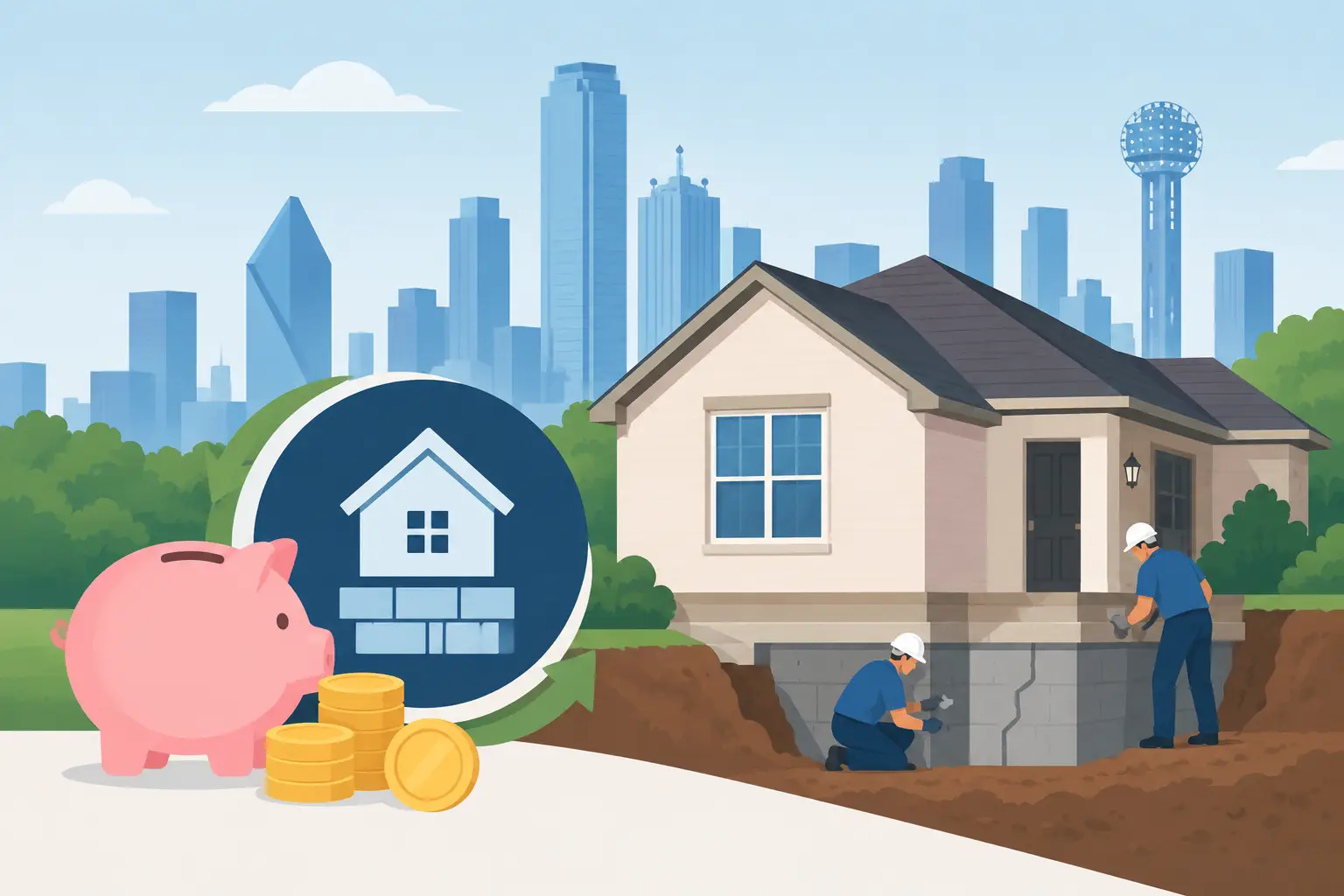
How to Finance Foundation Repairs in Dallas
October 12, 2026
A foundation problem rarely arrives at a convenient time. One day, a bedroom door starts sticking. Then a crack appears above a window, floors feel uneven, or water begins collecting beside the slab after a North Texas storm. When the repair estimate follows, the next question is often how to finance foundation repairs without putting your household or property at greater risk.
The right answer depends on the cause of the movement, the scope of repair, your available equity, and how quickly the work needs to begin. What should not be delayed is a professional assessment. In Dallas-Fort Worth, expansive clay soil and drainage problems can continue moving a structure long after the first visible warning sign. A clear diagnosis gives you a repair plan you can budget for instead of guessing at a number.
Start With a Clear Repair Scope and Written Estimate
Before choosing a financing method, make sure you are financing the right work. Foundation symptoms can come from several sources: shifting soil, water pooling near the home, plumbing leaks, poor grading, aging support systems, or a combination of conditions. Repairing only the visible crack without addressing the cause may create another expense later.
A thorough inspection should explain what is moving, why it is moving, and what repair method fits the structure. A slab foundation may need concrete or steel piers. A pier and beam home may need support adjustments, beam work, or drainage correction. In many North Texas homes, a French drain or surface drain is part of protecting the repair because controlling moisture around the foundation matters year-round.
Ask for a written estimate that separates the major parts of the project. You should understand the proposed repair, drainage work if recommended, permit or engineering needs when applicable, warranty terms, payment schedule, and expected project timing. This gives you a dependable figure to compare with your financing options.
Contractor Financing Can Keep Repairs Moving
For many homeowners, contractor financing is the most direct path. Qualified foundation companies may offer financing programs designed for major home repairs, often with an application process that is faster than applying for a traditional bank loan.
This option can make sense when the damage needs attention soon and you want to preserve savings for other household needs. Depending on approval and the available program, you may be able to spread the cost into predictable monthly payments rather than paying the entire amount upfront.
Read the terms carefully before signing. Look beyond the monthly payment and ask about the annual percentage rate, length of the loan, origination fees, prepayment penalties, deferred-interest terms, and what happens if a promotional period ends before the balance is paid. A lower monthly payment can be helpful, but a longer term may increase the total amount you pay.
At All American Foundation Repair & Drainage, the goal of a financing conversation should be straightforward: help you understand the available path forward, not pressure you into a repair plan that does not fit your property or budget.
Consider Home Equity Carefully
If you have built equity in your home, a home equity loan or home equity line of credit may offer a lower interest rate than unsecured borrowing. A home equity loan generally provides a lump sum with fixed payments. A HELOC works more like a revolving line of credit, which can be useful if repairs and related drainage work will be completed in stages.
The trade-off is time and risk. These products can require an appraisal, closing process, and lender approval, so they may not be the fastest choice when structural movement is active. They also use your home as collateral. Missing payments can put your property at serious risk.
A cash-out refinance is another equity-based option, but it deserves extra caution. Replacing a low-rate existing mortgage with a higher-rate loan just to fund repairs may cost far more over time. It can be reasonable in certain situations, but compare the full loan cost with other financing choices before deciding.
Use Savings Strategically, Not Recklessly
Paying with savings avoids loan interest and can simplify the project. It is often a strong option when the repair cost is manageable and you can still keep an emergency reserve after payment.
Do not drain every available dollar just to avoid financing. A foundation repair may also reveal related needs, such as gutter improvements, grading changes, plumbing repairs, or interior cosmetic work after stabilization. Families should retain enough cash for normal emergencies and the unexpected costs that can come with homeownership.
Some property owners combine savings with financing. For example, they may make a larger down payment to reduce the financed balance while keeping enough reserves for other priorities. That approach can lower monthly payments without leaving the household exposed.
Personal Loans and Credit Cards: Understand the Cost
An unsecured personal loan can be a practical option for homeowners who do not want to borrow against their home or who need funds faster than an equity loan allows. These loans usually have fixed payments and set repayment terms. Interest rates vary widely based on credit history, income, debt, and loan amount.
Credit cards may work for a small portion of a repair or an immediate deposit, particularly if a short-term promotional rate is available. They are usually a poor fit for a large foundation project that will take years to repay. Standard credit card interest can make an already necessary repair much more expensive.
If you use a promotional card, calculate whether you can realistically pay the balance before the promotional period ends. Deferred-interest offers can be especially costly if interest is charged retroactively after a missed deadline.
Do Not Count on Insurance Until You Review the Policy
Many homeowners assume foundation repairs are covered by homeowners insurance. In most cases, normal settling, soil movement, drainage problems, and long-term moisture conditions are excluded. Texas policies often have specific exclusions related to foundation movement and earth movement.
Coverage may apply when the damage results from a covered event, such as a sudden plumbing leak, but the policy language and the cause of damage matter. Review your policy, document the symptoms, and speak with your insurer before assuming coverage is available. If a claim is denied, you still need a repair plan that protects the structure from further damage.
How to Finance Foundation Repairs Without Missing the Bigger Problem
The least expensive financing option is not always the best value. A low-interest loan does little good if it funds an incomplete repair that fails to address drainage or ongoing moisture changes around the foundation.
When comparing estimates and payment options, focus on four practical questions:
- Does the plan identify the cause of movement, not just the symptom?
- Does it include necessary drainage correction or explain why it is not needed?
- Are the warranty terms clear, including what is covered and what maintenance is expected?
- Can you make the payment comfortably while keeping an emergency cushion?
A qualified repair plan should protect the long-term stability of the property. That is particularly important for homeowners planning to sell, refinance, age in place, or pass a home down to family. Documented repairs performed by an established contractor can also be easier to explain to future buyers than an untreated foundation issue.
Take Action Before the Damage Spreads
Foundation movement can affect more than walls and floors. As a home shifts, doors and windows may stop operating correctly, plumbing connections can be stressed, exterior brick can crack, and water may find new paths toward the structure. Waiting for a problem to become urgent usually reduces your choices and increases the final cost.
Begin with a professional evaluation and an honest discussion of the repair priorities. If the full scope cannot be completed immediately, ask whether there are steps that can reduce water exposure or prevent conditions from worsening while you arrange financing. Temporary measures are not a substitute for structural repair, but they can be part of a responsible plan.
Your home is one of your largest investments. A well-planned foundation repair, paired with financing you understand and can manage, is a practical way to protect its safety, stability, and value for the years ahead.