House Leveling Dallas Homeowners Can Trust
October 10, 2026
A door that suddenly sticks, a new crack above a window, or a floor that feels lower on one side of the room can make any property owner worry. In North Texas, those signs often point to soil movement beneath the home. House leveling Dallas homeowners need is not simply about making floors feel even again. It is about correcting foundation movement with a repair plan that protects the structure for the long term.
Dallas-Fort Worth homes sit on expansive clay soils that react strongly to moisture. During dry weather, clay can shrink and pull away from the foundation. After heavy rain, it swells. That cycle can cause sections of a slab or pier and beam foundation to move at different rates. A professional evaluation helps determine whether leveling is needed, where the movement began, and what should be done to reduce the chance of future problems.
What House Leveling Is Designed to Correct
House leveling is a foundation repair process used to restore support where a home has settled, heaved, or shifted. The right method depends on the foundation type, the soil conditions, the severity of movement, and the cause of the problem. There is no responsible one-size-fits-all repair.
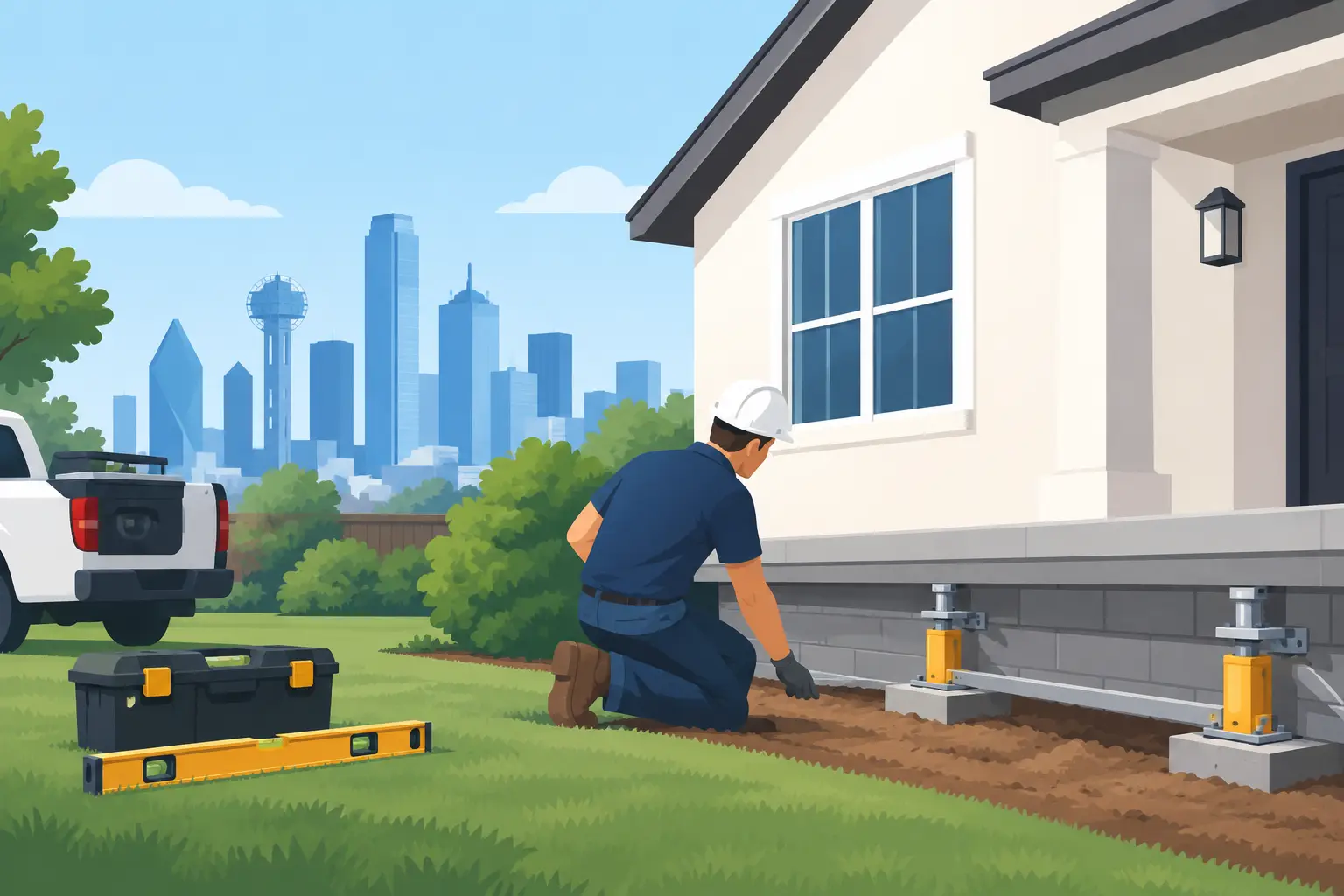
For many slab foundations, repair may involve installing concrete piers beneath affected portions of the structure. These piers transfer the home’s weight to more stable bearing material below the active soil zone. Once the foundation is properly supported, technicians can carefully lift it toward its appropriate position. The goal is controlled stabilization, not forcing every cosmetic crack to disappear.
Pier and beam homes require a different approach. The work may include shimming, replacing deteriorated beams, adjusting support posts, or adding concrete supports where the structure needs better bearing capacity. Block and base foundations also need a plan built around their particular layout and support system.
Leveling can improve uneven floors, gaps around trim, sticking doors, and some wall cracks. Still, every house responds differently. Older homes may have framing movement, prior repairs, or finishes that cannot return exactly to their original appearance. A trustworthy contractor explains those limitations before work begins.
Signs Your Dallas Home May Need Leveling
Foundation concerns rarely begin with one dramatic event. More often, property owners notice several small changes over time. The most meaningful signs are patterns that continue, worsen, or appear in multiple areas of the home.
Inside, look for cracks in drywall, especially diagonal cracks extending from doors and windows. Doors or windows that no longer open and close normally can also signal movement, although humidity and normal wear can cause similar issues. Sloping floors, separated baseboards, cracked tile, and gaps between cabinets and walls deserve attention as well.
Outside, stair-step cracks in brick mortar, cracks in the foundation itself, separations around garage doors, and a chimney pulling away from the home can indicate structural movement. Drainage issues are another major warning sign. Water that ponds near the foundation, overflowing gutters, or soil that slopes toward the house can keep the ground around the structure too wet.
One crack alone does not automatically mean major foundation repair is necessary. Homes expand and contract, and minor cosmetic cracking can occur. The concern rises when cracks grow, recur after repair, or appear alongside uneven floors and operating problems with doors or windows. A professional inspection replaces guesswork with useful information.
Why Dallas Soil and Drainage Matter So Much
The foundation is only part of the story. The soil supporting it and the water moving around it are just as important. North Texas clay soil needs reasonably consistent moisture conditions. Extreme drying on one side of a home and excess water on another can create differential movement, where one section rises or falls more than the rest.
This is why a repair recommendation should include a close look at drainage. Installing piers may stabilize an affected area, but unmanaged water can still create trouble around other parts of the foundation. Depending on the property, a long-term plan may call for gutter improvements, surface drains, French drains, grading correction, or better discharge routing away from the house.
Drainage work is not automatically required with every leveling project. A home on a well-graded lot with properly functioning gutters may need only structural support. But when water is collecting near the foundation or flowing toward the home, addressing it is a practical part of protecting the repair investment.
What to Expect During a House Leveling Inspection in Dallas
A thorough inspection should begin with listening. A foundation specialist needs to know when you first noticed the changes, whether the area has experienced drought or heavy rain, and whether prior repairs have been performed. That history often helps identify whether movement is ongoing and what conditions may be contributing to it.
The inspection should include both the interior and exterior of the property. The evaluator may check floor elevations, inspect visible cracks, assess doors and windows, examine foundation walls or crawl space components, and review the grading and drainage around the building. For commercial properties, the scope may also consider structural loads, exterior paving, and water flow across the site.
Afterward, you should receive a clear explanation of the findings. If repairs are recommended, ask what type of foundation support will be used, which areas are affected, how the work will be performed, and whether drainage correction should be part of the plan. The proposal should explain the warranty and what it covers. Clear answers matter because foundation repair is a significant decision for any property owner.
Choosing the Right Repair Plan
The lowest estimate is not always the best value, especially if it leaves the cause of movement unaddressed. Compare proposals based on the repair method, number and placement of piers or supports, drainage recommendations, warranty terms, and the contractor’s experience with Dallas-area soil conditions.
It is also wise to be cautious about anyone who recommends extensive work without inspecting the entire home and surrounding property. Foundation movement can be localized, but the reason for that movement may be found elsewhere, such as poor drainage at a back corner or a leaking line near the slab. A good plan targets the actual problem rather than selling unnecessary work.
Ask how the contractor handles cosmetic repairs after leveling. Structural leveling may close some cracks, but drywall, brick, paint, and flooring repairs are often separate from foundation work. Knowing that distinction upfront helps set realistic expectations and prevents surprises after the structural repair is complete.
For homeowners concerned about cost, financing options can make necessary repairs more manageable. The most useful next step is not delaying until damage becomes more visible. It is getting a professional opinion while the repair options are still clear.
Protecting Your Foundation After Leveling
Once a foundation has been stabilized, consistent maintenance helps protect the home. Keep gutters clear, extend downspouts so water discharges away from the foundation, and watch for low areas where runoff collects. During extended dry periods, follow appropriate watering guidance for the property to avoid severe moisture swings in the soil.
Also pay attention to plumbing leaks, irrigation overspray, and changes to landscaping or hardscaping. A new flower bed, patio, or driveway alteration can change how water moves around the home. Small drainage corrections made early are usually easier than dealing with years of repeated saturation near the foundation.
All American Foundation Repair & Drainage has served North Texas property owners for decades with customized foundation and drainage solutions built around real site conditions, not assumptions. A free estimate gives you a practical starting point, whether the answer is immediate leveling, drainage correction, monitoring, or simple maintenance.
If your floors feel uneven or cracks are becoming harder to ignore, do not let uncertainty take over. A careful inspection can give you a clear path forward and help protect the home you have worked hard to build.