Foundation Repair Double Oak Homeowners Trust
September 26, 2026
A door that suddenly sticks, a crack that keeps growing above the living room window, or a floor that no longer feels level can make a home feel uncertain. Foundation repair Double Oak property owners need is not about chasing cosmetic cracks. It is about identifying what is moving, why it is moving, and what will protect the structure for the long term.
Double Oak homes face the same North Texas reality as much of the Dallas-Fort Worth area: expansive clay soil. That soil can swell when it is wet and shrink during dry stretches. When moisture levels around a foundation change dramatically, the ground beneath the home can shift. The result may be foundation movement, drainage problems, and damage that becomes more expensive when left unaddressed.
Why Double Oak Foundations Move
A foundation is only as stable as the soil supporting it. North Texas clay soils hold significant moisture, then lose it during heat and drought. As the soil expands and contracts, it can place uneven pressure on a slab foundation or cause portions of a pier and beam home to settle.
Water is often the deciding factor. A broken sprinkler head near the house, gutters that discharge at the foundation, low spots in the yard, or poor grading can keep one area too wet. At the same time, dry conditions can pull moisture from another area. That imbalance is what creates trouble.
Trees can also play a role. Mature trees add value and shade, but their root systems need water. During dry periods, roots may draw moisture from the soil around the home. This does not mean every tree near a house is a foundation problem. It does mean a proper inspection should consider tree placement, soil conditions, drainage patterns, and the specific movement observed in the structure.
Signs It Is Time to Schedule an Inspection
One crack alone does not automatically mean a home needs structural repair. Concrete, drywall, and framing all experience some normal movement over time. The concern rises when multiple signs appear, when cracks widen, or when conditions continue to change.
Watch for cracks in brick, exterior mortar, drywall, or tile; doors and windows that stick or will not latch; gaps around trim or cabinets; floors that slope or feel uneven; and separation where walls meet ceilings. Outside, pooling water near the foundation, standing water after rain, and soil pulling away from the slab deserve attention as well.
The pattern matters more than any single symptom. A diagonal crack at a window corner may be minor, while the same crack combined with sticking doors, a sloping floor, and exterior brick separation calls for a closer look. A qualified foundation professional should measure elevations, inspect visible structural conditions, and evaluate how water moves across the property before recommending repairs.
Foundation Repair in Double Oak Should Start With Answers
A dependable repair plan starts with an honest inspection, not a one-size-fits-all sales pitch. The goal is to determine whether the structure is actively moving, whether prior movement has stabilized, and whether drainage is contributing to the problem.
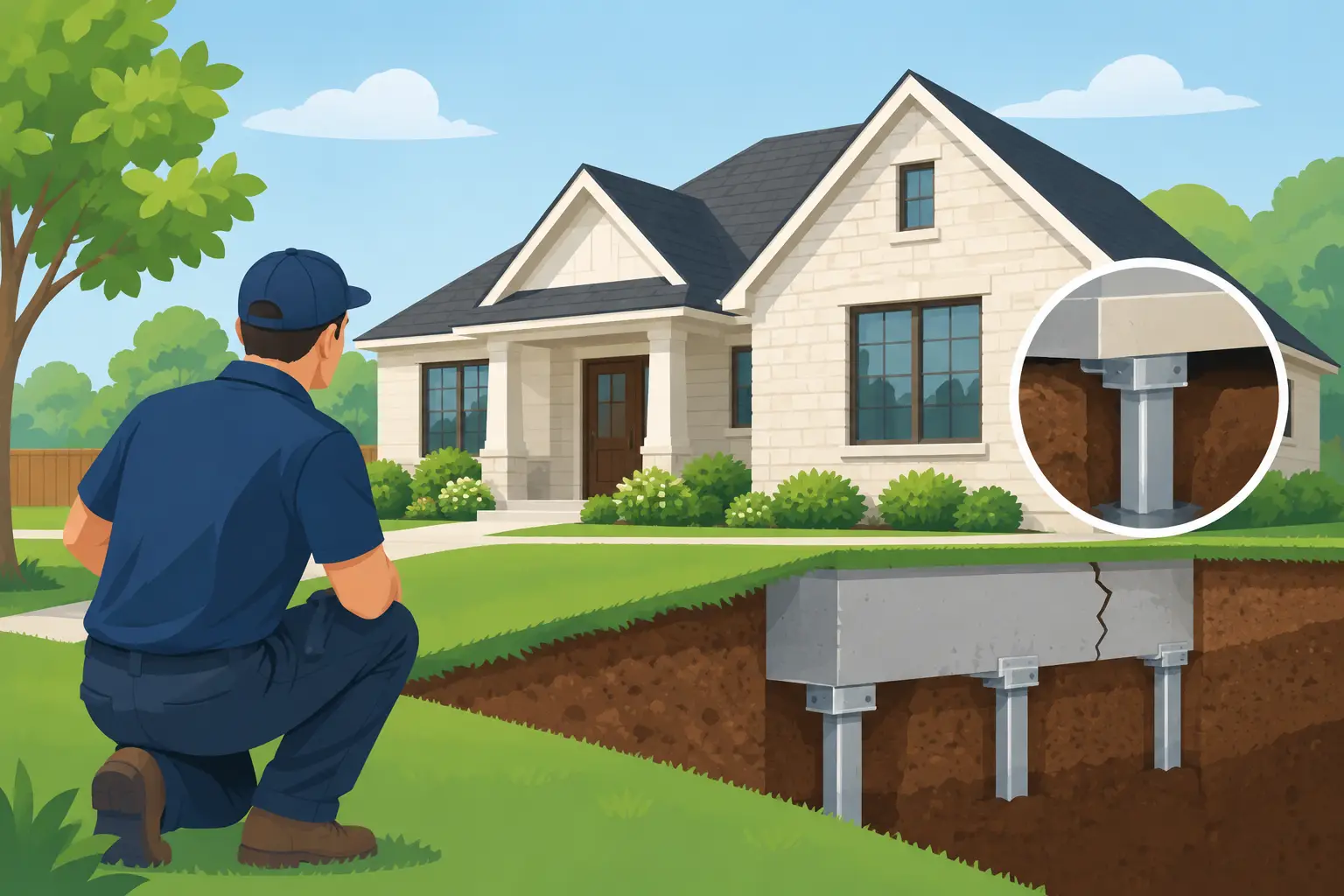
For slab foundations, repairs often involve installing concrete piers at selected points around the perimeter or beneath load-bearing areas. These piers are designed to support the foundation and help stabilize affected sections. House leveling may be part of the work when conditions allow, but lifting a home is not always the sole goal. In many cases, stabilization is the priority, especially when lifting could create additional stress on finishes, plumbing, or framing.
Pier and beam foundations require a different approach. The work may involve adjusting or replacing supports, addressing weakened beams or joists, improving crawl space conditions, and correcting moisture issues below the home. Block and base structures also require a repair plan tailored to their construction and current support conditions.
No responsible contractor should promise that every cosmetic crack will disappear or that every floor will become perfectly level. Homes age, materials respond differently, and the safest repair target depends on the structure. What homeowners should expect is a clear explanation of the recommended work, the reason it is needed, and what realistic results look like.
Stabilization and drainage often belong together
Foundation piers address support. They do not automatically correct the water conditions that contributed to soil movement in the first place. If runoff continues to collect near the house, the soil can remain unstable even after structural work is completed.
That is why drainage should be part of the conversation. A French drain may be appropriate where groundwater or persistent subsurface moisture is affecting the property. A surface drain can collect and redirect runoff from low areas, patios, downspouts, or landscape beds. In other cases, regrading, extending downspouts, or repairing irrigation issues may provide the needed improvement.
The right drainage solution depends on the lot. A system that works well on one Double Oak property may not fit another because lot elevation, landscaping, roof runoff, soil, and nearby hardscapes all affect where water goes. The best plan moves water away from the foundation without creating a new problem elsewhere on the property.
What a Practical Repair Process Looks Like
Homeowners often worry that a foundation inspection will lead immediately to a major project. A professional process should reduce uncertainty, not add pressure. It begins with listening to the homeowner’s concerns and reviewing the history of the home. When did the crack first appear? Has it changed? Is there standing water in the yard? Were plumbing leaks, landscaping changes, or drainage work completed recently?
Next comes the inspection. This may include checking interior and exterior cracks, evaluating doors and windows, measuring floor elevations, looking at drainage routes, and reviewing accessible structural areas. The contractor should explain the findings in plain language and distinguish between active structural concerns and cosmetic conditions.
If repairs are recommended, the proposal should identify the work area, repair method, expected scope, and warranty information. Ask questions before signing. You should understand where supports will be installed, whether leveling is included, how landscaping or concrete may be affected, and what steps will help protect the repair afterward.
Protecting Your Home After Repairs
Foundation repairs are a major investment, and maintenance helps preserve that investment. The most useful habit is managing consistent moisture around the home. That does not mean soaking the soil or trying to keep the yard perfectly wet. It means preventing extremes caused by poor drainage, leaks, or unmanaged runoff.
Keep gutters clear and make sure downspouts carry water well away from the foundation. Repair leaking outdoor faucets and irrigation lines promptly. Avoid allowing flower beds or mulch to trap water against the house. During extended dry weather, follow the guidance of your foundation professional regarding controlled watering around the perimeter, particularly where soil separation is visible.
Pay attention after heavy rain. Water should not stand against the foundation for long periods. If it does, that observation can help identify whether a surface drain, French drain, or grading correction is needed.
Choosing a Foundation Contractor With Local Experience
Foundation work is not the place to make a decision on price alone. The lowest proposal may leave out drainage correction, use a repair scope that does not match the problem, or provide limited support after the work is finished. A higher price is not automatically better either. The value is in a repair plan that fits the home, the soil, and the conditions causing movement.
Look for a contractor that explains findings clearly, has experience with North Texas foundations, provides written repair details, and stands behind the work with a meaningful warranty. Financing can also help homeowners address necessary repairs before damage spreads into flooring, walls, plumbing, or exterior masonry.
All American Foundation Repair & Drainage has served North Texas property owners since 1969 with tailored structural and drainage solutions. Our family-owned team understands that a foundation concern affects more than concrete. It affects the safety, comfort, and value of the place you call home.
If you are seeing changes in your Double Oak home, do not wait for one more season of heat, rain, or shifting soil to provide the answer. A careful inspection and a practical plan can replace uncertainty with a clear path forward.