Can Weather Affect Foundation Repair?
June 26, 2026
A foundation problem rarely starts with one dramatic event. More often, a homeowner in North Texas notices a door that suddenly sticks after a long dry spell, or new wall cracks that seem to spread after heavy rain. If you have been asking, can weather affect foundation repair, the short answer is yes. Weather can influence when damage shows up, how severe it becomes, and how repair work should be planned for lasting results.
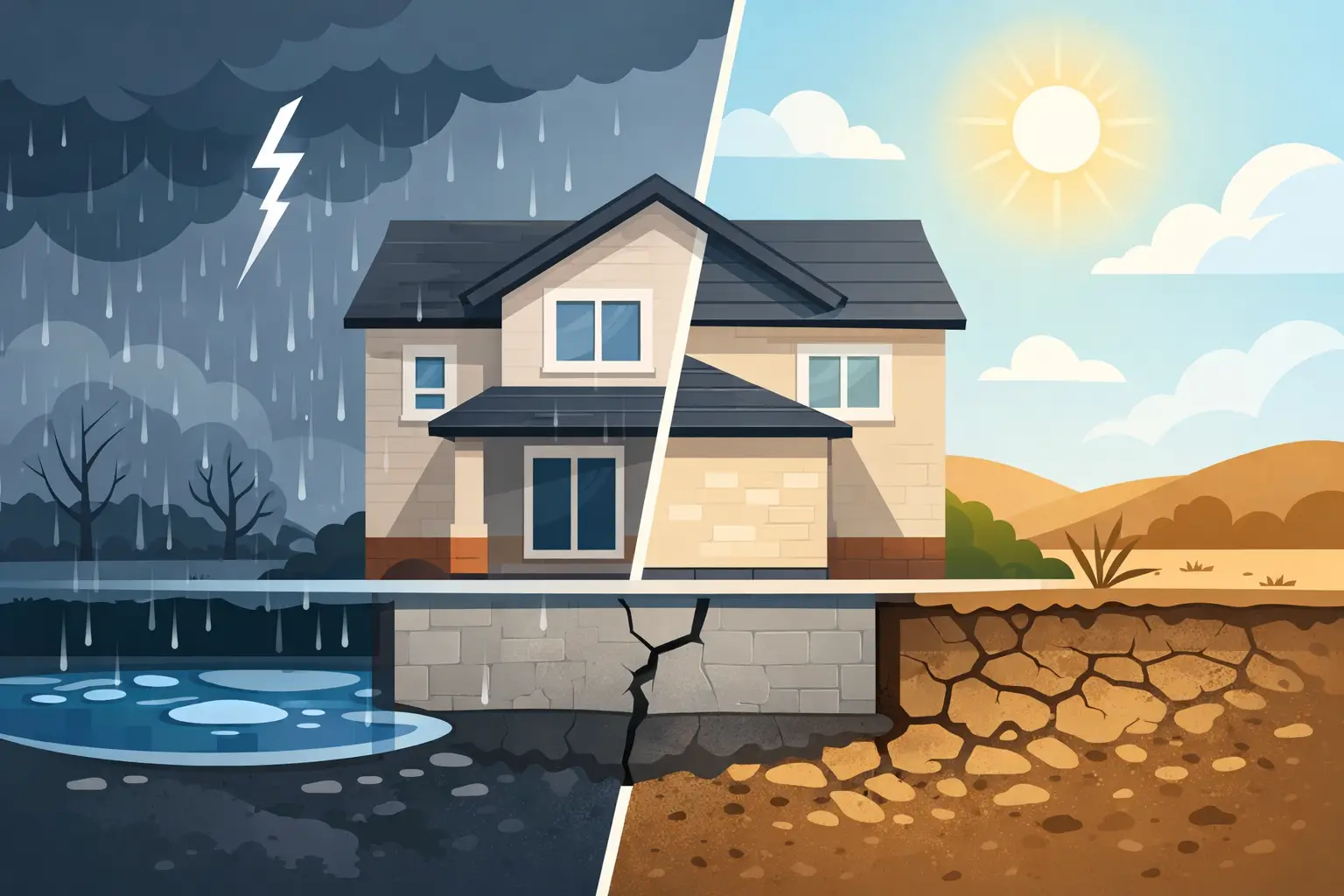
In the Dallas-Fort Worth area, weather matters even more because of our soil. Much of North Texas has expansive clay soil, which swells when it gets wet and shrinks when it dries out. That constant movement puts stress on slab foundations, pier and beam systems, and other structural supports. A repair plan that ignores weather and drainage is only addressing part of the problem.
Can Weather Affect Foundation Repair in North Texas?
Yes, and it affects more than just scheduling. Weather can change soil moisture levels, which directly impacts how the ground beneath and around your home behaves. When the soil expands and contracts too much, your foundation can shift unevenly. That movement may lead to cracks in brick, drywall separation, uneven floors, and windows or doors that stop operating properly.
For homeowners, this matters because foundation repair is not just about lifting or stabilizing a structure. It is also about correcting the conditions that caused the movement in the first place. If those conditions are tied to ongoing weather patterns, the repair strategy should account for them.
That is why experienced contractors in this region pay close attention to drainage, grading, moisture control, and seasonal timing. A foundation can often be repaired year-round, but the surrounding site conditions may call for a different approach depending on recent rain, extreme heat, or prolonged drought.
How Rain Affects Foundation Movement and Repair
Heavy rain can be hard on a home if water is not being directed away properly. When too much moisture collects near the perimeter, the soil can swell and push against parts of the foundation. If one area stays wetter than another, the movement may become uneven.
This is especially common when a property has clogged gutters, poor grading, standing water, or no effective drain system. One side of the home may hold moisture while another side dries out. Over time, that imbalance can cause differential settlement or heaving.
From a repair standpoint, rainy periods can create both urgency and opportunity. On one hand, active drainage problems are easier to identify when water is actually moving through the property. On the other hand, saturated soil can affect excavation conditions and may slow certain parts of the work. That does not mean repairs should always wait. It means the repair plan should be built around real site conditions, not guesswork.
In many cases, drainage correction needs to go hand in hand with structural repair. If the water issue remains, the foundation may continue to experience movement even after piers or leveling work are completed.
Drought and Extreme Heat Can Be Just as Damaging
Many homeowners assume water is the main threat, but long periods of heat and drought can be just as hard on a foundation in North Texas. As clay soil loses moisture, it contracts. Gaps can form between the soil and the foundation, reducing support in certain areas.
That loss of support can lead to settlement, especially around the edges of a slab. You may start seeing stair-step cracks in brick, interior sheetrock cracks, or floors that feel slightly out of level. These changes are often gradual at first, but they can become more noticeable after a summer of intense heat.
Drought conditions can also affect repair planning. If the soil is extremely dry and pulled away from the home, an experienced contractor will consider whether moisture conditions are temporary, seasonal, or tied to larger drainage and watering issues. Repairing the structure without discussing moisture management may leave the property vulnerable to repeated stress.
This is one reason local experience matters. A contractor who understands North Texas soil behavior knows that weather patterns are not background noise. They are often part of the root cause.
What About Cold Weather?
Cold weather usually plays a smaller role in DFW than heat and moisture swings, but it can still matter. Freezing temperatures can affect the workday, especially if concrete is involved or the ground is unusually hard. Material performance, cure times, and jobsite access may all need a closer look during winter weather events.
That said, foundation problems do not pause for winter. If your home is showing clear signs of structural movement, it is still worth getting it inspected. Waiting for perfect weather can allow cracks and alignment issues to worsen.
In our area, the bigger concern is usually the shift from one moisture extreme to another. A dry stretch followed by strong rain can create sudden changes in soil pressure around the home. Those transitions are often what trigger visible signs of movement.
Can Foundation Repair Be Done in Bad Weather?
Often, yes, but it depends on the type of repair and current site conditions. Many foundation repair methods can be performed in a range of weather conditions, especially when the contractor has the equipment and experience to work safely and efficiently. Still, severe storms, flooding, lightning, or extremely saturated ground may delay part of a project.
The key issue is not convenience. It is quality. Good contractors do not push ahead under conditions that could compromise the work, create unsafe access, or prevent a proper assessment of elevation and structural performance.
Sometimes a short delay is the right call. Other times, moving quickly is more important because the home is actively shifting or water is causing ongoing damage. That is why no honest company should promise the same timeline or method for every home. Foundation repair is always tied to the structure, the soil, and the weather conditions around it.
Why Drainage Is Part of the Answer
If you are asking whether weather can affect foundation repair, you are really asking a bigger question: what keeps the repair working long term? In many cases, the answer includes drainage.
A repaired foundation still sits in the same yard, with the same slope, the same roof runoff, and the same soil conditions unless those issues are addressed too. If water continues pooling near the house or one side of the property stays oversaturated, movement can continue. That does not mean the repair failed. It may mean the original moisture problem never got corrected.
That is why drainage solutions such as French drains, surface drains, and grade corrections are often part of a complete recommendation. Structural stabilization and water management are closely connected in North Texas. Treating one without the other can leave a homeowner frustrated later.
Signs Weather May Be Making Your Foundation Problem Worse
A few patterns are worth taking seriously. If cracks open wider after a hot summer, if doors stick more after heavy rain, or if standing water collects around your home after storms, weather is likely contributing to the issue. You may also notice separation at trim, gaps around windows, or floors that seem to slope more during certain seasons.
Some seasonal movement is common in this region, but recurring or worsening symptoms should not be dismissed. The longer a home moves without a clear plan, the harder it can be to control the damage and related repair costs.
When to Schedule an Inspection
The best time to schedule an inspection is when you notice signs of trouble, not when the weather becomes ideal. An inspection can help determine whether you are seeing minor seasonal movement, a drainage-driven issue, or a structural problem that needs repair.
A dependable contractor will look at more than the cracks. They should evaluate elevations, moisture patterns, drainage behavior, and the foundation type. They should also explain what needs attention now and what can be monitored over time.
For homeowners in Duncanville and across DFW, that local understanding makes a real difference. All American Foundation Repair & Drainage has worked in these soil conditions for decades, and that kind of experience helps when weather is part of the problem.
Foundation issues are stressful enough without trying to guess whether the next storm or dry spell will make things worse. The right repair plan accounts for weather, soil, and drainage together, so your home is protected not just for this season, but for the years ahead.