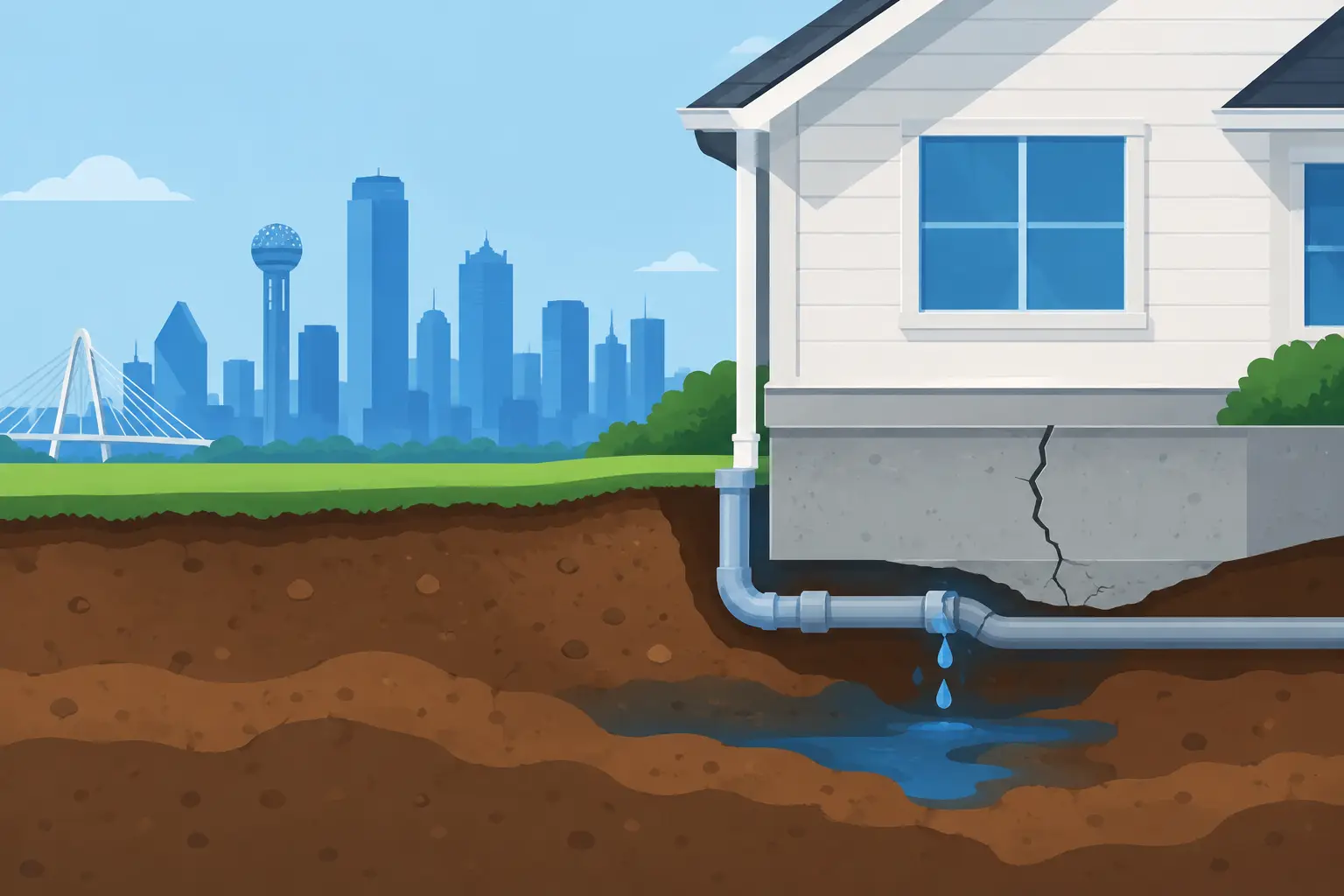
Can Plumbing Leaks Shift Foundations in DFW?
November 22, 2026
A leak under a slab can stay out of sight while it changes the ground supporting your home. So, can plumbing leaks shift foundations? Yes. A persistent plumbing leak can contribute to foundation movement, particularly in the expansive clay soils common across Dallas-Fort Worth. The leak itself does not push a house around, but the moisture it adds to the soil can cause that soil to swell, soften, erode, or lose its ability to support the structure evenly.
For homeowners, that distinction matters. A foundation problem tied to a plumbing leak often requires two solutions: repair the source of the water and evaluate any structural movement that has already occurred. Addressing only one side can leave the underlying problem unresolved.
How Plumbing Leaks Affect a Foundation
Your foundation depends on consistent support from the soil below and around it. North Texas clay soils are especially sensitive to moisture. When they absorb water, they expand. When they dry out, they shrink and pull away. Repeated or uneven moisture changes can cause one area of a slab to rise while another settles.
A plumbing leak creates an unnatural concentration of water. For a slab foundation, the concern is often a leak in a water line or sewer line beneath the home. Water may saturate a limited section of soil for weeks or months before obvious symptoms appear. As the soil changes volume or strength, the foundation may no longer be supported evenly.
With pier and beam homes, a leak can create a different set of problems. Water in the crawl space can soften supporting soils, contribute to wood moisture damage, and encourage conditions that weaken structural components over time. Standing water also needs prompt attention because it can point to a drainage or plumbing failure that will not correct itself.
Not every leak leads to foundation damage. The risk depends on the amount of water involved, how long the leak has existed, the soil type, the home’s construction, and whether the property already has drainage concerns. A small, quickly repaired leak is very different from a long-term under-slab leak that continually saturates one area.
Signs a Plumbing Leak May Be Shifting Your Foundation
Foundation movement and plumbing leaks can share several warning signs, which is why a careful inspection is more useful than guessing from one symptom alone. You may notice cracks in sheetrock, brick, or interior tile. Doors may begin sticking, windows may become difficult to open, and floors may feel uneven in areas that once felt level.
Water-related clues are equally important. An unexplained increase in your water bill, the sound of running water when fixtures are off, warm spots on a floor, damp carpet, mildew odors, or recurring wet areas near the home can all suggest a leak. Sewer line issues may bring slow drains, unpleasant odors, or soft ground outside.
Look for patterns, not just isolated imperfections. A single hairline crack may be normal settling or minor cosmetic movement. But widening cracks, new gaps around trim, multiple sticking doors, or signs that occur near a suspected leak deserve professional attention. The sooner the water source is identified, the more options you may have for limiting additional damage.
Why North Texas Soil Raises the Stakes
Homes in the Dallas-Fort Worth area contend with a cycle of heavy rain, high summer heat, dry spells, and expansive clay. That clay can exert significant pressure as it swells, then lose support as it dries and contracts. A hidden plumbing leak adds moisture at the wrong place and often at the wrong time.
This is also why foundation repairs should not be treated as a one-size-fits-all project. The right repair plan must consider where the home is moving, what the soil is doing, whether plumbing is involved, and how surface water drains around the property. Raising or stabilizing a foundation without addressing ongoing water exposure can create avoidable risk down the road.
Can a Leak Cause a Foundation to Settle or Rise?
It can cause either, depending on conditions. Excess moisture may cause expansive clay to swell, which can lift a portion of the slab. In other cases, flowing water can wash away or weaken supporting soil, allowing an area to settle. A damaged sewer line may also create voids or unstable soil beneath or near the foundation.
The location of the leak matters. A leak near the center of a slab can produce a different movement pattern than one near an exterior beam. A broken line outside the home can affect perimeter soils, while poor drainage may add another source of moisture at the same location. That is why a proper evaluation considers both the structure and the path water is taking across the property.
It is also possible for a plumbing leak to expose a foundation issue that was already developing. The leak may accelerate movement in a home that has experienced years of soil-related stress. A qualified foundation contractor can help identify the movement pattern, but a licensed plumber should locate and repair active plumbing leaks before structural repairs are finalized whenever possible.
What to Do If You Suspect an Under-Slab Leak
Start by taking the concern seriously, but do not assume the worst from a crack alone. Check whether your water meter continues moving when all water-using fixtures and appliances are off. Review recent water bills for unusual increases. If you suspect a leak, contact a licensed plumber for leak detection and repair.
After the plumbing issue is addressed or clearly identified, have the foundation evaluated if you see structural symptoms. An inspection should look beyond visible cracks. The goal is to understand elevation changes, the type and location of damage, drainage conditions, soil behavior, and whether the home needs stabilization, monitoring, or a drainage correction.
Avoid covering up the warning signs with caulk, patching, or cosmetic repairs before the cause is understood. Those repairs may make a room look better temporarily, but they do not stop active movement. They can also make it harder to track whether cracking is continuing.
Do You Always Need Foundation Repair After a Leak?
No. Some leaks are found early and repaired before they cause meaningful structural movement. Other homes show minor cosmetic effects but remain stable after the moisture source is corrected. In those situations, monitoring and proper drainage may be the most reasonable path.
However, if measurements show settlement, heave, or ongoing movement, foundation repair may be necessary to restore stability and protect the home from further damage. Depending on the home and the movement pattern, repairs may involve concrete piers, house leveling, or other engineered support methods. The proper option should be based on the property’s conditions, not a predetermined sales pitch.
Drainage often belongs in the conversation as well. Surface drains, French drains, and grading corrections can help direct water away from the foundation. These systems do not repair a broken plumbing line, but they can reduce the additional moisture stress that contributes to soil movement around the home.
Protecting Your Home After Leak Repairs
Once the leak is repaired, keep moisture around the foundation as consistent as practical. Make sure gutters and downspouts carry roof runoff away from the house. Correct areas where water stands near the slab, and watch for drainage changes after major storms. During prolonged dry weather, follow a sensible foundation watering routine appropriate for your property and local conditions.
Keep records of leak repairs, plumbing reports, water bills, and photos of cracks or affected areas. This documentation can be useful during a foundation inspection and gives you a clearer picture of whether conditions are improving or changing.
A plumbing leak does not automatically mean a major foundation repair is ahead. But when water and structural symptoms appear together, waiting can allow a manageable concern to become a larger one. All American Foundation Repair & Drainage has helped North Texas property owners understand movement, moisture, and practical long-term repair options since 1969. If your home is showing signs of both, a professional evaluation can replace uncertainty with a clear plan for protecting your property.