French Drain vs Surface Drain: Which Fits?
July 4, 2026
Water around a home rarely stays a small problem for long. In North Texas, where clay soil expands, contracts, and puts constant pressure on foundations, the choice between a french drain vs surface drain can affect far more than a soggy yard. It can influence how well your property sheds water, how stable your foundation stays, and how much repair work you may avoid later.
For many homeowners, the confusion starts because both systems are designed to move water away. That part is true. The difference is where the water is coming from, how it travels, and what kind of protection your property actually needs.
French drain vs surface drain: the basic difference
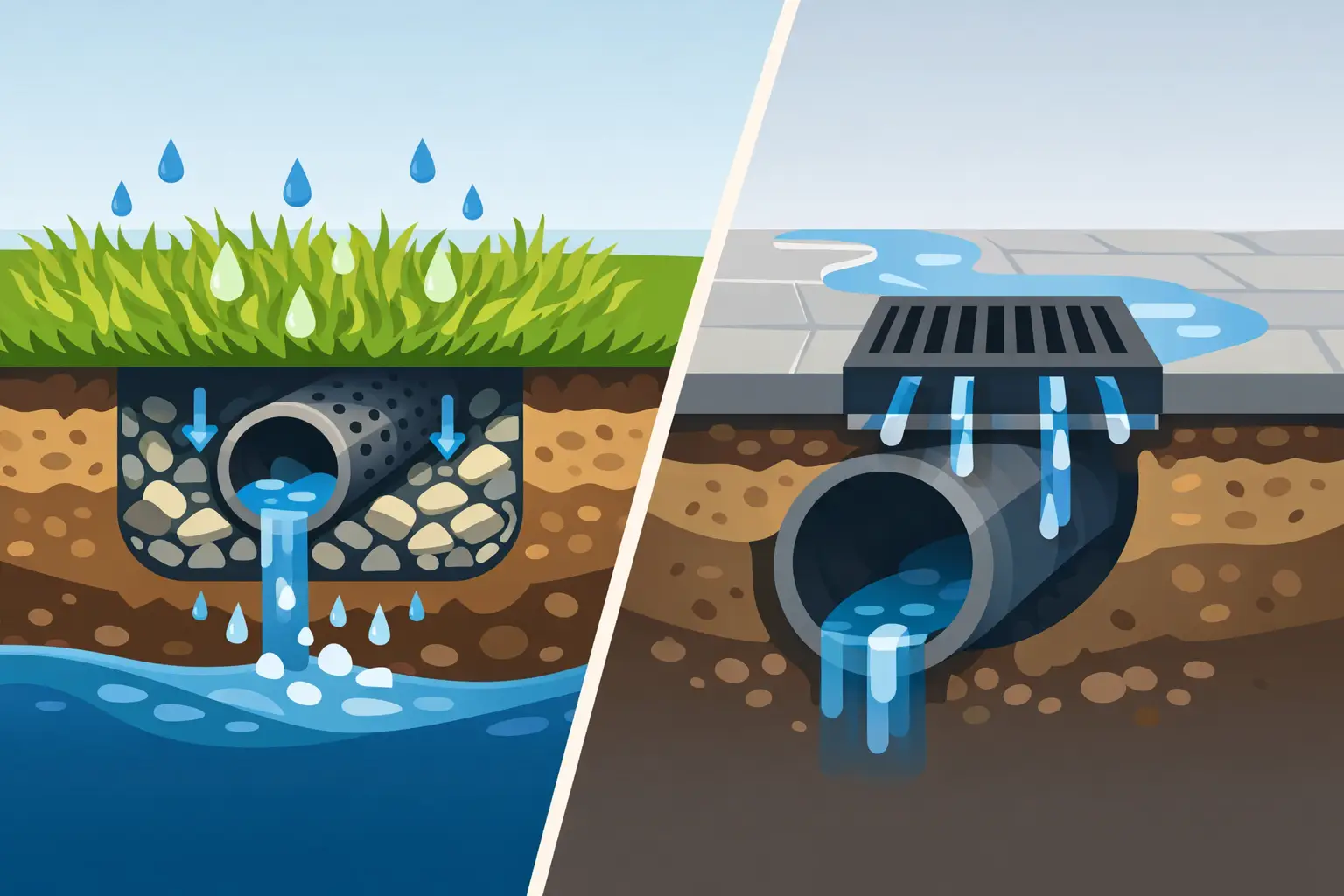
A surface drain is built to collect water sitting on top of the ground. Think of the water that pools near a patio, gathers in a low spot in the yard, or runs off a driveway during a hard rain. Surface drains catch that visible runoff and direct it away before it has time to pond and soak into the soil around the house.
A French drain works below the surface. It is designed to intercept water moving through the soil and redirect it before that moisture builds up where it should not. In practical terms, a French drain is often the better fit when the problem is not just standing water you can see, but subsurface moisture that keeps the ground too wet around the foundation.
That distinction matters in the Dallas-Fort Worth area. A lot of drainage trouble here is not just about one storm leaving puddles behind. It is about repeated moisture swings in expansive soil. Too much water near the foundation can contribute to movement, cracking, and uneven support. Too little moisture in one area and too much in another can also create imbalance.
When a surface drain makes the most sense
Surface drains are usually the right answer when the drainage issue is obvious and above ground. If your yard has low areas where water stands after rain, or if runoff is moving quickly off hard surfaces and collecting near the house, a surface drain is often the most direct fix.
These systems are commonly installed in places where water has a clear path across the surface, such as along patios, beside driveways, near walkways, or in problem areas where grading alone does not solve the issue. They work by collecting water at the point where it gathers and sending it through a discharge line to a safer outlet.
For homeowners, the biggest advantage is speed. Surface drains address water before it has time to soak down and saturate the soil. That can be especially helpful when heavy storms hit fast and dump a large amount of water in a short period.
The trade-off is that surface drains do not solve every drainage problem. If water is moving underground or the soil stays wet long after surface puddles disappear, a surface system alone may not be enough.
When a French drain is the better choice
A French drain is better suited for water that is building up beneath the surface. If parts of your yard stay soft and muddy, if moisture seems to linger near the foundation, or if drainage issues keep returning even after visible puddles are gone, the problem may be happening below grade.
A French drain uses a gravel-filled trench and perforated pipe to collect and redirect groundwater or subsurface moisture. Instead of waiting for water to rise to the surface, the system captures it while it is still moving through the soil.
This can be a strong option around foundations, along side yards, or in areas where the natural drainage pattern keeps feeding moisture toward the structure. In North Texas, where foundation performance is closely tied to moisture control, that kind of interception can be a major part of long-term protection.
The trade-off is that French drains require careful design and installation. If the trench depth, slope, pipe placement, or outlet are wrong, the system may not perform the way it should. This is one of those jobs where experience matters, especially when the goal is not just yard drainage but foundation protection.
French drain vs surface drain for foundation concerns
If your main concern is foundation movement, the right answer often depends on why water is collecting in the first place. Surface water that repeatedly ponds next to the home can absolutely contribute to soil expansion and structural stress. In that case, a surface drain may be the most effective first step.
But if the soil around the home stays wet because water is filtering down and remaining trapped, a French drain may be more appropriate. The goal is not simply to remove water you can see. It is to maintain more consistent moisture conditions around the foundation.
That is why drainage recommendations should not be based on product labels alone. They should be based on symptoms, grading, soil behavior, roof runoff patterns, and the layout of the lot. A system that works well in one yard may fall short in another just a few streets over.
What DFW properties often need
In the Dallas-Fort Worth Metroplex, drainage is rarely a one-size-fits-all issue. A property may have runoff coming off the roof, a backyard low spot holding water, and soil around the slab staying too wet on one side. In that situation, choosing between a french drain vs surface drain is not always an either-or decision.
Many homes benefit from a combination approach. A surface drain may be installed where stormwater collects quickly, while a French drain handles the moisture that moves through the soil and lingers near the foundation. When both surface and subsurface water are part of the problem, combining systems can provide better long-term control.
This is also where local experience matters. North Texas soil does not behave like soil in other parts of the country. The same rain event can create very different effects depending on lot slope, tree placement, existing drainage paths, and how close water is getting to the foundation.
Signs you may have the wrong drainage solution
Some homeowners already have drains but still see signs of trouble. That does not always mean the system failed. It may mean the wrong type of drain was installed for the actual problem.
If you still have standing water after rain, the collection points may be in the wrong places, or the issue may need a stronger surface solution. If the yard looks dry on top but the soil near the house remains soft, or foundation symptoms keep getting worse, the property may need subsurface drainage instead.
Common warning signs include recurring ponding, erosion channels, mulch washing away, water marks near the slab, cracks getting worse after wet periods, and doors or windows becoming harder to open as moisture patterns shift. Those are not signs to ignore and hope for the best.
Why installation quality matters as much as drain type
A poorly installed surface drain can clog, back up, or discharge water where it causes a different problem. A poorly installed French drain can hold water instead of moving it. In both cases, the result is frustration, extra cost, and continued risk to the home.
Proper drainage work starts with understanding where the water originates, how it moves, and where it can be safely discharged. The slope has to be right. The depth has to be right. The system has to match the actual drainage pattern of the property, not just the symptom that is easiest to see.
That is why experienced contractors look beyond the puddle itself. They evaluate grading, roof runoff, soil conditions, and the relationship between drainage and foundation performance. For a company like All American Foundation Repair & Drainage, that broader view is what helps homeowners protect the structure, not just dry out the lawn.
How to decide between a French drain and a surface drain
Start with the source of the water. If the problem is runoff sitting or moving across the top of the yard, surface drainage is usually the first thing to consider. If the problem is persistent moisture in the soil, especially near the foundation, a French drain may be the stronger option.
Then look at the stakes. If the issue is limited to a wet patch in the lawn, the urgency may be lower. If water is threatening the foundation, affecting the slab, or contributing to structural warning signs, the decision deserves a more careful inspection.
Most of all, do not guess based on what a neighbor installed or what sounds familiar. Drainage systems work best when they are matched to the property, the soil, and the way water behaves on that specific lot.
The right drainage fix should do more than move water for one season. It should help protect your home through the next heavy rain, the next dry stretch, and the long-term shifts that North Texas soil is known for. If your yard or foundation is telling you something is off, it is worth addressing it before water turns a manageable issue into a structural one.