Pier and Beam Foundation Problems Explained
June 18, 2026
A floor that suddenly feels soft near the hallway, a door that used to swing freely but now sticks, a musty smell coming from below the house – these are often the first signs of pier and beam foundation problems. In North Texas, those issues rarely stay small for long. Expansive clay soils, heat, drought, and heavy rain can all put stress on a home’s support system, especially when crawl space moisture is part of the picture.
Pier and beam homes have been around for generations, and for good reason. They give access beneath the structure, make plumbing repairs easier, and can perform well when properly maintained. But they also depend on a chain of structural components working together. When one part shifts, settles, rots, or weakens, the symptoms can show up throughout the home.
What pier and beam foundation problems usually look like
Most homeowners do not notice the foundation first. They notice the living conditions changing. Floors may slope or bounce. Interior walls may develop cracks, especially around door frames or windows. Doors and windows may stick, drift open, or stop latching correctly. In some homes, cabinets separate slightly from the wall, or trim begins to gap.
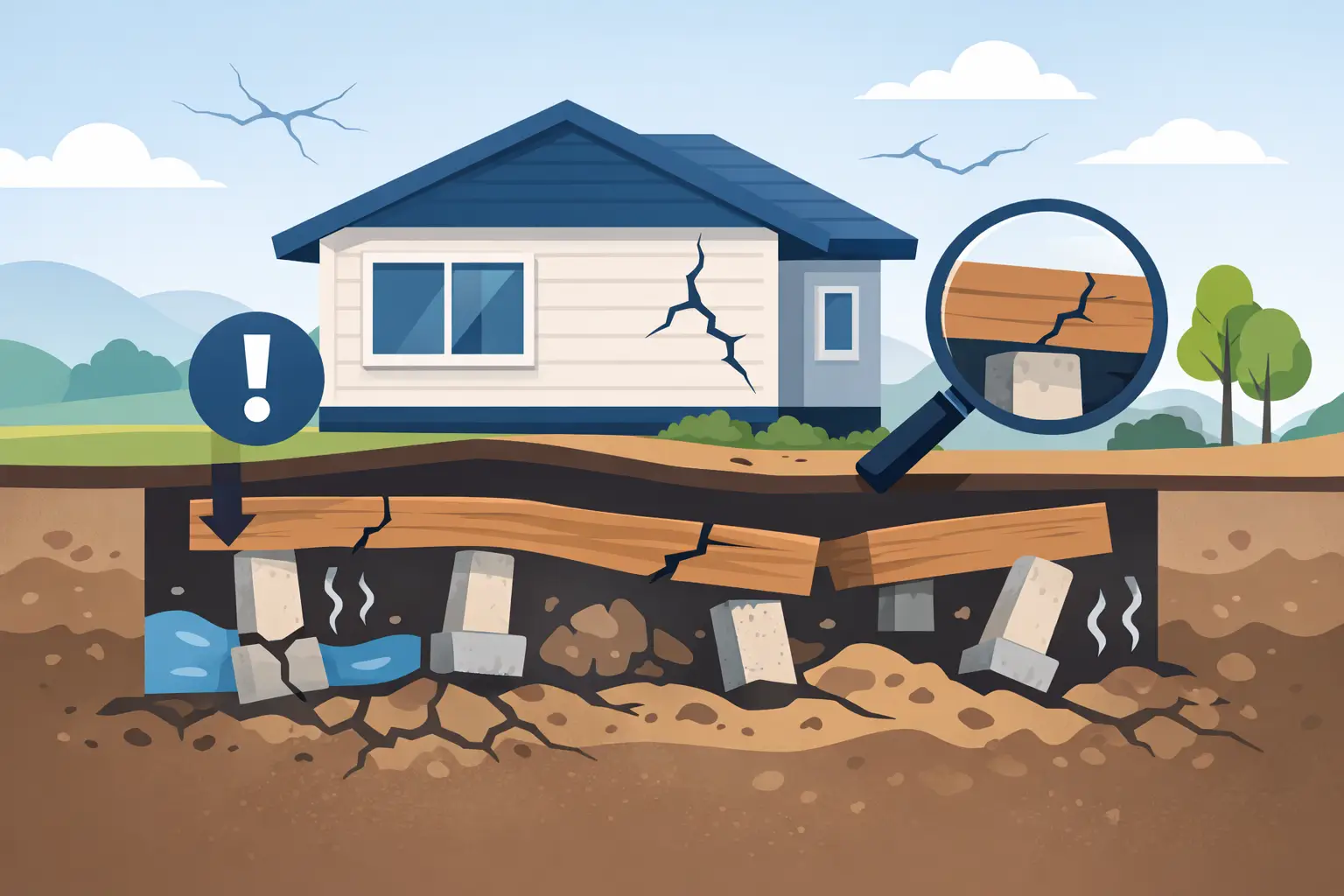
Below the house, the warning signs are often clearer. You may find standing water in the crawl space, wood that looks dark or deteriorated, shifted shims, loose supports, or pier movement. Sometimes the problem is not dramatic at first. A single area may settle gradually over time, and the home adjusts until the movement becomes large enough to affect daily use.
That is one reason these systems need careful inspection. Surface symptoms can point to foundation trouble, but they can also be tied to moisture changes, drainage issues, or damaged support materials underneath the structure.
Why pier and beam foundations develop problems
In the Dallas-Fort Worth area, soil movement is one of the biggest drivers. North Texas clay expands when it absorbs moisture and contracts during dry periods. That repeated cycle can shift piers, change load distribution, and create uneven support under the home. A foundation may be stable for years, then start showing movement after a long drought followed by heavy rain.
Moisture is another major factor, and it works both above and below the house. Poor drainage around the perimeter can direct water toward the crawl space. Plumbing leaks under the home can keep soil wet and unstable. On the other side, very dry conditions can cause the soil to shrink and leave supports less secure. Pier and beam systems do not like extremes. Too much moisture causes one set of problems, and too little can cause another.
Wood deterioration is also common in older homes. Beams, joists, and subfloor components can weaken from long-term humidity, fungal decay, or termite damage. When wood loses strength, the home may sag even if the piers themselves have not moved much. In some cases, the real issue is a combination of structural movement and material damage, which is why a one-size-fits-all repair approach usually falls short.
The most common pier and beam foundation problems under a home
Settlement is one of the most common issues. Individual piers can sink, tilt, or lose bearing capacity in unstable soil. When that happens, the beam system above may no longer carry the load evenly. The result is uneven floors and stress throughout the framing.
Rotting beams and joists are also frequent in homes with poor ventilation or chronic moisture. Even a small leak can create conditions that damage wood over time. If repairs focus only on leveling the structure without fixing the moisture source, the same trouble can return.
Another concern is failing shims or poorly installed past repairs. It is not unusual to find temporary adjustments under older homes that were never meant to serve as a long-term solution. Loose stacked materials, undersized supports, or patched repairs can leave the home vulnerable to more movement.
Crawl space drainage problems deserve special attention. Water under a pier and beam house does not just create odor or humidity. It changes soil conditions, contributes to wood damage, attracts pests, and weakens support points. In many cases, drainage correction is just as important as the structural repair itself.
When cosmetic signs are actually structural warnings
Not every wall crack means the house is failing, but some patterns should not be ignored. Cracks that keep growing, doors that suddenly stop working, or floor changes that become more noticeable from one month to the next can point to active movement. If multiple symptoms appear together, the chances of an underlying structural issue go up.
The key is progression. A hairline crack that has looked the same for years may not be urgent. A crack that has widened, stair-step cracking in certain areas, or a floor that has become harder to walk across deserves a closer look. Homeowners often wait because they hope the issue is minor. Unfortunately, waiting can mean more framing stress, more finish damage, and a more involved repair later.
Why drainage and foundation repair often go together
A pier and beam home can only be as stable as the conditions beneath it. That is why drainage matters so much. If roof runoff dumps next to the house, if the yard slopes inward, or if water pools after storms, the crawl space can become part of the problem. The same is true if underground plumbing leaks are keeping the soil saturated in one area.
In North Texas, stable moisture management is often the difference between a durable repair and a recurring issue. Proper drainage can reduce soil fluctuation, protect wood components, and help preserve the correction made during foundation work. Depending on the property, that may involve surface drainage, French drains, grading improvements, or leak repairs.
This is where experience matters. A contractor should not look at the floor system in isolation. The best repair plans account for both the structure and the water conditions affecting it.
How pier and beam foundation problems are repaired
The right repair depends on what is actually failing. If the issue is pier settlement, the home may need new support piers, pier adjustment, or house leveling to restore proper bearing. If beams or joists are compromised, damaged wood may need to be repaired or replaced. If moisture is driving the problem, drainage correction should be part of the plan.
A careful repair approach starts with inspection, not guesswork. The goal is to identify whether the problem is isolated or widespread, active or long-standing, structural or moisture-driven, or some combination of all three. That distinction matters because over-repair can cost more than necessary, and under-repair can leave the home unstable.
For many homeowners, cost is part of the stress. That is understandable. But the more practical question is whether the problem is being addressed in a way that protects the property long term. A repair plan should be clear about what is being fixed, why it is needed, and how future movement risk is being reduced.
When to schedule an inspection
If you can feel the floor change underfoot, if doors and windows are becoming harder to use, or if you have noticed water under the house, it is time to have the foundation checked. The same is true if you are buying or selling an older home with signs of movement. Early evaluation gives you more options.
For homeowners in Duncanville and across DFW, local soil conditions make that timing even more important. Foundation movement here is not unusual, but ignoring it can turn a manageable repair into a larger structural project. An experienced contractor who understands pier and beam systems and North Texas drainage patterns can tell you what is cosmetic, what is structural, and what should be handled now.
All American Foundation Repair & Drainage has worked with these conditions for decades, and that local experience matters when a home needs more than a quick fix. The right answer is not always the biggest repair. It is the one that restores support, controls moisture, and gives your home a better chance to stay stable through the next season and the one after that.
If your home is showing signs of pier and beam foundation problems, trust what you are seeing and get it checked before the damage spreads. Peace of mind usually starts with a clear look underneath the house.