Surface Drain Installation Benefits Explained
June 18, 2026
After a North Texas storm, the warning signs usually show up fast – standing water near the slab, muddy low spots in the yard, and runoff heading straight toward the house. That is where surface drain installation benefits become easy to see. A properly designed surface drainage system helps move water away before it has time to soak the soil, collect against the foundation, or create the kind of moisture swings that lead to expensive structural trouble.
For homeowners in Duncanville and across the Dallas-Fort Worth area, drainage is not a cosmetic issue. It is part of protecting the structure itself. With our clay-heavy soils, too much water in one area and too little in another can put stress on a foundation over time. Surface drains are one of the most practical ways to control that water where it lands.
Why surface drainage matters in North Texas
In this region, the soil expands when it gets wet and shrinks when it dries out. That movement can become a serious problem when water is allowed to pond near the home or repeatedly saturate the same sections of soil. Even if you do not see major cracking yet, poor drainage can quietly create conditions that lead to slab movement, uneven floors, sticking doors, and wall cracks.
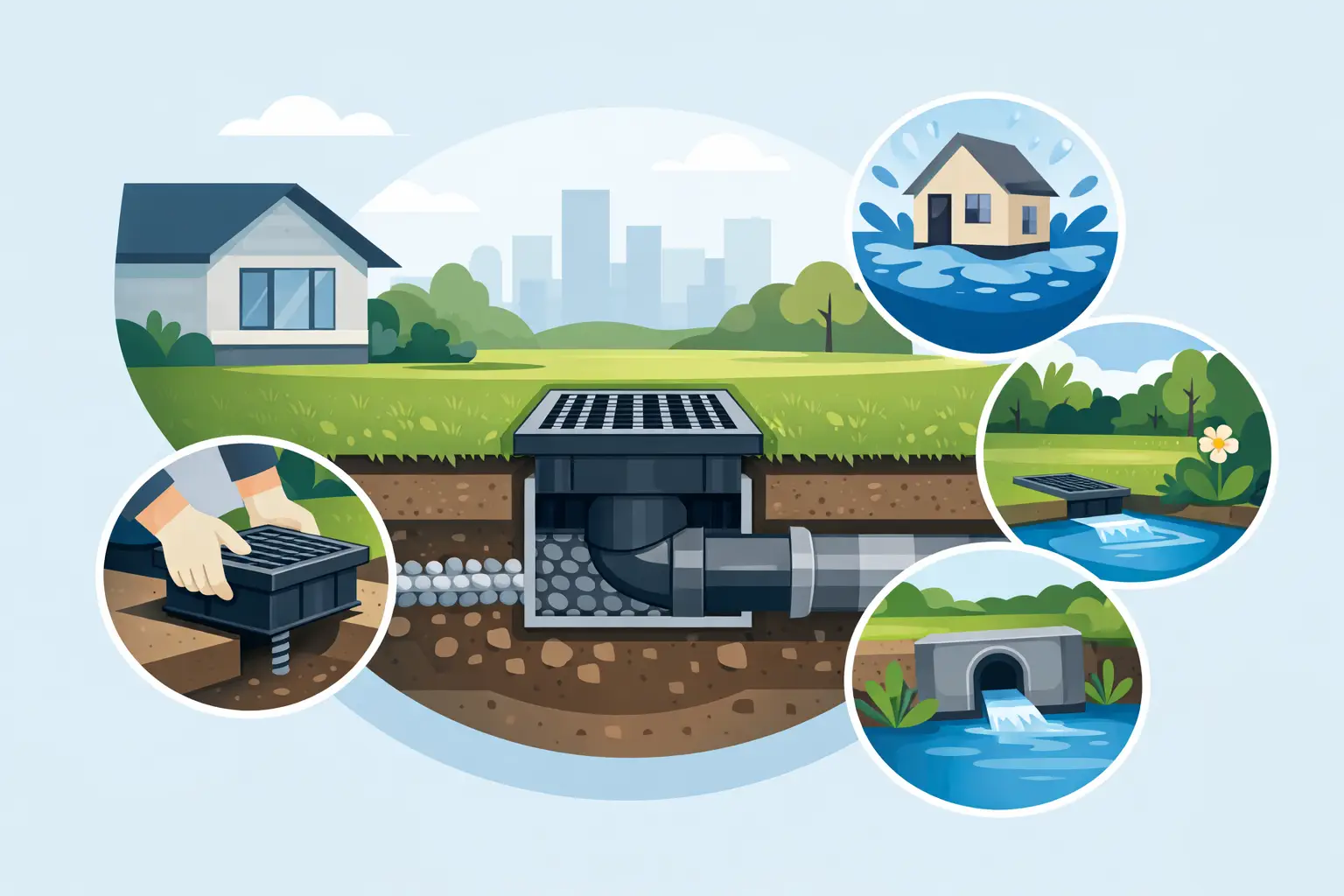
Surface drains help manage water at grade level. Instead of letting rainwater sit on the surface and find its own path, the system collects runoff and directs it away from vulnerable areas. That sounds simple, but the long-term impact can be significant when the goal is foundation protection.
The main surface drain installation benefits
One of the biggest benefits is reducing standing water near the foundation. When water pools against the home, it increases the chance of soil expansion in concentrated areas. Over time, that uneven moisture pattern can contribute to differential movement beneath the slab or around pier and beam supports. A surface drain helps keep water from lingering where it should not.
Another major advantage is protecting the yard, walkways, and hardscape from erosion. Runoff does not just threaten the house. It can wash out flower beds, create muddy channels, undermine flatwork, and leave low areas that get worse with each storm. Collecting and redirecting water can preserve the usability of the property and reduce cleanup after heavy rain.
Surface drains can also improve safety. Pooled water on patios, driveways, and sidewalks creates slick spots and can encourage algae growth over time. If certain areas stay wet for days after rain, that is a sign the drainage pattern is not doing the property any favors. A better drainage path can make those surfaces dry faster and stay in better condition.
There is also the benefit homeowners often appreciate most – peace of mind. If every storm sends you outside to check whether water is gathering at the edge of the slab, the problem is already affecting how you live in the home. A drainage solution that is designed for your lot can remove a lot of that uncertainty.
How surface drains protect foundations
The connection between drainage and foundation performance is direct. Foundations do best when the soil moisture around them stays as consistent as possible. Sudden saturation next to one section of the house and dry conditions at another can create stress that builds over time.
A surface drain system helps by intercepting water before it can collect near the structure. In practical terms, that means less ponding at the perimeter, fewer wet spots that soak into the soil next to the slab, and better control over where stormwater ends up. For homes already showing signs of movement, drainage correction is often an important part of preventing continued problems after repair work is completed.
That said, drainage alone is not a cure-all. If a home already has significant structural movement, a surface drain may need to be part of a larger repair plan rather than the only fix. The right answer depends on the property, the grading, the soil conditions, and whether foundation damage is already present.
Where surface drains work best
Surface drains are especially useful in low spots where water naturally collects, at the bottom of slopes, near patios and driveways, and in side yards where runoff gets trapped between homes or fences. They can be a strong option when water is visible on the surface and needs to be collected quickly.
They are also commonly used in areas where roof runoff, hard surfaces, and lot grading combine to overwhelm the yard. If water pours off a driveway or across a backyard and has nowhere to go, a surface drain can capture that flow and move it toward a safer discharge point.
In some cases, surface drains work best alongside other systems. A French drain may be better for subsurface moisture, while a surface drain is meant to handle water moving across the top of the ground. On many North Texas properties, a combination approach makes the most sense.
Surface drain installation benefits depend on design
Not every drain system performs the same way. The real surface drain installation benefits come from proper placement, correct slope, and a discharge route that moves water far enough away from the structure. If a drain is installed in the wrong location or the outlet does not let water escape efficiently, the system may not solve the underlying problem.
This is where experience matters. A drainage plan should consider how the lot sheds water during heavy rain, where the low points are, how close neighboring properties sit, and how drainage ties into the overall health of the foundation. A quick fix that only moves water a few feet can still leave the property vulnerable.
It is also important to think about maintenance. Surface drains can collect leaves, sediment, and debris, especially during storm season. A well-installed system should be accessible enough to inspect and keep clear. That maintenance is usually straightforward, but it is still part of owning the solution.
Signs your property may need a surface drain
If water stands in the same places after every storm, your property is already telling you something. The same goes for muddy areas that never seem to dry out, mulch washing away, water marks on the edge of the slab, or runoff that visibly heads toward the home.
Inside the house, drainage trouble can show up more gradually. New cracks in sheetrock, doors that begin sticking, gaps around window frames, or uneven floors may be related to foundation movement influenced by moisture imbalance outside. Those signs do not automatically mean a surface drain is the answer, but they do mean the drainage pattern deserves a closer look.
Homeowners often wait because the issue seems manageable between storms. The problem is that repeated wetting and drying cycles can create cumulative stress. Addressing drainage earlier is usually less disruptive and less expensive than waiting until structural symptoms get worse.
What homeowners should expect from a good installation
A quality surface drain installation should start with a real inspection, not a guess. The contractor should evaluate where water is collecting, how the grade is affecting runoff, and whether there are signs that drainage is impacting the foundation. From there, the recommendation should fit the property rather than forcing the same solution onto every yard.
Good workmanship also matters. The drain must be set at the correct elevation, connected to a line that carries water effectively, and discharged where it will not circle back toward the house or create a problem elsewhere. For many property owners, that is the difference between a temporary improvement and long-term protection.
At All American Foundation Repair & Drainage, LLC, that practical, property-specific approach matters because drainage and structural performance go hand in hand. Especially in the DFW Metroplex, water management is not something to treat as an afterthought.
Cost versus long-term value
Some homeowners hesitate at the idea of installing drainage because they are focused on immediate cost. That is understandable. But drainage work is often best viewed in terms of damage it helps prevent. Repeated ponding can contribute to foundation issues, landscape loss, concrete movement, and persistent maintenance headaches that cost more over time.
The value of a surface drain is not only in moving water after the next storm. It is in reducing risk year after year. The payoff is often better yard performance, fewer moisture-related concerns, and a stronger defense against foundation trouble that starts outside before it becomes visible indoors.
If your property regularly holds water, the right question is not whether it is annoying. It is whether that water is quietly putting pressure on the home you worked hard to own. A well-planned drainage solution can do more than dry out a yard – it can help protect the stability of the whole property for years to come.