Foundation Repair vs Replacement: Which Works?
August 20, 2026
A crack over the living room doorway can make a homeowner fear the worst: that the entire foundation must be replaced. In most cases, foundation repair vs replacement is not an all-or-nothing choice. The right answer depends on why the home is moving, how much structural damage is present, and whether the conditions causing that movement have been corrected.
For Dallas-Fort Worth property owners, that last point matters a great deal. North Texas clay soils expand when wet and shrink when dry. Without controlled drainage and consistent moisture conditions, even a well-built home can experience settlement, heave, cracking, and uneven floors over time. A lasting solution addresses both the structure and the water around it.
Foundation Repair vs Replacement: The Main Difference
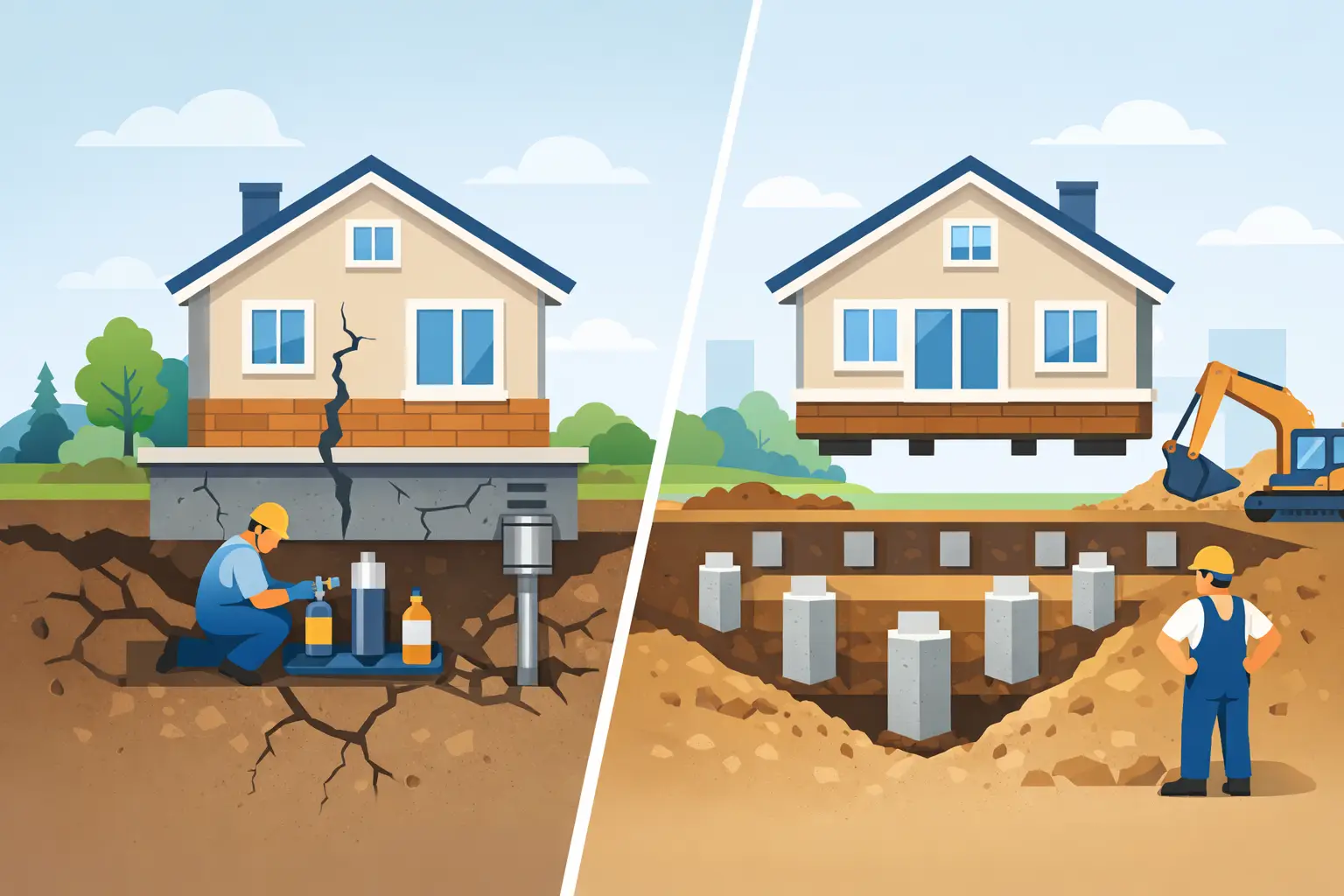
Foundation repair stabilizes or re-levels an existing foundation. The goal is to preserve sound portions of the structure while correcting areas that have moved or lost support. Depending on the home and foundation type, repairs may include concrete piers, steel piers, house leveling, beam repair, shimming, or localized concrete work.
Foundation replacement means removing and rebuilding a substantial portion of the foundation, or in rare cases, the entire foundation system. It is far more invasive than repair. The structure may need to be supported or lifted while old materials are removed and a new foundation is constructed beneath it.
Replacement is not automatically better simply because it sounds more complete. If the existing foundation is structurally serviceable and the movement can be stopped with properly designed repairs, replacement can add major cost and disruption without providing a better outcome. On the other hand, repairing a foundation with widespread material failure or severe structural deterioration may only delay a larger problem.
When Foundation Repair Is Usually the Right Choice
Most homes with foundation movement are candidates for repair rather than full replacement. A qualified inspection should identify the pattern of movement, the condition of the concrete or supporting system, and the source of the moisture problem before any recommendation is made.
Repair is often appropriate when the home has localized settlement, such as one side of a slab dropping because dry soil has pulled away from it. Piers can be installed at engineered locations to transfer the home’s load to more stable bearing material. Once support is restored, the affected area may be lifted carefully toward its proper elevation.
Pier and beam homes can often be repaired by reinforcing or replacing damaged beams, adjusting shims, installing new supports, and correcting moisture under the house. Block and base foundations may need support improvements, leveling, or targeted rebuilding of damaged sections. These are meaningful structural repairs, but they do not require tearing out a sound foundation system.
Repair also makes sense when cracks are present but the concrete remains generally intact. Not every crack means the foundation is failing beyond recovery. Some cracks are cosmetic, while others reflect movement that needs structural support. The distinction comes from a full evaluation, not from the crack alone.
A repair plan should also account for drainage. If roof runoff, standing water, poor grading, or leaking plumbing continues to saturate soil near the home, movement can return. Surface drains and French drains can direct water away from the foundation and help create more stable soil conditions around the property.
Signs Your Home May Need Repair
Homeowners often notice changes inside before they see the underlying cause outside. Doors that stick, windows that become difficult to open, floors that slope, gaps at trim, and diagonal wall cracks can all indicate movement. Exterior brick cracks, separated mortar, or visible gaps between the soil and slab edge deserve attention as well.
These signs do not necessarily mean replacement is needed. They mean it is time to have the home evaluated before smaller changes become more expensive structural or drainage concerns.
When Foundation Replacement May Be Necessary
Complete foundation replacement is uncommon, but it can be the responsible recommendation in certain situations. It is generally considered when the foundation has extensive deterioration that cannot be reliably stabilized through localized work.
For example, a slab may have widespread concrete failure, major structural cracking throughout the system, or damage caused by long-term water intrusion that has compromised its ability to carry the home safely. A pier and beam foundation may require substantial rebuilding if framing members, supports, and foundation walls have deteriorated across large sections of the structure.
Replacement can also become necessary after severe events, such as a fire, flood, major plumbing failure, or long-term neglect that has caused widespread rot, erosion, or material breakdown. In these cases, a contractor should explain clearly why repair would not provide dependable long-term support.
Even then, replacement may be partial rather than total. Rebuilding a heavily damaged perimeter section or an addition’s failed foundation can be more practical than replacing the foundation under the entire home. The scope should match the actual condition of the structure, not a one-size-fits-all approach.
Cost, Disruption, and Long-Term Value
Repair is typically less costly and less disruptive than replacement because it preserves much of what is already sound. Piers and targeted leveling can often be completed without removing large portions of the home. Costs vary based on access, foundation type, depth requirements, the number of support points, and drainage needs.
Replacement involves demolition, excavation, structural support, concrete work, and often significant interior or exterior restoration afterward. It can affect flooring, walls, landscaping, utilities, and daily use of the property. It may be justified when necessary, but homeowners should understand the full scope before deciding.
The lowest initial estimate is not always the best value. A plan that lifts the home but ignores a drainage issue can leave the underlying cause in place. Likewise, an oversized replacement proposal may not be the right investment when a targeted repair would stabilize the structure effectively.
Ask whether the proposed work addresses the cause of movement, what areas will be supported, how the contractor will protect the home during the work, and what warranty applies. A clear answer to these questions helps homeowners compare recommendations on more than price alone.
Why North Texas Drainage Changes the Decision
In the Dallas-Fort Worth area, soil moisture is often part of the foundation story. During long dry periods, expansive clay can shrink and create voids beneath portions of a slab. Heavy rain can then cause the soil to swell again. Repeated cycles place stress on the foundation and the framing above it.
That is why drainage correction is not an optional add-on when water is contributing to movement. Gutters should discharge away from the house, grading should carry surface water away, and low areas should not hold water against the foundation. In some properties, a properly designed French drain or surface drain is needed to manage recurring runoff.
A sound repair recommendation should explain whether drainage is contributing to the damage and what should be done about it. This is especially important when one area of the home moves repeatedly or when pooling water appears near the same section after storms.
Getting a Recommendation You Can Trust
A foundation decision should begin with an on-site inspection, not a guess based on a photo or a single crack. The contractor should review interior and exterior symptoms, measure elevations where appropriate, inspect drainage conditions, and consider the type and age of the foundation.
Be cautious of anyone who recommends full replacement immediately without explaining why targeted repair cannot work. The reverse is also true: do not accept a quick patch when the foundation materials or support system are too compromised for a reliable repair.
At All American Foundation Repair & Drainage, LLC, our approach is built around identifying the cause of movement and recommending practical work that protects the property for the long term. With more than 57 years of North Texas experience, we understand that every home, soil condition, and drainage pattern requires its own plan.
A limited lifetime warranty, clear scope of work, and a discussion of financing options can also provide needed confidence when structural work is required. Homeowners should never feel pressured to choose between doing nothing and replacing everything without first understanding the condition of their foundation.
If you are seeing cracks, uneven floors, or drainage problems, acting early gives you more options. A careful inspection can determine whether a focused repair will protect your home or whether more extensive work is truly warranted.